Wednesday, 15 January 2020

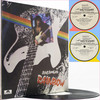
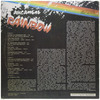
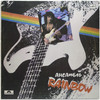
Rainbow - Rainbow (Compilation) (1989) (Russian Vinyl)

Year: 1975-1982 (LP 1989)
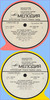
Label: Melodia Records (Russia), C60 27023 005
Style: Hard Rock
Country: Hertford, Hertfordshire, England
Time: 41:31
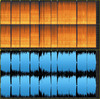
Format: Flac Tracks 16/44,1 kHz
Size: 286 Mb

"Ritchie Blackmore's Rainbow" Album Review (Tony Stewart, New Musical Express - 30 August 1975)
When a musician (in this case Ritchie Blackmore) decides to leave a band (in this case, Deep Purple), presumably because of musical differences, you`d expect him to adopt an approach dissimilar from that of his former band. But not our Ritchie.
This is the same kind of metal rock, the lineup is similar (Ronnie James Dio, vocals; Gary Driscoll, drums; Craig Gruber, bass; and Mickey Lee Souls, assorted keyboards) and even the packaging sniffs of a Purple influence. The only significant difference I can discern between the two are that (1) Rainbow are not as accomplished musicians as Purple, and (2) their breadth of vision isn`t as great. In fact this album is duller than a March morning.
The majority of the cuts are the same old riff stews; admittedly they do it capably enough, but that hardly seems sufficient. Out of the nine tracks, there are only two which are worth complimentary remarks. Those are the gentle melodic "Catch The Rainbow", and the acoustically based "Temple Of The King".
The rest are just cliched structures, such as the pounding "Man On The Silver Mountain" and "Sixteenth Century Greensleeves" where Blackmore and Dio reclaim a Uriah Heep riff which they`d borrowed from Purple originally. And even the inclusion of The Hat`s instrumental re-working of the Yardbird`s "Still I`m Sad" does nothing for me at all. Besides their lack of imagination in the composing department, with seven originals from the pens of The Hat and Ronnie James, the band lacks any real feeling. With the exception of Dio.
Now he is a good singer who has a lot of passion, good phrasing and pitch (particularly on "Temple") and puts a considerable amount of effort into the songs. Whereas The Mad Axeman and Gruber merely illustrate their technical manoeuverability, Souls (despite the name) is recording in the studio next door and you rarely hear him, and Driscoll is what you`d describe as solid. But it is a group album. The Hat keeps a low profile, filling out songs and taking the occasional lead, sounding, particularly on "Rainbow" and "Temple", like Peter Green, but there are no real instances of inspired madness. So in conclusion, all I can say is that they`re an imitation of Purple, and not a particularly good one at that.

01. A1 Man On The Silver Mountain (Dio 1975) (04:36)
02. A2 Still I'm Sad (Dio 1975) (03:55)
03. A3 Long Live Rock'n'Roll (Dio 1978) (04:21)
04. A4 All Night Long (Graham Bonnet 1979) (03:54)
05. A5 Stone Cold (Joe Lynn Turner 1982) (05:15)
06. B1 If You Don't Like Rock'n'Roll (Dio 1975) (02:36)
07. B2 Stargazer (Dio 1976) (08:24)
08. B3 Freedom Fighter (Joe Lynn Turner 1981) (04:26)
09. B4 I Surrender (Joe Lynn Turner 1981) (04:01)
imagebam.com imagebam.com imagebam.com imagebam.com imagebam.com imagebam.com

TurboBit
KatFile
UsersDrive
Monday, 13 January 2020

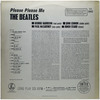
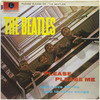
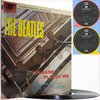
The Beatles - Please Please Me (1963) (Vinyl Stereo)

Year: 22 March 1963 (LP 1971-1973)
Label: Parlophone Records (UK), PCS 3042
Style: Classic Rock
Country: Liverpool, England
Time: 32:52
Format: Flac Tracks 16/44,1 kHz
Size: 212 Mb

George Martin Recalls Recording The Beatles' "Please Please Me" in a Day 'That Lasted 3 Weeks'.
When he was interviewed by Billboard in 2008, the "Fifth Beatle" George Martin recalled his most vivid memory recording the Beatles' first album, Please Please Me. His response was that they managed to track the whole set in one day - a day, he joked, "that lasted three weeks."
Martin died Tuesday at 90. His production credits are vast but he is best known for first signing and producing nearly all of the Fab Four's work.
The album was recorded in 13 hours, Martin said, as the band ran through its standard set from performing at the Cavern Club in Liverpool. He held off the cover of "Twist and Shout" for last because he said he knew Lennon wouldn't have any voice left after recording the intense song.
"It was a day that lasted three weeks," Martin said. "We started at about 10 in the morning, and we finished at about 11 at night. The last song we did was 'Twist and Shout' and I didn't do it earlier because I knew John wouldn't have any voice left. We did 11 songs in 11 hours. It was really a run-through. I'd seen them working in the Cavern in Liverpool, and I'd seen them other places, so I said, 'Let's just run through what you do as an act and record it.' I needed that album out quickly, so that was why I did it [that way]."
Billboard 3/9/2016

01. A1 I Saw Her Standing There (McCartney) (02:53)
02. A2 Misery (Lennon and McCartney) (01:51)
03. A3 Anna (Go to Him) (Arthur Alexander) (Lennon) (02:57)
04. A4 Chains (Gerry Goffin - Carole King) (Harrison) (02:28)
05. A5 Boys (Luther Dixon, Wes Farrell) (Starr) (02:27)
06. A6 Ask Me Why (Lennon) (02:29)
07. A7 Please Please Me (Lennon) (01:59)
08. B1 Love Me Do (McCartney) (02:21)
09. B2 P.S. I Love You (McCartney) (02:07)
10. B3 Baby It's You (M. David, B. Williams, B. Bacharach) (Lennon) (02:41)
11. B4 Do You Want to Know a Secret (Harrison) (02:01)
12. B5 A Taste of Honey (Bobby Scott, Ric Marlow) (McCartney) (02:06)
13. B6 There's a Place (Lennon and McCartney) (01:53)
14. B7 Twist and Shout (Phil Medley, Bert Russell) (Lennon) (02:33)

imagebam.com imagebam.com imagebam.com imagebam.com imagebam.com imagebam.com imagebam.com

UploadRar

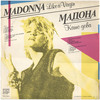
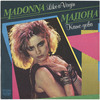
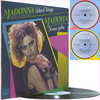
Madonna - Like A Virgin (1984) (Vinyl)

Year: 1984 (LP 1989)
Label: Balkanton Records (Bulgaria), BTA 11999
Style: Pop
Country: Bay City, Michigan, U.S.
Time: 38:59
Format: Flac Tracks 16/44,1 KHz
Size: 262 Mb

On her self-titled 1983 debut, Madonna sang perky little tunes about going on vacation ("Holiday") and falling in and out of love ("Lucky Star" and "Borderline"). These were ideas grandma and grandpa could get behind, and yet the 20-something Michigan native caused a minor sensation, setting the stage for a total pop-culture takeover. Clearly, music was only one of her weapons.
While Madonna offered Middle American mallrats a taste of underground NYC dance culture, what really got people talking was the singer herself. This spunky, self-assured club kid with the belly shirts and rubber bracelets liked being a topic of conversation, and with her second album, Like a Virgin, she endeavored to keep her name on everyone’s lips.
Released 30 years ago today (Nov. 12, 1984), Like a Virgin is sometimes thought of as Madonna’s artistic coming-out party, the moment she swapped frivolous bubblegum for more thoughtful examinations of female sexuality. Such praise stems mostly from what we now know about Madonna. However, for all its merits - and it has many - Like a Virgin isn’t exactly The Feminine Mystique set to music. In fact, it’s not all that different from its predecessor.
As with her first record, Madonna went into Like a Virgin wrestling Warner Bros. for more artistic control. After her negative experiences working with Reggie Lucas, she wanted to handle more of the production herself, and she found a winning collaborator in Chic guitarist Nile Rodgers, who’d just worked on David Bowie’s Let’s Dance.
Rodgers gave Madonna’s music some extra snap and sheen, and if he didn’t quite hand the singer her first classic album -- she’d have to wait another five years for that -- he did get her to the top of the Billboard 200. He also helped craft two of the decade’s most iconic singles.
The first, of course, is "Like a Virgin," Madonna’s first No. 1 pop hit. It’s here that she most explicitly tackles sexual politics and explores that whole virgin-whore thing so central to her image. The other is “Material Girl,” a winking gold-digger anthem that can be taken a couple of different ways. The remaining seven songs range from fun-enough dance tunes to flat-out filler – but that was all it took to propel Madonna onto the same plain as Prince, Michael Jackson and Bruce Springsteen.
"Material Girl": Like so many ‘80s pop classics, this one is inextricably linked to its video, which features a pretty-in-pink Madonna paying homage to Marilyn Monroe. It’s also more clever than most people realize. She’s either making a sarcastic statement about the decade’s rampant materialism or promoting the kind of "I got mine, bitches" feminism that’s always been her guiding light. Either way, "Material Girl" is a stylish sign-of-the-times synth-funk jam she didn’t write but totally owned.
"Like a Virgin": Ask a hundred people what this song is about, and you’ll get a hundred interpretations -- none as hilariously vulgar as Quentin Tarantino’s in Reservoir Dogs, but each as valid. "Like a Virgin" was actually written by a couple of men (Billy Steinberg and Tom Kelly), and that makes the finished Madonna product all the more ambiguous. Atop a bassline like the one heard in "Billie Jean" - another complex song about purity and sex - Madonna is coquettish yet knowing. "Like a Virgin" is about reconnecting with lost innocence through the act of lovemaking, a counterintuitive idea that was bound to confuse people. It didn’t exactly clarify things when she wore a wedding dress and humped the floor while performing the song at the inaugural MTV Video Music Awards.
Billboard 11/12/2014

01. A1 Material Girl (04:02)
02. A2 Angel (04:00)
03. A3 Like A Virgin (03:43)
04. A4 Over And Over (04:14)
05. A5 Dress You Up (04:03)
06. B1 Love Don't Live Here Anymore (04:50)
07. B2 Shoo-Bee-Doo (05:20)
08. B3 Pretender (04:35)
09. B4 Stay (04:07)

imagebam.com imagebam.com imagebam.com imagebam.com imagebam.com

UploadRar
UsersDrive 

Friday, 27 December 2019

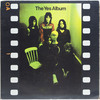
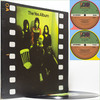
Yes - The Yes Album (1971) (Vinyl)

Year: 1971 (LP 1972)
Label: Atlantic Records (UK), K 40106
Style: Symphonic Rock
Country: London, England
Time: 40:50
Format: Flac Tracks 16/44,1 kHz
Size: 257 Mb

"The Yes Album started a new plane for Yes," Steve Howe said in 2013, "where we were completely original. Not doing other people’s songs, but creating our own music. "When I joined, I said: ‘Isn’t it time Yes did the whole thing?’ They all felt the same."
First released in February 1971, Yes’s third full-lengther “felt like the first real Yes album” according to Jon Anderson.
With Peter Banks having left, Howe came in with a dazzling scope of guitar sonics and styles while the band, skint and fed up of watching other bands they knew break big, jettisoned the stabilisers.
Co-producer and engineer Eddy Offord too played a vital role in their invention of a new post-psychedelia landscape. Like radical sculptors, they curved and warped the structure of their material until it offered resonant revelations in sound.
The trippy trinity of Yours Is No Disgrace, I’ve Seen All Good People and Starship Trooper stand as evergreen Yes masterworks. Your ears enter them through fresh windows and doorways every time, even over four decades later.
Prior to recording the band – getting to know Howe – “got away from it all” in Devon, renting a farmhouse in which they wrote, rehearsed and realised they could break the time-honoured rules of popular music. In the London studio, they then put down the tracks in sections and listened back to producer Eddie Offord’s ingenious assemblages.
The artful eclecticism surprised even its creators. Even though Kaye’s subsequent departure (a Hammond aficionado, he wasn’t keen on emerging technology) and Rick Wakeman’s arrival marked what most believe to be the definitive Yes line-up, it’s a pity this quintet crafted only this one diamond, unique in its sparkle and flow.
It was and is funkier, looser, than their later jewels, while always knowing where it’s going. It’s exploratory, but concise: so much happens, but every second counts. The Yes Album gave the band their first number one (albeit thanks at first to a dubious chart, taken hurriedly from the Oxford Street Virgin store because of a postal strike), and sold a million.

John Anderson (born 25 October 1944, Accrington, Lancashire, UK) – vocals, percussion
Chris Squire (4 March 1948 – 27 June 2015, London, UK) – bass guitars, vocals
Steve Howe (born 8 April 1947, London, UK) – electric and acoustic guitars, vachalia, vocals
Tony Kaye (11 January 1946, Leicester, UK) – piano, organ, moog
Bill Bruford (born 17 May 1949, Sevenoaks, Kent, UK) – drums, percussion

01. A1 Yours Is No Disgrace (09:33)
02. A2 The Clap (03:12)
03. A3 Starship Trooper (09:13)
04. B1 I've Seen All Good People (06:46)
05. B2 A Venture (03:20)
06. B3 Perpetual Change (08:44)

imagebam.com imagebam.com imagebam.com imagebam.com imagebam.com imagebam.com

UsersDrive
KatFile
TurboBit

Saturday, 21 December 2019

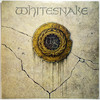
Whitesnake - Whitesnake (1987) (Vinyl)

Year: 1987 (LP 1987)
Label: Balkanton Records (Bulgaria), BTA 12336
Style: Hard Rock
Country: Middlesbrough, Cleveland, England
Time: 48:57
Format: Flac Tracks 16/44,1 kHz
Size: 366 Mb

Whitesnake are a hard rock band formed in England in 1978 by David Coverdale, after his departure from his previous band Deep Purple. Their early material has been compared by critics to the blues rock of Deep Purple, but they slowly began moving toward a more commercially accessible rock style. By the turn of the decade, the band's commercial fortunes changed and they released a string of UK top 10 albums, Ready an' Willing (1980), Come an' Get It (1981), Saints & Sinners (1982) and Slide It In (1984), the last of which was their first to chart in the US and is certified 2x platinum.
The band's 1987 self-titled album was their most commercially successful worldwide, and contained two major US hits, "Here I Go Again" and "Is This Love", reaching number one and two on the Billboard Hot 100. The album went 8 times platinum in the US, and the band's success saw them nominated for the 1988 Brit Award for Best British Group. Slip of the Tongue (1989) was also a success, reaching the top 10 in the UK and the US, and received a platinum US certification. The band split up shortly after this release, but had a reunion in 1994, and released a one-off studio album, Restless Heart (1997).
Whitesnake officially reformed in 2002 and have been touring together since, releasing four albums, Good to Be Bad (2008), Forevermore (2011), The Purple Album (2015) and Flesh & Blood (2019). In 2005, Whitesnake were named the 85th greatest hard rock band of all time by VH1.

David Coverdale – lead vocals (ex & next - Roger Glover, Jon Lord, Eddie Hardin, Bernie Marsden, Jimmy Page, Deep Purple)
John Sykes – guitars, backing vocals
Neil Murray – bass (ex & next - Colosseum II, Black Sabbath, Brian May, Peter Green, Graham Bonnet, Cozy Powell, Jon Lord, Gary Moore, Micky Moody, Michael Schenker)
Aynsley Dunbar – drums, percussion (ex & next - Eric Burdon, John Mayall, Frank Zappa, Ian Hunter, Lou Reed, Jefferson Starship, Jeff Beck, David Bowie, Whitesnake, Sammy Hagar, Michael Schenker, UFO, Journey, and Black Sabbath)

01. A1 Still Of The Night (06:40)
02. A2 Bad Boys (04:11)
03. A3 Give Me All Your Love (03:36)
04. A4 Looking For Love (06:34)
05. A5 Here I Go Again (03:58)
06. B1 Crying In The Rain (05:45)
07. B2 Is This Love (04:45)
08. B3 Straight For The Heart (03:43)
09. B4 Don't Turn Away (05:14)
10. B5 Children Of The Night (04:27)

imagebam.com imagebam.com imagebam.com imagebam.com imagebam.com

KatFile
UsersDrive
TurboBit

Saturday, 7 December 2019

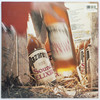
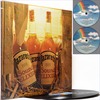
Nazareth - Sound Elixir (1983) (Vinyl)

Year: 1983 (LP 1983)
Label: MCA Records (UK), MCA 5458
Style: Rock
Country: Dunfermline, Scotland
Time: 39:53
Format: Flac Tracks 16/44,1 kHz
Size: 265 Mb

Nazareth formed in December 1968 in Dunfermline, Scotland, from the remaining members of semi-professional local group The Shadettes (formed in 1961) by vocalist Dan McCafferty, guitarist Manny Charlton (ex Mark V and The Red Hawks), bassist Pete Agnew, and drummer Darrell Sweet. They were inspired by The Beatles and The Rolling Stones. Nazareth took their name from Nazareth, Pennsylvania, which is cited in the first line of The Band's classic song "The Weight" ("I pulled into Nazareth, was feelin' about half past dead...").
The band moved to London, England in 1970 and released their eponymous debut album in 1971. After getting some attention with their second album Exercises, released in 1972, Nazareth supported Deep Purple on tour, and issued the Roger Glover-produced Razamanaz, in early 1973. This collection spawned two UK Top Ten hits, "Broken Down Angel" and "Bad Bad Boy". This was followed by Loud 'N' Proud in late 1973, which contained another hit single with a cover of Joni Mitchell's song "This Flight Tonight". Then came another album Rampant, in 1974, that was equally successful although its only single, "Shanghai'd in Shanghai", narrowly missed the British Top 40. A non-album song, again a cover version, this time of Tomorrow's "My White Bicycle", was a UK Top 20 entry in 1975.
Hair of the Dog was released in April 1975 and was produced by Manny Charlton, ending Roger Glover's association with the band. The title track of that album (popularly, though incorrectly, known as "Son of a Bitch" due to its hook lyric) became a staple of 1970s rock radio. The American version of the album included a song originally recorded by The Everly Brothers, the melodic Boudleaux Bryant-penned ballad "Love Hurts", that was released as a hit single in the UK and in the US, where it went platinum. The track became the band's only US Top Ten hit and was also a top 10 hit in nine other countries, reaching number 1 in six of them. The song was on the Norwegian chart for 60 weeks.
In 1979, second guitarist Zal Cleminson was added to the line-up, remaining for two albums, No Mean City and Malice in Wonderland, and contributing numerous compositions. Malice in Wonderland contained the single "Holiday". In 1981, they contributed the song "Crazy (A Suitable Case for Treatment)" to the soundtrack to the film, Heavy Metal.
Various Nazareth line-ups continued to make studio albums and tour throughout the 1980s and 1990s, although their popularity had declined such that some albums no longer received either a UK or a US release. They remained popular in Europe, particularly Germany, where "Dream On" became a hit single. In 1991, Billy Rankin returned to replace Manny Charlton on the No Jive album, remaining with the band until 1994.
A tribute came in 1993 when Guns N' Roses covered Nazareth's "Hair of the Dog" on "The Spaghetti Incident?", consolation after they turned down Axl Rose's request for the group to play at his wedding. Rankin departed again in 1994, but with Jimmy Murrison and keyboard player Ronnie Leahy, Nazareth maintained a live following in Europe and the US.
Nazareth continued touring after Rankin's departure, with Jimmy Murrison and keyboard player Ronnie Leahy. While on tour in 1999, original drummer Darrell Sweet died at age 51 of a heart attack. He was replaced by bassist Pete Agnew's son Lee for later editions of the band.
On 4 August 2006, John Locke, the former keyboardist of the band, died from cancer at the age of 62.
In February 2008, The Newz was released on the Hamburg-based label, Edel Entertainment. The release of the album coincided with Nazareth's fortieth anniversary tour, which started on 25 January in Sweden and visited most of Europe, finished on 4 November 2008 in Norway. A follow up album, Big Dogz, was released on 15 April 2011.
Nazareth announced McCafferty's retirement from the band due to ill health on 28 August 2013, leaving Pete Agnew as the sole remaining original member of the band. On 22 February 2014, it was announced that Scottish singer Linton Osborne was chosen as McCafferty's replacement, with the former singer's blessing. In December 2014, Nazareth announced the cancellation of several shows, and later postponement of their UK tour, due to Osborne contracting a virus that left him unable to perform. In a post on his Facebook page 16 January 2015, Osborne announced his departure from the band.
On 13 February 2015, the band announced that Carl Sentance, formerly of Persian Risk, Geezer Butler Band, and Krokus, was their new lead vocalist.
On 25 June 2019, The New York Times Magazine listed Nazareth among hundreds of artists whose material was reportedly destroyed in the 2008 Universal fire.
www.wikiwand.com/en/Nazareth_(band)

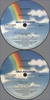
Matrix SideA: MCA-3684-ASR-2, SideB: MCA-3685-ASR-2

01. A1 Why Don't You Read The Book (03:44)
02. A2 Whippin' Boy (04:43)
03. A3 All Nite Radio (04:08)
04. A4 Where Are You Now (03:53)
05. A5 Backroom Boys (03:23)
06. B1 Rags To Riches (03:26)
07. B2 Local Still (03:32)
08. B3 I Ran (04:29)
09. B4 Rain On The Window (04:22)
10. B5 Milk And Honey (04:09)

imagebam.com imagebam.com imagebam.com imagebam.com imagebam.com

KatFile
TurboBit
UsersDrive 

Saturday, 30 November 2019

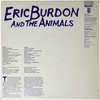
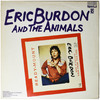
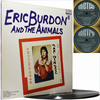
Eric Burdon and the Animals - Eric Burdon and the Animals (1975) (Vinyl)

Year: 1966-1968 (LP 1975)
Label: Metro Records (UK), 2356-142
Style: Classic Rock
Country: Newcastle upon Tyne, England
Time: 59:54
Format: Flac Tracks 16/44,1 kHz
Size: 343 Mb

Hailing from Newcastle, England, The Animals formed in 1963. After splitting in 1969, various incarnations of the band kept playing together under the same name and are still playing live today. They were one of the key artists of the British Invasion and remain highly influential to this day
When no lesser artist than Bruce Springsteen openly admits that he ripped your bands songs off to make some of the most legendary albums in rock history, that’s the point where respect becomes not so much deserved as undeniable. Yet by and large, The Animals are widely known for only one song, and a cover at that. I suppose we can write that one off to time’s reduction of everything to its simplest story and, let’s face it, there was some pretty stellar competition in those days (welcome to the 60’s, where you either rivalled The Beatles in quality or no-one gave a damn!). However, The Animals were no one hit wonders, charting twenty top ten hits in the U.K and U.S combined by the end of the 1960’s.
This was all achieved in record time as well. The band began life as the Alan Price Rhythm and Blues Combo, which featured a fluid line up but by 1962, band leader Alan Price had settled on himself playing the organ and keyboards, Hilton Valentine playing guitar, John Steel drumming, and Bryan "Chas" Chandler on the bass guitar. The group needed a vocalist to compete in the thriving U.K pop scene and, although they were originally a jazz-flavoured combo by trade, they chose the charismatic blues singer Eric Burdon to be there frontman. Burdon joining the group was the catalyst for a radical change in their performance style, their wild and energetic shows led them to be called “animals” by a few audience members. Needless to say, the name stuck.
By 1964 the band had signed to Columbia and put out their first single, but their second effort was what really took them into the stratosphere. The band had faith in their raucous version of the old folk standard “House Of The Rising Sun” given the rapturous reception it had gotten night after night on a tour they’d played with Chuck Berry, but no-one alive at the time could have predicted that it would top the charts on both sides of the Atlantic and provide some of Rock and Roll’s most iconic sounds. By September 1964, The Animals were one of the world’s biggest bands, but the music world worked faster than we can comprehend today, and by 1966 the original incarnation of the band imploded in a mess of mismanaged business affairs, internal friction and pressures from fans and the record company alike.
However, Eric Burdon formed a new incarnation of the group in December 1966, ditching their rhythm and blues roots for a far more psychedelic style of music that was heavier than the band had ever dreamed of being. The band were highly successful but at a far steadier rate than the original incarnation, with hits like "San Franciscan Nights", "Monterey", and "Sky Pilot" keeping them a very big deal but at a more manageable rate. However, at this point the group was a solo project for Burdon and the revolving door style of membership (Future Police guitarist Andy Summers played with the band briefly!) began to take its toll.
The band dissolved at the end of 1968, and after that the original line up reunited twice, once for an album in 1977 and again in 1983 for an album and a highly succesful tour that took in the band’s biggest ever headline show, at Wembley Stadium on New Years Eve of that year. Several different incarnations of the band have sprung up since then but whichever one you see is still showing a side of rock history that many know of but not many truly appreciate. Seek them out and you’ll find one of the true greats of classic rock and a band that are truly timeless, always at the top of their game. Highly recommended.

Matrix side1: 2356142 A//1 420 05, side2: 2356142 B//1 420 05

01. A1 Good Times (03:05) - "Winds of Change" 1967
02. A2 Sky Pilot (07:30) - "The Twain Shall Meet" 1968
03. A3 San Franciscan Nights (03:25) - "Winds of Change" 1967
04. A4 Paint It Black (06:16) - "Winds of Change" 1967
05. A5 When I Was Young (03:03) - UK Single A-Side 1967
06. A6 C.C. Rider (04:04) - "Animalization" 1966
07. B1 Ring Of Fire (04:48) - "Love Is" 1968
08. B2 River Deep, Mountain High (07:25) - "Love Is" 1968
09. B3 Monterey (04:41) - "The Twain Shall Meet" 1968
10. B4 Help Me Girl (02:43) - "Eric Is Here" 1967
11. B5 I'm An Animal (05:37) - "Love Is" 1968
12. B6 To Love Somebody (06:55) - "Love Is" 1968

imagebam.com imagebam.com imagebam.com imagebam.com imagebam.com

TurboBit
KatFile

Thursday, 28 November 2019

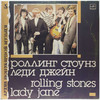
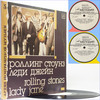
The Rolling Stones - Lady Jane (1988) (Compilation 1965-66 Russian Vinyl)

Year: 1965-1966 (LP 1988)
Label: Melodia Records (USSR), C60 27411 006
Style: Rhythm and Blues
Country: London, England
Time: 41:45
Format: Flac Tracks 16/44,1 kHz
Size: 267 Mb

The Rolling Stones, British rock group, formed in 1962, that drew on Chicago blues stylings to create a unique vision of the dark side of post-1960s counterculture. The original members were Mick Jagger (b. July 26, 1943, Dartford, Kent, England), Keith Richards (b. December 18, 1943, Dartford), Brian Jones (b. February 28, 1942, Cheltenham, Gloucestershire, England—d. July 3, 1969, Hartfield, Sussex, England), Bill Wyman (b. October 24, 1936, London, England), and Charlie Watts (b. June 2, 1941, London). Later members were Mick Taylor (b. January 17, 1948, Hereford, East Hereford and Worcester, England), Ron Wood (b. June 1, 1947, London), and Darryl Jones (b. December 11, 1961, Chicago, Illinois, U.S.). The Rolling Stones in the mid-1960s.
No rock band has sustained consistent activity and global popularity for so long a period as the Rolling Stones, still capable, more than 50 years after their formation, of filling the largest stadia in the world. Though several of their mid-1960s contemporaries—notably Bob Dylan, Paul McCartney, Eric Clapton, and Van Morrison—have maintained individual positions in rock’s front line, the Rolling Stones’ nucleus of singer Jagger, guitarist Richards, and drummer Watts remains rock’s most durable ongoing partnership.
In the process, the Stones have become rock’s definitive, emblematic band: a seamless blend of sound, look, and public image. It may be debatable whether they have actually, at any given moment, been the “greatest rock-and-roll band in the world,” as their time-honoured onstage introduction has claimed them to be; that they are the mold from which various generations of challengers—from the Who, Led Zeppelin, and Aerosmith via the New York Dolls, the Clash, and the Sex Pistols all the way to Guns N’ Roses and Oasis—have been struck is not. In their onstage personae, Jagger and Richards established the classic rock band archetypes: the preening, narcissistic singer and the haggard, obsessive guitarist.

01. A1 Heart Of Stone (02:49)
02. A2 Get Off My Cloud (03:00)
03. A3 Satisfaction (03:46)
04. A4 19th Nervous Breakdown (04:02)
05. A5 Stupid Girl (02:56)
06. A6 Flight (03:29)
07. B1 Mother's Little Helper (02:45)
08. B2 Out Of Time (05:41)
09. B3 Lady Jane (03:12)
10. B4 Take It Or Leave It (02:51)
11. B5 Paint It Black (03:26)
12. B6 Under My Thumb (03:43)

imagebam.com imagebam.com imagebam.com imagebam.com imagebam.com

TurboBit
KatFile