Saturday, 16 January 2021

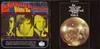
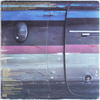
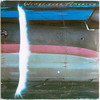
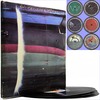
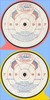
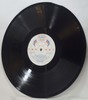
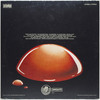
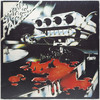
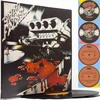
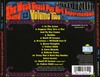
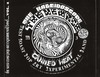
West Coast Pop Art Experimental Band - Volume Two (1967) CD

Year: 1967 (CD 2001)
Label: SUNDAZED Records (USA), SC 6174
Style: Rock, Psychedelia
Country: Los Angeles, California, US
Time: 39:10
Format: Flac Tracks 16/44,1 kHz
Size: 225 Mb

Contributor: Dave Stephens
With a stupid name like that it was always pretty unlikely that it would work out right for the band.
Couple in the fact that the band’s leader saw himself as the incarnation of hip/alternate, and …
… that the guy who’s reputed to have put the key components of the band together, Kim Fowley, while having a deserved cult following, has never been strongly associated with serious music,
then it might come as a surprise to learn that The West Coast Pop Art Experimental Band managed to release six albums, some of which contained some really good music.
There were two parts to the jigsaw. The first part was Bob Markley, adopted son of a wealthy oil magnate. Bob had studied law, which was to come in useful, but he was also an aspiring record star – he’d released a couple of singles on his own label. The other part was an existing band, the Laughing Wind, who’d also cut a few singles. The band comprised brothers Danny and Shaun Harris, on lead and bass guitar respectively, Michael Lloyd also on guitar, plus John Ware, drums. All bar Ware handled vocals. Most of the boys had worked in previous bands in the L.A. area.
At a party held in Markley’s Beverly Hills mansion in August 1965, attended by the Harris Brothers, Michael Lloyd, Kim Fowley and plenty more, with musical entertainment provided by the Yardbirds amongst others, our hero/anti-hero had one of those eureka moments and decided that groups were the in thing, and, armed with the introduction from Fowley, proposed to the Laughing Wind that, if he could join the group as vocalist and songwriter, he would purchase new gear for them plus a light show and would cover the boys’ touring expenses. This was agreed and Markley came up with the West Coast Pop Art Experimental Band name. Not only that, he ensured that legally he owned the band’s name and that he handled the music publishing.
The first album from the WCPAEB, released on the tiny indie FiFo Records (see Footnotes) was titled West Coast Pop Art Experimental Band Volume One, perhaps rather optimistically, since it implied a future. Without wishing to be unduly cruel, there wasn’t a lot on the album that signified there might have been a future. Much of it was garage in sound – this was 1966 – but slightly more tender in nature than some bands that got classified under that heading. Outside of five originals which I’ll come on to, the content consisted of covers, some predictable like You Really Got Me and yet another Louie Louie, some rather less predictable including Chris Kenner’s New Orleans rolling rocker Something You Got (a not unpleasing workout which did capture some of the Crescent City laid-back feel) and Oscar Brown/Nat Adderley’s Work Song. Unlike the Georgie Fame vocal version of the song which might have been a Brit source, this take was purely instrumental, in line with the Cannonball Adderley record.
There were two Dylan covers, It’s All Over Now Baby Blue and She Belongs To Me. The first was reasonable but paled in comparison to the versions from Them and the 13th Floor Elevators (with the last named taking the biscuit for sheer freakiness). However the WCPAEB’s version of She Belongs To Me definitely warrants a listen. Starting out with heavy fuzz bass, the record eventually disappears in a storm of feedback and distortion. In comparison, the vocal, which lasts for little more than a minute, is precise and controlled, sounding passably like Dylan without falling into the trap of pastiche. The whole thing is over in less than two minutes though one could well imagine them stretching out on stage.
Of the five originals, three were from Bob Markley with two being Kim Fowley co-writes. Two of this trio were unremarkable attempts at psych, while the other was a soft folk rock thing, not unlike the sort of song P.F. Sloan was producing in the time frame. Which leaves two, I Won’t Hurt You (on which Markley gets another co-write along with Shaun Harris and Michael Lloyd), and If You Want This Love. Both were decent folk rock sounding affairs which was probably why they were selected to turn up again on the group’s second album in more fully realised versions.
Before leaving this set I would note that, for many years the LP was very difficult to get hold of (which didn’t do any harm to the band in terms of cult status), but in 1997 a CD version was released via Sundazed which doubled the number of tracks to 22. It is believed that most, possibly all, of the extra tracks were from the Laughing Wind prior to morphing into the WCPAEB. Certainly they are generally softer in nature with more of an emphasis on harmonies. Their cover of the Left Banke’s She May Call You Up Tonight would illustrate this superbly if only it was on YouTube!
One gets the impression that Markley, who very much saw himself as leader with the rest almost as paid employees, was keen to expunge any memory of the first album, since the second, which saw release on the far more prestigious Reprise label, was entitled The West Coast Pop Art Experimental Band Part One. I would assume that it was only ‘Part One’ rather than ‘Volume One’ because the latter had been used. Whatever, Markley, with or without the band, evidently saw this as the start and given his general outlook that would probably have been, in his eyes, “the start of something big”.
It wasn’t – the start of something big that is – but it was a mighty fine album in its own right. From the first few bars of track #1, Shifting Sands, you were aware that this was on a different level to the first outing. There was a balance of eight relatively conventional, often Byrds inspired songs, and three freaky ones. If that balance was slightly more skewed to the more accessible stuff, I’d classify this album as great. As it is it’s merely very very good.
The detail: let’s take those freaky ones first. Help, I’m A Rock is, of course, the number from the first Mothers Of Invention album, and it begs the question, why would you want to hear this from anyone other than Frank and the Mothers? Apart from some slight curiosity which, I found, disappeared rather quickly, my answer would be that you wouldn’t. Even the original wasn’t something you would play very frequently but it was essentially Zappa, no one else. I would call Leiyla, Bo Diddley meets Monster Mash. A perfectly good Diddley based backing track with a simplistic but acceptable vocal is marred by a kitsch horror show on top. It does develop but that doesn’t mean it gets better. The most successful of this bunch is 1906. Over a fast guitar + choral riff a narrator intones nonsense lines interspersed with “I don’t feel well” pleas. Presumably a bad trip but considerably more acceptable than the other ‘advanced’ efforts. Markley himself was so impressed with these tracks that Help, I’m A Rock and 1906 were the A-sides of the two singles issued from the album.
(www.toppermost.co.uk)

01. In The Arena (04:14)
02. Suppose They Give a War and No One Comes (03:41)
03. Buddha (02:08)
04. Smell of Incense (05:51)
05. Overture - WCPAEB Part II (01:32)
06. Queen Nymphet (02:20)
07. Unfree Child (04:05)
08. Carte Blanche (02:45)
09. Delicate Fawn (02:31)
10. Tracy Had a Hard Day Sunday (04:36)
11. Smell of Incense (single mix) (02:28)
12. Unfree Child (single mix) (02:52)
imagebam.com imagebam.com imagebam.com imagebam.com imagebam.com imagebam.com

KatFile          TurboBit

Thursday, 31 December 2020

Paul McCartney and Wings - Wings Over America (1976) [Vinyl Rip] 1st Press, 3LP Live

Year: 1976 (LP 1976, 1st Press)
Label: MPL Communications (UK), PCSP 720 0C 154-98497/8/9
Style: Classic Rock
Country: London, United Kingdom
Time: 43:20, 32:50, 40:06
Format: Flac Tracks 16/44,1 kHz
Size: 280, 212, 268 Mb

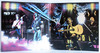
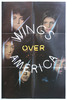
This year's premiere U.S. tour by Paul McCartney's post-Beatles group was one of the best-attended and best-put-together concert jaunts ever mounted. McCartney is one superstar who instinctively understands the importance of adding entertainment to live musical appearances, and his painstaking mixes of tapes made all along the tour represent the many original programming concepts in this show. The three disks are packaged in a clever split double-pocket jacket with a poster taking up the fourth compartment. Just about all the great songs written by McCartney either for the Beatles or Wings can be found here in intensely performed versions that cleverly take maximum advantage of the excitement of playing before big arena audiences. One unique bonus found on this LP is Wings guitarist Denny Laine, original singer of the Moody Blues performing that group's early hit "Go Now," which was only in the show at LA. But McCartney live with this well-honed group is an endless fascination. He remains the ultimate pop-rocker whether singing with his solo acoustic guitar, driving the group with his bass, rocking full-out with the travelling horn quartet or riffling off piano arpeggios for his haunting ballads. No LP in the future is likely to deliver us this much of McCartney in so many effective settings. Best cuts: "Jet," "Band On The Run," "Magneto & Titanium Man," "Silly Love Songs," "Let 'Em In," "Blackbird," "Yesterday," "Live And Let Die," "Lady Madonna," "Listen To What The Man Said," "Long And Winding Road ," "Hi Hi Hi," "Richard Cory."
(Billboard, 1976)

For such an expensive, three-record concert souvenir, made by an artist as commercially astute as Paul McCartney, a consumer-conscious review seems appropriate. The Wings fan with all the studio albums, for instance, may find Wings over America a legitimate alternative; excepting the single side of acoustic material, these performances are rawer and more driven than the original recordings and, in many cases, much the better for it. "Rock Show" is placed in its natural habitat; "Magneto and Titanium Man" becomes more sinewy and sinister; "Time to Hide" is reborn and simply wonderful. "Soily," the encore original, is a perfect climax, one of the best fast songs McCartney has written. In other words, there is probably enough novelty here to make Wings over America worth owning. From the above, non-Wings fans -- particularly those who find them wimpy -- can infer that this is as good and tough as you'll get this particular band.
On the debit side, the acoustic set is unremittingly maudlin. Many of Wings' mediocre songs -- "My Love," "Listen to What the Man Said," "Silly Love Songs" -- successfully resist transcending mediocrity.
There isn't much stage patter; crowd noise is kept at an unobtrusive but effective level; the cover painting compares favorably to a witty James Rosenquist, but the poster inside is downright cheesy. Caveat emptor.
(Ken Tucker, Rolling Stone, 2/10/77)

Wings Over America - Triple Live album, with Poster (pictures are included):
Wings over America is a live album by the band Wings, released in December 1976 on MPL Communications (in the US, it was released by MPL Communications and Capitol). In its initial release, it was a triple album and included a poster of the band, which reached number 8 in the UK charts and peaked at number 1 in the US. The cover was designed by Hipgnosis, and features a painting of an airliner about to open its cabin door.
Wings over America was another success for Wings, reaching number 1 in the US in early 1977 (the last in a 5-album stretch of consecutive number 1 albums for Wings) and number 8 in the UK. For the five Beatles songs included, McCartney elected to reverse the songwriting credit to McCartney?Lennon.

Linda McCartney - backing vocals, piano, keyboards, percussion

Denny Laine (ex Moody Blues) - lead vocals on "Spirits of Ancient Egypt", "Picasso's Last Words (Drink to Me)," "Richard Cory," "Time to Hide", and "Go Now" and backing vocals, acoustic, electric and bass guitars, piano, keyboards, percussion, harmonica

Jimmy McCulloch (ex Thunderclap Newman, Stone The Crows) - lead vocals on "Medicine Jar" and backing vocals; acoustic, electric and bass guitars 

Joe English - backing vocals, drums, percussion 

Tony Dorsey - trombone, percussion

Howie Casey - saxophone, percussion

Steve Howard - trumpet, flugelhorn, percussion

Thaddeus Richard - saxophone, clarinet, Western concert flute, percussion

01. A1 Venus And Mars - Rock Show - Jet (10:15)
02. A2 Let Me Roll It (03:44)
03. A3 Spirits Of Ancient Egypt (04:04)
04. A4 Medicine Jar (Jimmy McCulloch) (04:05)
05. B1 Maybe I'm Amazed (05:09)
06. B2 Call Me Back Again (05:24)
07. B3 Lady Madonna (02:37)
08. B4 The Long And Winding Road (04:26)
09. B5 Live And Let Die (03:31)
10. C1 Picasso's Last Words (Drink To Me) (01:57)
11. C2 Richard Cory (03:01)
12. C3 Bluebird (03:41)
13. C4 I've Just Seen A Face (02:07)
14. C5 Blackbird (02:32)
15. C6 Yesterday (02:22)
16. D1 You Gave Me The Answer (02:04)
17. D2 Magneto And Titanium Man (03:19)
18. D3 Go Now (03:43)
19. D4 My Love (04:18)
20. D5 Listen To What The Man Said (03:41)
21. E1 Let Em In (04:05)
22. E2 Time To Hide (Denny Laine) (04:58)
23. E3 Silly Love Songs (05:54)
24. E4 Beware My Love (05:12)
25. F1 Letting Go (04:35)
26. F2 Band On The Run (05:43)
27. F3 Hi, Hi, Hi (03:34)
28. F4 Soily (06:01)

imagebam.com imagebam.com imagebam.com imagebam.com imagebam.com imagebam.com imagebam.com imagebam.com imagebam.com

LP1

KatFile         TurboBit

LP2

KatFile         TurboBit

LP3

KatFile         TurboBit

Saturday, 19 December 2020

The Who - Meaty Beaty Big and Bouncy (1971) [Vinyl Rip]


Year: 1971 (LP 1971)
Label: Track Records (UK), 2406 006
Style: Rock
Country: London, England
Time: 43:41
Format: Flac Tracks 16/44,1 kHz
Size: 284 Mb

The overwhelming success of Tommy and Who's Next brought the Who a huge new army of fans, and many of them weren't around during their initial hit-making period in the 1960s. Also, many of their early classics ("I Can't Explain," "The Seeker," "Substitute") weren't available on any album. It was common practice in the 1960s for bands to churn out regular singles, leaving many of them off their albums. All of this made it perfectly logical to package up their early work on a single album and drop it in stores right in time for the Christmas buying season. The album was a big success. Many, many compilations followed, but this was the first.
(By Andy Greene. Rolling Sone magazine)

Matrix side 1: 2406006 A//1 11 8 PORKY, side2: 2406006 B//1 13 9 PECKO.

01. A1 I Can't Explain (02:06)
02. A2 The Kids Are Alright (02:47)
03. A3 Happy Jack (02:12)
04. A4 I Can See For Miles (04:08)
05. A5 Pictures Of Lily (02:44)
06. A6 My Generation (03:19)
07. A7 The Seeker (03:11)
08. B1 Anyway, Anyhow, Anywhere (02:43)
09. B2 Pinball Wizard (03:02)
10. B3 A Legal Matter (02:49)
11. B4 Boris The Spider (02:32)
12. B5 Magic Bus (04:30)
13. B6 Substitute (03:49)
14. B7 I'm A Boy (03:43)

imagebam.com imagebam.com imagebam.com imagebam.com imagebam.com

KatFile          TurboBit

Sunday, 13 December 2020

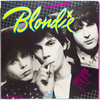
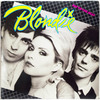
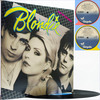
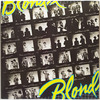
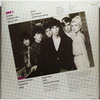
Blondie - Eat to the Beat (1979) [Vinyl Rip]


Year: 1979 (LP 1979)
Label: Chrysalis Records (UK), CDL 1225E
Style: Pop, New Wave
Country: New York City, U.S.
Time: 42:32
Format: Flac Tracks 16/44,1 kHz
Size: 295 Mb

Blondie has always been a band less concerned with weaving dreams than with critiquing them in order to emphasize the distance between desire and fulfillment. They pioneered a reverse-twist musical archivism that’s antiromantic rather than escapist: instead of digging for intact nuggets of nostalgia, Blondie went at pop tradition with a ball peen hammer, splintering and rearranging shards of the past according to an up-to-date aesthetic. Familiar fragments conjured up classic fantasies — a series of teen dreams and B movies, all of them starring Deborah Harry — while the pared-down context underscored their irrelevance. Singing like either a petulant baby doll or a Thorazined waif, Harry modeled pop images, then ripped them to shreds.
With each LP, Blondie has updated their musical mosaic by assimilating another chunk of pop history. Plastic Letters added touches of neopsychedelic electronics to the mock-girl-group sound of the band’s debut. The repackaging and refinements of last year’s Parallel Lines helped reduce Blondie’s we-know-better-now perspective from the larger-than-life campiness of their early work to a subtler, eyebrow-raised irony: a level of detachment perfectly calculated to let the group play it both ways with a discofied song like "Heart of Glass."
Smart, smirky and elating as those albums were, they had the unsatisfying feel of schoolwork turned in by a brilliant dilettante whose greatest effort went toward maintaining a stance of noncommittal, deathless cool that guarded against expectations while holding back energy for a future, more worthy challenge.
Alone among the bands that emerged from the mid-Seventies New York punk-club circuit, Blondie has always regarded success as necessary, well deserved and inevitable. You got the feeling that if Deborah Harry and Chris Stein didn’t become famous as rock stars, they’d gain fame as something else.
With Eat to the Beat, all that smug certainty has been vindicated. Faced with the challenge of following up the million-selling Parallel Lines, Blondie has delivered a record that’s not only ambitious in its range of styles, but also unexpectedly and vibrantly compelling without sacrificing any of the group’s urbane, modish humor. As if to distinguish Blondie from the pop revival they helped catalyze, Eat to the Beat subjugates melody to momentum: in their construction and in Mike Chapman’s dense, crystalline production, most of the tracks are organized around Clem Burke’s superb drumming. The new LP is — purposefully, I think — less overtly hooky than Parallel Lines, exchanging that album’s cool self-possession for an engaging neuroticism. If hooks are the small revelations of rock & roll, then the beat is its obsession.
Blondie’s obsession here is with dreams and distance — the band’s usual themes, now suddenly personalized by its own success. Like a comedian who outlasts and outclasses the subjects of his impressions, the group itself has become a pop image as powerful as any it can invoke. Blondie has invariably recognized the resonances that stardom has from without: Jimmy Destri’s "Fan Mail" on Plastic Letters captures perfectly the lightheaded devotion of hero-worship. Now they’re comparing perspectives. Without ever approaching a music-biz cliche, Eat to the Beat explores the nagging paradoxes of success — like the way it imposes distance between you and your surroundings, your memories and your dreams. Or the contrast between internal and external transformation, means and ends, recognition and risk taking.
"Dreaming" makes the keynote statement. Burke’s drums roll in and out like the inexorable pounding of breakers on the beach, nearly drowning out Stein’s twangy, Beatles-style guitar riff and the keening, insistent reiteration of the six-note refrain. Harry’s voice emerges in smooth peals, as if she’s found a place for herself beyond the waves:
Reel to reel is living rarity
People stop and stare at me
We just walk on by
We just keep on dreaming.
Holding private thought so dear raises the ante on fantasies: the dreams played out on Eat to the Beat are all high-stakes dramas. The throbbing, witty "The Hardest Part" weds — not for the first time — sexual and financial fantasy ("No short heist/No overnight/Big money/Take it to Brazil"), while "Union City Blue" evokes life-or-death romance. Mixed with the intertwined-guitars-and-keyboards density of "Dreaming," "Union City Blue" has the force of an incantation. Key words — power, passion — slip out with a resonant urgency. Harry’s finally using her sweet tones to create real emotional intensity.
Eat to the Beat shows off Deborah Harry’s increasing pleasure in her craft — the histrionic screeching of "Victor" must have been fun — as well as her incredible improvement as a stylist. (The record’s only dud is "Sound-a-Sleep," an insomniac’s lullaby with artificial crooning a la Doris Day.) It’s exhilarating to hear her give thematic depth to the contrast between "Shayla" and the title tune; her wordless, whippoorwill vocals in the former do more to convey the apotheosis of an ex-working girl (it could be Harry’s own story) than do all of Stein’s banal, "cosmic energy" lyrics. If "Shayla" is about arriving, the careening, jumping "Eat to the Beat" makes the route explicit — you travel to the top, toes tapping, by way of a lot of rock & roll street corners. Alternately petulant and gleeful, Harry flings lyrics around like a prizefighter.
In "Accidents Never Happen" and "Die Young Stay Pretty" (the latter a carousel reggae number with mock-steel-drum punctuation), the band enumerates constraining real-world pressures and expectations. In search of blessed predictability ("...in a perfect world/Complications disappear"), Blondie finds only the time clocks of mortality and the media. With "Atomic," meanwhile, they deflect some of these expectations by going the steely irony of "Heart of Glass" one better. By uniting a Ventures guitar line, a pulsing Eurodisco synthesizer and cascading female harmonies with some deliberately facile lyrics ("Your hair is beautiful.../Atomic me tonight"), the group smoothly rewrites sexual cliches.
(Rolling Stone. Magazine. By Debra Rae Cohen. November 30, 1983 5:00AM ET)

01. A1 Dreaming (03:04)
02. A2 The Hardest Part (03:39)
03. A3 Union City Blue (03:19)
04. A4 Shayla (03:53)
05. A5 Eat To The Beat (02:39)
06. A6 Accidents Never Happen (04:10)
07. B1 Die Young Stay Pretty (03:31)
08. B2 Slow Motion (03:26)
09. B3 Atomic (04:37)
10. B4 Sound-A-Sleep (04:14)
11. B5 Victor (03:16)
12. B6 Living In The Real World (02:40)

imagebam.com imagebam.com imagebam.com imagebam.com imagebam.com imagebam.com

KatFile          TurboBit

Saturday, 12 December 2020

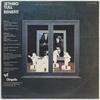
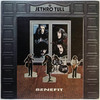
Jethro Tull - Benefit (1970) [Vinyl Rip]


Year: 1970 (LP 1970)
Label: Chrysalis Records (UK), ILPS 9123
Style: Rock, Art-Rock
Country: Blackpool, Lancashire, England
Time: 41:56
Format: Flac Tracks 16/44,1 kHz
Size: 263 Mb

Rolling Stone (magazine). By Jack Shadoian. August 6, 1970 4:00AM ET.
The popularity of Jethro Tull continues to amaze me, They draw good crowds, they get lengthy interviews and writeups in the rock press. They turn people on. I’ve got to think that Ian Anderson must be an extremely nice, cooperative, charismatic, or some such kind of cat, because I find his records pretty lame and dumb.
The new album, Benefit, is a sluggish bore — a kind of Anthology of Rock Muzak, performed dispiritedly and mechanically. Especially rhythm — each track creaks stiffly, but given the barren, derivative material Anderson has come up with, the wooden delivery is understandable. His idea of a song is to get some inexpressibly commonplace snippet of melody, repeat it, affix an inane riff or two, and let the boys pound it out — with some occasional and usually ill-advised chirping flute for "texture." To top it all, I find his singing (this time around) close to vile. But it’s the cold, noisy, insensitive execution of the music (however vapid in and of itself) that provides the true and irremediable pall.
So who needs it? Lots of people, it seems. Has it come to pass that the rock audience is so jaded that a minute or two of flaccid "jazz" and some penurious gestures towards the "exotic" can effectively disguise blatant mediocrity?

01. A1 With You There To Help Me (06:15)
02. A2 Nothing To Say (05:11)
03. A3 Alive And Well And Living In (02:47)
04. A4 Son (02:50)
05. A5 For Michael Collins, Jeffrey And Me (03:46)
06. B1 To Cry You A Song (06:12)
07. B2 A Time For Everything (02:44)
08. B3 Inside (03:46)
09. B4 Play In Time (03:47)
10. B5 Sossity - You're A Woman (04:33)

imagebam.com imagebam.com imagebam.com imagebam.com

KatFile          TurboBit

Sunday, 6 December 2020

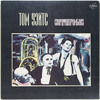
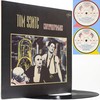
Tom Waits - Swordfishtrombones (1983) [Vinyl Rip]

Year: 1983 (LP 1991)
Label: Antrop Records (USSR), Рџ91 00085
Style: Pub Rock, Rock
Country: December 7, 1949 Pomona, California, U.S.
Time: 41:56
Format: Flac Tracks 16/44,1 kHz
Size: 232 Mb

Tom Waits, in full Thomas Alan Waits, (born December 7, 1949, Pomona, California, U.S.), American singer-songwriter and actor whose gritty, sometimes romantic depictions of the lives of the urban underclass won him a loyal if limited following and the admiration of critics and prominent musicians who performed and recorded his songs.
Born into a middle-class California family but enamoured of the bohemian lifestyle depicted in Beat literature, Waits lived in his car and in seedy Los Angeles hotels as he embarked on his career. His raspy vocals, delivered in his signature growl, evoked the late-night atmosphere of the smoky clubs in which he first performed in the late 1960s. Drawing on jazz, blues, pop, and avant-garde rock music, he combined offbeat orchestrations with his own piano and guitar playing and stream-of-consciousness lyrics that reflected the influence of writers Jack Kerouac and Charles Bukowski.
Although Waits’s albums found considerable commercial success in Britain beginning in the mid-1980s, even his best-selling albums—Small Change (1976) and Heartattack and Vine (1980)—failed to crack the American Top 40. His songs, however, have been recorded by the Eagles (“Ol’ 55”), Bruce Springsteen (“Jersey Girl”), and Rod Stewart (“Downtown Train”). He also scored films, cowrote the stage musical Frank’s Wild Years (which premiered in 1986), and collaborated with writer William S. Burroughs and theatre director Robert Wilson on another musical, The Black Rider (1990). Waits’s 1992 release Bone Machine, typical of his increasingly experimental musical efforts in the 1990s, won a Grammy Award for best alternative music album. His 1999 album, Mule Variations, was also much praised and took the Grammy for best contemporary folk album.
Later albums included Blood Money (2002), Alice (2002), Real Gone (2004), and Orphans: Brawlers, Bawlers, and Bastards (2006), a sprawling collection of 56 songs. In 2009 Waits released Glitter and Doom, a series of live recordings from his 2008 concert tour. Waits’s first studio release since 2004, Bad as Me (2011), a collection of blues-tinged, whiskey-soaked love songs, was greeted with wide critical acclaim. He was inducted into the Rock and Roll Hall of Fame in 2011.
The theatrical posturing of Waits’s live performances led in the 1980s to an alternate career as a film actor, notably in Down by Law (1986). He made further appearances in Dracula (1992), Mystery Men (1999), Coffee and Cigarettes (2003), and Domino (2005). His saturnine features and gravelly voice perfectly suited him to Mephistophelian roles, and he deployed these attributes to memorable effect as one of the “people in charge” of purgatory in Wristcutters: A Love Story (2006) and as the Devil himself in The Imaginarium of Doctor Parnassus (2009). Waits later appeared in The Old Man & the Gun, about a real-life group of bank robbers known as the Over-the-Hill Gang, and The Ballad of Buster Scruggs (both 2018), the Coen brothers’ ode to the Old West. He was then cast in the zombie movie The Dead Don’t Die (2019).
(Encyclopaedia Britannica, Last Updated: Dec 3, 2020)

01. A1 Underground (02:02)
02. A2 Shore Leave (04:19)
03. A3 Johnsburg Illinois (01:36)
04. A4 16 Shells From A Thirty-Ought-Six (04:33)
05. A5 Town With No Cheer (04:29)
06. A6 In The Neighborhood (03:08)
07. A7 Just Another Sucker On The Vine (Instrumental) (01:45)
08. B1 Frank's Wild Years (01:54)
09. B2 Swordfishtrombone (03:09)
10. B3 Down, Down, Down (02:17)
11. B4 Dave The Butcher (Instrumental) (02:22)
12. B5 Soldier's Things (03:20)
13. B6 Gin Soaked Boy (02:27)
14. B7 Trouble's Braids (01:22)
15. B8 Rainbirds (Instrumental) (03:08)

imagebam.com imagebam.com imagebam.com imagebam.com imagebam.com

KatFile          TurboBit

Friday, 4 December 2020

Small Faces - The Autumn Stone (1969) (Double LP) [Vinyl Rip]


Year: 1969 (LP 1977)
Label: Charly Records, Bellaphon Records (Germany), CR 3009
Style: Classic Rock, Rock
Country: London, England, United Kingdom
Time: 38:23, 26:25
Format: Flac Tracks 16/44,1 kHz
Size: 225, 163 Mb

Steve Marriott (next Humble Pie, 30 January 1947 – 20 April 1991) - vocals, guitar, harmonica
Ronnie Lane (ex Faces, 1 April 1946 – 4 June 1997) - vocals, guitar, bass guitar
Kenney Jones (ex Faces, next The Who) - drums
Ian McLagan (next Rolling Stones, 12 May 1945 – 3 December 2014) - keyboards, guitar, bass guitar, vocals
Jimmy Winston (next musical "Hair", television programme "Doctor Who", "serial Day of the Daleks", 20 April 1945) - vocals, keyboards

Whether you liked them better Mod or with Rod, both incarnations of The Small Faces/The Faces have gotten their Rock Hall due as British Invasion visionaries.
The Small Faces had but one Top 20 hit in the USA — the 1967 single "Itchycoo Park," which reached No. 16 in 1968. And the group’s highest-charting U.S. album was the 1968 classic "Ogdens’ Nut Gone Flake," which peaked at No. 159 in 1968. But following the announcement of the group’s induction into the Rock & Roll Hall of Fame, the Rock Hall’s website stressed that these "visionary mods … were creative peers and commercial equals of The Beatles, The Who and The Rolling Stones" and cited the group as an influence "on artists like The Black Crowes, The Jam’s Paul Weller, The Replacements and Oasis."
The Small Faces’ story was only one chapter for the band. Rechristened as The Faces in the 1970s, the lineup at times featured solo star Rod Stewart, future Rolling Stone Ron Wood and former Wings man Jimmy McCulloch. There were a few more hits in that decade as well, although both versions of the band always enjoyed more success in their native England.
The original group came together in 1965, when Steve Marriott met Ronnie Lane at the J60 Music Bar in London, where Marriott was working. Marriott got his start in show business in the stage musical "Oliver!" and subsequently pursued an acting career before going into music, releasing a solo single and becoming a member of London band The Moments.
Marriott had seen Lane when The Moments shared the bill with Lane’s band, The Outcasts. The two struck up a conversation, then went back to Marriott’s house to listen to records. Lane, a bassist, invited Marriott, who played guitar, to jam with his current band, The Pioneers, who had a residency at a local pub. Marriott ended up getting so drunk, he smashed the pub’s piano, and The Pioneers lost their residency. But, Lane found a new musical partner. Lane then brought Pioneers’ drummer Kenney Jones on board, and Marriott brought in a friend from his acting days, Jimmy Winston (real name Jimmy Langwith) on keyboards. The Small Faces were born.
Langwith wasn’t the strongest keyboardist, but he had something else of value to the budding group: His parents owned a pub where the band could rehearse, and his brother owned a van to drive them to gigs. A female friend of Marriott’s helped him buy an amplifier and suggested the name The Small Faces, which Marriott liked for its play on words. Everyone in the group was short, and "face" was mod slang. "The term ‘Face’ was a top mod, a face about town, a respected chap!" Marriott explained. ...
(www.goldminemag.com/articles/the-small-faces-story-was-just-one-chapter-for-the-band)

 Matrix: CR 3009 A, CR 3009 B-2, CR 3009 C, CR 3009 D

LP1

01. A1 Here Come The Nice (03:00)
02. A2 The Autumn Stone (03:58)
03. A3 Collibosher (03:12)
04. A4 All Or Nothing (03:02)
05. A5 Red Balloon (04:12)
06. A6 Lazy Sunday (03:02)
07. B1 Rollin Over (02:24)
08. B2 If I Were A Carpenter (02:15)
09. B3 Every Little Bit Hurts (06:37)
10. B4 My Mind's Eye (02:01)
11. B5 Tin Soldier (03:21)
12. B6 Just Passing (01:12)

LP2

01. C1 Call It Something Nice (02:03)
02. C2 I Can't Make It (02:06)
03. C3 Afterglow Of Your Love (03:33)
04. C4 Sha La La La Lee (02:54)
05. C5 The Universal (02:40)
06. D1 Itchycoo Park (02:49)
07. D2 Hey Girl (02:14)
08. D3 Wide Eyed Girl On The Wall (02:46)
09. D4 Whacha Gonna Do About It (01:59)
10. D5 Wham Bam Thank You Mam (03:18)

imagebam.com imagebam.com imagebam.com imagebam.com imagebam.com imagebam.com 

LP1

KatFile          TurboBit          UploadRar          Up-4ever                                              

LP2

KatFile          TurboBit          UploadRar          Up-4ever

Thursday, 3 December 2020

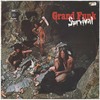
Grand Funk Railroad - Survival (1971) [Vinyl Rip]


Year: April 1971 (LP 1971)

Label: Capitol Records (USA), SW-764

Style: Hard Rock

Country: Flint, Michigan, United States

Time: 41:02

Format: Flac Tracks 16/44,1 kHz

Size: 268 Mb

Survival is Grand Funk Railroad's fourth studio album and was released in April 1971 by Capitol Records. It was produced by Terry Knight. Drummer Don Brewer was never happy with the drum sound on the album, due to Knight's insistence of having Brewer cover his drum heads with tea-towels, after seeing Ringo Starr using that technique in the Beatles' film Let It Be (1970). (Wikipedia)

Album Charts:
Billboard 200 - #6
Australia - #9
Canada - #4

Singles Charts:
"Feelin' Alright" - Billboard Hot 100 #54, Canada - #20
"Gimme Shelter" - Billboard Hot 100 #6, Canada - #49, Germany - #42

01. A1 Country Road (04:23)
02. A2 All You've Got Is Money (05:17)
03. A3 Comfort Me (06:50)
04. A4 Feelin' Allright (04:28)
05. B1 I Want Freedom (06:20)
06. B2 I Can Feel Him In The Morning (07:18)
07. B3 Gimme Shelter (06:23)

imagebam.com imagebam.com imagebam.com imagebam.com 
KatFile       TurboBit