Saturday, 11 December 2021

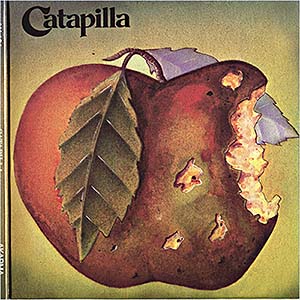
Catapilla - Catapilla (1971)

Year: 1971 (CD 2000)
Label: Akarma Records (Italy), AK 131
Style: Progressive Rock, Rock
Country: London, England
Time: 49:32
Format: Flac Tracks 16/44,1 kHz
Size: 288 Mb

The band was formed in 1970 in London, England. The original lineup consisted of saxophonists Robert Calvert and Hugh Eaglestone, drummer Malcolm Frith, bassist Dave Taylor, guitarist Graham Wilson, woodwinds player Thierry Rheinhardt, and vocalist Jo Meek. Jo Meek's time with the band was brief; she was replaced by her sister Anna by the time of the band's earliest live performances.
The band was discovered by Cliff Cooper of the Orange Music Electronic Company, who took on managing Catapilla and arranged for them to appear in a showcase event in front of an invited audience of music industry figures. Among them was Patrick Meehan, manager of Black Sabbath, who was sufficiently impressed to get Catapilla a recording contract with Vertigo Records. Meehan produced their first, eponymous album, released on Vertigo in late 1971. Following this release, the band set off on a Vertigo-sponsored tour of the UK, supporting Graham Bond and Roy Harper, which failed to earn them mainstream public recognition.
Following the tour, Eaglestone, Frith, Rheinhardt, and Taylor all left the band. The remnants of Catapilla reformed the group with the additions of Bryan Hanson (drums), Ralph Rolinson (keyboards) and Carl Wassard (bass), and returned to the studio to record their second album, Changes. It was released in 1972, again on Vertigo. The group disbanded shortly after the album's release.
Calvert went on to play in Gong off-shoots, The Invisible Opera Company Of Tibet and Mother Gong with Daevid Allen and Gilli Smyth. Taylor formed the band Liar with Clive Brooks, ex-drummer with Egg.
(en.wikipedia.org/wiki/Catapilla#Discography)

01. Naked Death (15:42)
02. Tumbleweed (03:58)
03. Promises (05:43)
04. Embryonic Fusion (24:08)

Catapilla-71-front Catapilla-71-inner-1 Catapilla-71-inner-2 Catapilla-71-inside

KatFile                TurboBit                GigaPeta

Gary Moore - Victims Of The Future (Japan Edition) (1983)

Year: December 1983 (CD March 17, 1986)
Label: Virgin Records (Japan), 32VD-1009
Style: Hard Rock, Rock
Country: Belfast, Northern Ireland (4 April 1952 - 6 February 2011)
Time: 43:28
Format: Flac Tracks 16/44,1 kHz
Size: 312 Mb

Victims of the Future is the fourth solo studio album by Northern Irish guitarist Gary Moore, released in 1983. It was the first album to feature former UFO guitarist/keyboardist Neil Carter and bassist Bob Daisley. It was also the last to feature bassist Neil Murray, who rejoined Whitesnake, and drummer Ian Paice, who rejoined the reformed Deep Purple in 1984.
Continuing Moore's path in the hard rock genre, Victims of the Future is a collection of straight-out rock n' roll anthems (such as "Teenage Idol" and "Hold On to Love"), a mournful love ballad ("Empty Rooms", which was later re-recorded by Moore for his 1985 album Run for Cover), a cover of the Yardbirds' "Shapes of Things", and two darker songs, featuring social and political commentary: "Victims of the Future" and "Murder in the Skies", the latter a protest against the Soviet Union's shooting down of Korean Air Lines Flight 007.
The album was released in North America with a different cover and altered content. The guitar solo intro to "Murder in the Skies" was removed, and "Devil in Her Heart", a single B-side, was added. "All I Want", omitted from the LP, was included as a bonus track on the cassette version.
Moore later dismissed Victims of the Future as "just one of my feeble attempts at heavy rock".
(en.wikipedia.org/wiki/Victims_of_the_Future)

01. Shapes Of Things (06:13)
02. Hold On To Love (04:07)
03. Murder In The Skies (04:14)
04. Empty Rooms (06:36)
05. Victims Of The Future (07:17)
06. Teenage Idol (04:17)
07. Devil In Her Heart (04:27)
08. Law Of The Jungle (06:15)

Gary-Moore83-Victims-back Gary-Moore83-Victims-in-a Gary-Moore83-Victims-obi

KatFile               TurboBit                 GigaPeta

Spock's Beard - The Light (1995)

Year: January 1995 (CD 1998)
Label: Metal Blade Records (US), 3984-14181-2
Style: Progressive Rock, Rock
Country: Los Angeles, California, U.S.
Time: 57:05
Format: Flac Tracks 16/44,1 kHz
Size: 349 Mb

The Light is the 1995 debut album by American progressive rock band Spock's Beard. The album features two different covers—one for its domestic release, and one for its European release. "The Light" has since become Spock's Beard's signature song.
Spock's Beard is an American progressive rock band formed in Los Angeles.
The band was formed in 1992 by brothers Neal (lead vocals, keyboards) and Alan Morse (vocals, guitars), John Ballard (bass) and Nick D'Virgilio (drums). Ballard was replaced by Dave Meros before the release of their debut album, The Light (1995), and Ryo Okumoto (keyboards) joined soon after. Neal Morse left the band following the release of their sixth album, Snow (2002), and D'Virgilio took over as the band's frontman. In 2011, D'Virgilio also left and was replaced by Jimmy Keegan (drums) and Ted Leonard (lead vocals) from Brief Nocturnes and Dreamless Sleep (2013) onwards. To date, the band have released thirteen studio albums, and numerous live releases.
The band, particularly the Neal Morse line-up, are considered to be at the forefront of modern progressive rock music. Four of their first six albums featured in the Prog Report's "Top 50 Prog Albums 1990–2015", with The Light and Snow featuring in the top ten.
(en.wikipedia.org/wiki/Spock%27s_Beard)

01. The Light (15:33)
02. Go The Way You Go (12:07)
03. The Water (23:10)
04. On The Edge (06:14)

Spocks-Beard95-The-Light-1 Spocks-Beard95-The-Light-4 Spocks-Beard95-The-Light-back

KatFile               TurboBit                 GigaPeta

Friday, 10 December 2021

Stevie Nicks (Fleetwood Mac) - The Other Side Of The Mirror [VinylRip] (1989)

Year: 1989 (LP 1990)
Label: His Master's Voice (India), EMD 1008
Style: Pop, Soft Rock
Country: Phoenix, Arizona, U.S.  (May 26, 1948)
Time: 55:21
Format: Flac Tracks 16/44,1 kHz
Size: 376 Mb

Deep Dive: Stevie Nicks, THE OTHER SIDE OF THE MIRROR.
30 years ago this month, Stevie Nicks released her fourth studio album, and this weekend Stevie Nicks celebrates another birthday, so between these two notable dates, we thought we’d take a deep dive and remind you that – even though it doesn’t necessarily have the stature of LPs like BELLA DONNA or THE WILD HEART – there’s still much to be discovered on THE OTHER SIDE OF THE MIRROR.
Produced by Rupert Hine, THE OTHER SIDE OF THE MIRROR emerged more or less on the heels of Fleetwood Mac’s TANGO IN THE NIGHT, and as the first member of the band to deliver a solo album after that multiplatinum-selling LP, it was reasonable to presume that Nicks was destined to reap additional success from a now-heightened profile. That presumption proved to be an accurate one, with her album climbing to #3 on the UK Albums chart, the highest she’d ever gotten with a solo LP. In addition, the album’s first single, “Rooms on Fire,” became her first UK top-40 hit: the song hit #16, which – by coincidence – is also how high it reached on the Billboard Hot 100.
Nicks released two additional singles from the album, “Long Way to Go” and “Whole Lotta Trouble,” which hit #60 and #62 in the UK, respectively. Neither, however, charted in America, but what was more surprising was that there was still another single that didn’t chart (“Two Kinds of Love”), despite the fact that it featured guest appearances from two highly recognizable names: Bruce Hornsby and Kenny G.
The era of this album was a tough time for Nicks, who was dealing with some long-since-conquered matters of a pharmaceutical nature, but the LP is one within her solo discography which remains underrated. Not by her diehard fans, of course, because their love is unconditional, as well it should be. But if you’re more of a casual fan and you only know “Rooms on Fire,” then you should take a sonic trip and visit THE OTHER SIDE OF THE MIRROR.
(rhino.com/article/deep-dive-stevie-nicks-the-other-side-of-the-mirror)

01. A1 Rooms On Fire (04:30)
02. A2 Long Way To Go (04:03)
03. A3 Two Kinds Of Love (04:35)
04. A4 Ooh My Love (04:54)
05. A5 Ghosts (04:41)
06. A6 Whole Lotta Trouble (04:50)
07. B1 Fire Burning (03:18)
08. B2 Cry Wolf (04:11)
09. B3 Alice (05:46)
10. B4 Juliet (04:46)
11. B5 Doing The Best I Can (Escape From Berlin) (05:33)
12. B6 I Still Miss Someone (Blue Eyes) (04:08)

Stevie-Nicks89-The-Other-Side-back Stevie-Nicks89-The-Other-Side-front Stevie-Nicks89-The-Other-Side-label-1-2

KatFile              TurboBit                  GigaPeta

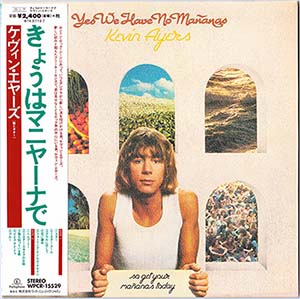
Kevin Ayers - Yes We Have No Mananas [Japan Edition] (1976)

Year: June 1976 (CD March 12, 2014)
Label: Parlophone Records (Japan), WPCR-15529
Style: Rock, Alternative Rock
Country: Kent, England (16 August 1944 - 18 February 2013)
Time: 73:12
Format: Flac Tracks 16/44,1 kHz
Size: 460 Mb

Kevin Ayers (16 August 1944 – 18 February 2013) was an English singer-songwriter who was active in the English psychedelic music movement. Ayers was a founding member of the psychedelic band Soft Machine in the mid-1960s, and was closely associated with the Canterbury scene.[2] He recorded a series of albums as a solo artist and over the years worked with Brian Eno, Syd Barrett, Bridget St John, John Cale, Elton John, Robert Wyatt, Andy Summers, Mike Oldfield, Nico and Ollie Halsall, among others. After living for many years in Deia, Majorca, he returned to the United Kingdom in the mid-1990s before moving to the south of France. His last album, The Unfairground, was released in 2007.[3] The British rock journalist Nick Kent wrote: "Kevin Ayers and Syd Barrett were the two most important people in British pop music. Everything that came after came from them.
Producer Muff Winwood employed a straightforward pop production that clipped some of Ayers' usual eccentricities from the tapes. The band comprised Rob Townsend from Family on drums, Taste's Charlie McCracken on bass, B.J. Cole's steel guitar and Ollie Halsall's guitar.
(en.wikipedia.org/wiki/Kevin_Ayers)

01. Star (04:21)
02. Mr. Cool (03:03)
03. The Owl (03:17)
04. Love's Gonna Turn You Round (04:52)
05. Falling In Love Again (02:38)
06. Help Me (02:42)
07. Ballad Of Mr. Snake (02:07)
08. Everyone Knows The Song (02:34)
09. Yes I Do (03:13)
10. Blue (06:33)
11. Mr. Cool (BBC John Peel Show) (03:01)
12. Love's Gonna Turn You Round (BBC John Peel Show) (04:44)
13. Star (BBC John Peel Show) (04:42)
14. Ballad Of Mr. Snake (BBC John Peel Show) (02:23)
15. Shouting In A Bucket Blues (BBC In Concert) (05:26)
16. Star (BBC In Concert) (04:40)
17. Mr. Cool (BBC In Concert) (03:44)
18. Ballad Of Mr. Snake (BBC In Concert) (02:39)
19. Blue (BBC In Concert) (06:24)

Kevin-Ayers76-Yes-We-Have-back Kevin-Ayers76-Yes-We-Have-front Kevin-Ayers76-Yes-We-Have-sleeve-0001

KatFile               TurboBit                GigaPeta

Hawkwind - Warrior on the Edge of Time (1975)

Year: 9 May 1975 (CD November 8, 1993)
Label: Griffin Music (US), 55421 3931-2
Style: Rock, Progressive Rock
Country: Ladbroke Grove, London, England
Time: 47:49
Format: Flac Tracks 16/44,1 kHz
Size: 320 Mb

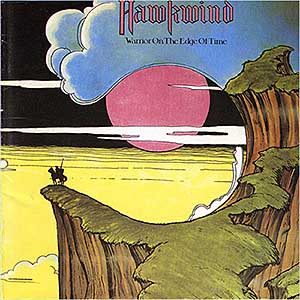
Warrior on the Edge of Time is the fifth studio album by the English rock band Hawkwind. Many of the lyrics are by Michael Moorcock, and the album is loosely based on the concept of Moorcock's novel The Eternal Champion. It was the band's highest-charting album on the UK Albums Chart, where it peaked at number 13, and was their third and last album to make the U.S. Billboard chart, where it peaked at number 150. Reviews have been mixed, with Melody Maker panning the album and particularly criticizing the vocal work while the All Music Guide has praised the album for features such as the songwriting. This would also be the last album to feature the band's bassist Ian "Lemmy" Kilmister, who was fired from the band one day before the album's release.
The original album sleeve unfolds into a large shield-shape, revealing that the silhouetted Warrior is standing at the edge of an apparently bottomless chasm. The landscape on the other side of the chasm is a mirror image, with another setting sun, a closer inspection of this entire image reveals a helmeted face. The reverse of the cover depicts a bronze shield bearing the 8-rayed emblem of Chaos, as described in Moorcock's books.
(en.wikipedia.org/wiki/Warrior_on_the_Edge_of_Time)

01. Assault & Battery Part I (05:36)
02. The Golden Void Part II (04:37)
03. The Wizard Blew His Horn (01:57)
04. Opa-Loka (05:12)
05. The Demented Man (03:57)
06. Magnu (08:22)
07. Standing at the Edge (02:40)
08. Spiral Galaxy 28948 (03:46)
09. Warriors (01:58)
10. Dying Seas (03:05)
11. Kings of Speed (03:32)
12. Motorhead (03:02)


KatFile               TurboBit                GigaPeta

Sunday, 5 December 2021

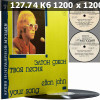
Elton John - Your Song (Compilation 1969-1971) [Vinyl Rip] (1987)

Year: 1987 (LP 1988)
Label: Melodia Records (Russia), C10 26031 002
Style: Rock, Piano Rock
Country: Middlesex, England (25 March 1947)
Time: 43:01
Format: Flac Tracks 16/44,1 kHz
Size: 255 Mb

Once famous for his flashy clothes and string of hit records, English rock musician Elton John has more recently become a humanitarian (one who works to promote human welfare) with a particular interest in supporting acquired immune deficiency syndrome (AIDS; a disease that destroys the body's ability to fight infection) charities.
Early life:
Elton John was born Reginald Kenneth Dwight on March 25, 1947, in the town of Pinner in Middlesex, England. An only child who was overweight and wore glasses, he was afraid of his father, a squadron leader (a ranking officer) with the Royal Air Force, whom he described as "very snobbish and sort of stiff." His mother Sheila, on the other hand, brought home records that introduced him to rock music. John taught himself to play the piano at the age of four. He studied at the London Academy of Music but quit two weeks before graduation to pursue a musical career. He worked for a music publishing company and also played the piano in bars, later joining a band called Bluesology. He created his stage name as a combination of the middle name of Bluesology's singer, Long John Baldry, and the first name of the saxophone player, Elton Dean. Later in his life, John added the middle name Hercules.
Recording career begins:
In 1968 John met Bernie Taupin (1950?), who became his long-term song-writing partner. John's first album, Empty Sky (1969), was a commercial failure. His second album contained "Your Song," a hit in both the United States and England. In 1972 "Rocket Man" became his first number-one single in America. Other hits followed, including "Daniel" and "Crocodile Rock" from the album Don't Shoot Me, I'm Only the Piano Player. The album Goodbye Yellow Brick Road (1973) contained "Candle in the Wind," written about actress Marilyn Monroe (1926?1962). That same year, John launched his own record label, Rocket Records.
John became famous for his oversize glasses and outrageous outfits. He was called the "Queen Mum of Pop." He also enjoyed many expensive cars, large homes, and shopping sprees. In 1975 he starred as the Pinball Wizard in the film version of the rock opera Tommy. In 1976 a duet with Kiki Dee, "Don't Go Breaking My Heart," became his first British number-one single. His popularity then began to decline after a series of less successful albums. Admitting that he was attracted to both men and women further damaged his popularity, and he began abusing alcohol and drugs.
Although John continued performing during the 1980s, his drug and drinking problems had caused him to lose his magic touch. While recording Too Low for Zero in 1983, John met Renate Blauel, a German-born, recording-studio worker. They were married on Valentine's Day (February 14) 1984. The British press attacked both the marriage and John, focusing on his sexual history. After less than five years, the couple agreed to divorce.
Decides to help others:
In the early 1990s John received treatment for alcoholism, drug abuse, and bulimia (an eating disorder). He admitted he was a homosexual (a man attracted to other men) and began to devote his energies toward helping others. Starting in 1990 he donated all of the profits from the sales of his singles to charity, mostly those associated with AIDS. In 1992 he established the Elton John AIDS Foundation. In 1994 he was elected to the Rock and Roll Hall of Fame, and in 1995 he won an Academy Award.
In 1997 John was shaken by the death of his friend, Diana, Princess of Wales (1961?1997), in a car accident. John performed a new version of "Candle in the Wind" at her funeral. It sold more than thirty million copies after being released as a sigle. John donated all of the profits (more than $47 million) to the charity established in Diana's name. He was knighted by Queen Elizabeth II (1926?) for his achievements in music and contributions to charity.
Honors and awards:
In 2000 the National Academy of Recording Arts and Sciences honored John as Person of the Year for his charity work. Later that year, John and lyric writer Tim Rice wrote songs for the Broadway musical Aida (which won a Tony award) and the film The Road to El Dorado. John also sued the accounting firm (a company paid to verify and calculate business dealings) PriceWaterhouseCoopers and his former manager for $29 million, claiming they had stolen money from him.
John won a Grammy Award for best musical show album for Elton John and Tim Rice's Aida in February 2001. At the award show he performed with rap artist Eminem (1972?), angering homosexual rights leaders who had criticized Eminem for his antigay lyrics. Later that year John released Songs from the West Coast, which many praised as a return to his "1970s sound."
(www.notablebiographies.com)

01. A1 Your Song (04:03)
02. A2 Son Of Your Father (03:51)
03. A3 Where To Now, St Peter (04:15)
04. A4 Talking Old Soldiers (04:09)
05. A5 Ballad Of A Well-Known Gun (04:57)
06. B1 Border Song (03:24)
07. B2 Tiny Dancer (06:20)
08. B3 Country Comfort (05:10)
09. B4 Amoreena (05:00)
10. B5 Good-Bye (01:48)


KatFile               GigaPeta
Elton John - Honky Cat (Compilation 1971-1972) [Vinyl Rip] (1987)

Year: 1987 (LP 1988)
Label: Melodia Records (Russia), C60 26123 006
Style: Pop, Piano Rock
Country: Middlesex, England (25 March 1947)
Time: 39:21
Format: Flac Tracks 16/44,1 kHz
Size: 265 Mb
Early life:
Elton John was born Reginald Kenneth Dwight on March 25, 1947, in the town of Pinner in Middlesex, England. An only child who was overweight and wore glasses, he was afraid of his father, a squadron leader (a ranking officer) with the Royal Air Force, whom he described as "very snobbish and sort of stiff." His mother Sheila, on the other hand, brought home records that introduced him to rock music. John taught himself to play the piano at the age of four. He studied at the London Academy of Music but quit two weeks before graduation to pursue a musical career. He worked for a music publishing company and also played the piano in bars, later joining a band called Bluesology. He created his stage name as a combination of the middle name of Bluesology's singer, Long John Baldry, and the first name of the saxophone player, Elton Dean. Later in his life, John added the middle name Hercules.
Recording career begins:
In 1968 John met Bernie Taupin (1950–), who became his long-term song-writing partner. John's first album, Empty Sky (1969), was a commercial failure. His second album contained "Your Song," a hit in both the United States and England. In 1972 "Rocket Man" became his first number-one single in America. Other hits followed, including "Daniel" and "Crocodile Rock" from the album Don't Shoot Me, I'm Only the Piano Player. The album Goodbye Yellow Brick Road (1973) contained "Candle in the Wind," written about actress Marilyn Monroe (1926–1962). That same year, John launched his own record label, Rocket Records.
John became famous for his oversize glasses and outrageous outfits. He was called the "Queen Mum of Pop." He also enjoyed many expensive cars, large homes, and shopping sprees. In 1975 he starred as the Pinball Wizard in the film version of the rock opera Tommy. In 1976 a duet with Kiki Dee, "Don't Go Breaking My Heart," became his first British number-one single. His popularity then began to decline after a series of less successful albums. Admitting that he was attracted to both men and women further damaged his popularity, and he began abusing alcohol and drugs.
Although John continued performing during the 1980s, his drug and drinking problems had caused him to lose his magic touch. While recording Too Low for Zero in 1983, John met Renate Blauel, a German-born, recording-studio worker. They were married on Valentine's Day (February 14) 1984. The British press attacked both the marriage and John, focusing on his sexual history. After less than five years, the couple agreed to divorce.
(notablebiographies.com/Ho-Jo/John-Elton.html)

01. A1 Levon (05:27)
02. A2 Razor Face (04:47)
03. A3 All The Nasties (05:10)
04. A4 Daniel (03:53)
05. B1 Madman Across The Water (06:03)
06. B2 Rocket Man (04:44)
07. B3 Honky Cat (05:16)
08. B4 Crocodile Rock (03:57)

Elton-John87-Honky-Cat-back Elton-John87-Honky-Cat-front Elton-John87-Honky-Cat-front-LP Elton-John87-Honky-Cat-LP Elton-John87-Honky-Cat-Spectrogram

KatFile              TurboBit               GigaPeta

Saturday, 4 December 2021

Eric Burdon & The Animals - Every One of Us (Japan Edition) (1968)

Year: August 1968 (CD 2013)
Label: Universal Records (Japan), SE-4553
Style: Rhythm and Blues, Rock
Country: Newcastle upon Tyne, England
Time: 49:37
Format: Flac Tracks 16/44,1 kHz
Size: 290 Mb

Every One of Us was the second of three albums released by the band in the United States in that year (the album was not released in the United Kingdom). The single from the album was "White Houses", which charted in the United States and Canada. The album combines several styles such as blues, folk rock, and raga rock, while the track "Year of the Guru" is notable for its early use of rapping vocals. The album was described by reviewer Bruce Eder of Allmusic as "a good psychedelic blues album, filled with excellent musicianship."
At the time of the release of the album in August 1968, both Danny McCulloch and Vic Briggs had been fired from the band earlier that summer, and Eric Burdon was seeking replacement musicians. Unlike the previous two albums, involving shared songwriting credits with band members, Every One of Us is primarily compositions solely credited to Eric Burdon.
(en.wikipedia.org/wiki/Every_One_of_Us)

01. White Houses (03:55)
02. Uppers And Downers (00:28)
03. Serenade To A Sweet Lady (06:18)
04. The Immigrant Lad (06:19)
05. Year Of The Guru (05:28)
06. St. James Infirmary (05:06)
07. New York 1963 - America 1968 (18:56)
08. White House (Single Version) (03:03)

Every-One-Of-Us-Back Every-One-Of-Us-Booklet-01 Every-One-Of-Us-Front

KatFile               TurboBit                GigaPeta

Friday, 3 December 2021

Amon Duul II - Yeti (2LP on 1 CD) (1970)

Year: April 1970 (CD ????)
Label: Revisited Records (Russia), REV 051
Style: Krautrock, Progressive Rock
Country: Munich, Bavaria, Germany
Time: 67:57
Format: Flac Tracks 16/44,1 kHz
Size: 389 Mb

Yeti is the second studio album by German rock band Amon Duul II, first released in April 1970 on Liberty (Germany: LBS 83359/60 X; United Kingdom: LSP 101) as a double LP. The album was produced by Olaf Kubler and Amon Duul II, and engineered by Willy Schmidt, "with a little help of Siegfried E. Loch". Including both short songs and longer, improvisational tracks, British avant-garde music magazine The Wire describes Yeti as "one of the cornerstones of both Amon Duul's career and the entire Krautrock movement."
The cover was designed by the band's organist, Falk Rogner, and features a collage depicting the Grim Reaper (German: Der Sensenmann), made from a photograph of Wolfgang Krischke. Krischke, who had worked with the band as a sound man, had died of hypothermia while under the effects of LSD. Rogner said: "When he died I thought that the photo would be a perfect tribute to his memory. He never managed to find his way into Amon Duul properly when he was alive, so maybe his image as "Der Sensenmann" will work as a strange cover image and he could be remembered as a magical person."
Part of the cover has been used on the cover of Julian Cope's book Krautrocksampler which provides a personal account of the underground music scene in Germany from 1968 through the 1970s.
In 2015 Yeti was chosen by Rolling Stone as the 41st greatest progressive rock album of all time. Dan Epstein described it as "one of the finest records of the entire original psychedelic era."
(en.wikipedia.org/wiki/Yeti_(album)

01. Soap Shop Rock a. Burning Sister (03:45)
02. Soap Shop Rock b. Halluzination Guillotine (03:10)
03. Soap Shop Rock c. Gulp A Sonata (00:46)
04. Soap Shop Rock d. Flesh-Coloured Anti-Aircraft Alarm (06:04)
05. She Came Through The Chimney (03:02)
06. Archangels Thunderbird (03:33)
07. Cerberus (04:21)
08. The Return Of Ruebezahl (01:41)
09. Eye-Shaking King (05:40)
10. Pale Gallery (02:18)
11. Yeti (Improvisation) (18:14)
12. Yeti Talks To Yogi (Improvisation) (06:18)
13. Sandoz In The Rain (Improvisation) (08:59)

Amon-Duul-II70-Yeti-8 Amon-Duul-II70-Yeti-front Amon-Duul-II70-Yeti-in

KatFile               TurboBit                 GigaPeta

LaVern Baker - Blues Ballads (1959)

Year: 1959 (CD 1997)
Label: Sequel Records (UK), RSA CD 911
Style: Oldies, Pop, Jazz
Country: Chicago, U.S. (November 11, 1929 – March 10, 1997)
Time: 42:53
Format: Flac Tracks 16/44,1 kHz
Size: 252 Mb

LaVern Baker was one of the sexiest divas gracing the mid-'50s rock & roll circuit, boasting a brashly seductive Vocals delivery tailor-made for belting the catchy novelties "Tweedlee Dee," "Bop-Ting-a-Ling," and "Tra La La" for Atlantic Records during rock's first wave of prominence.
Born Delores Williams, she was singing at the Club DeLisa on Chicago's south side at age 17, decked out in raggedy attire and billed as "Little Miss Sharecropper" (the same handle that she made her recording debut under for RCA Victor with Eddie "Sugarman" Penigar's band in 1949). She changed her name briefly to Bea Baker when recording for Okeh in 1951 with Maurice King's Wolverines, then settled on the first name of LaVern when she joined Todd Rhodes' band as featured Vocalsist in 1952 (she fronted Rhodes' aggregation on the impassioned ballad "Trying" for Cincinnati's King Records).
LaVern signed with Atlantic as a solo in 1953, debuting with the incendiary "Soul on Fire." The coy, Latin-tempo "Tweedlee Dee" was a smash in 1955 on both the R&B and pop charts, although her impact on the latter was blunted when squeaky-clean Georgia Gibbs covered it for Mercury. An infuriated Baker filed suit over the whitewashing, but she lost. By that time, though, her star had ascended: Baker's "Bop-Ting-A-Ling," "Play It Fair," "Still," and the rocking "Jim Dandy" all vaulted into the R&B Top Ten over the next couple of years.
Baker's statuesque figure and charismatic persona made her a natural for TV and movies. She co-starred on the historic R&B revue segment on Ed Sullivan's TV program in November of 1955 and did memorable numbers in Alan Freed's rock movies Rock, Rock, Rock and Mr. Rock & Roll. Her Atlantic records remained popular throughout the decade: she hit big in 1958 with the ballad "I Cried a Tear," adopted a pseudo-sanctified bellow for the rousing Leiber & Stoller-penned gospel sendup "Saved" in 1960, and cut a Bessie Smith tribute album before leaving Atlantic in 1964. A brief stop at Brunswick Records (where she did a sassy duo with Jackie Wilson, "Think Twice") preceded a late-'60s jaunt to entertain the troops in Vietnam. She became seriously ill after the trip and was hospitalized, eventually settling far out of the limelight in the Philippines. She remained there for 22 years, running an NCO club on Subic Bay for the U.S. government.
Finally, in 1988, Baker returned stateside to star in Atlantic's 40th anniversary bash at New York's Madison Square Garden. That led to a soundtrack appearance in the film Dick Tracy, a starring role in the Broadway musical Black & Blue (replacing her ex-Atlantic labelmate Ruth Brown), a nice comeback disc for DRG (Woke Up This Mornin'), and a memorable appearance at the Chicago Blues Festival. Baker died on March 10, 1997.
(rocky-52.net/chanteursb/baker_l.htm)

01. I Cried A Tear (02:37)
02. If You Love Me (02:41)
03. You're Teasing Me (02:17)
04. Love Me Right (01:57)
05. Dix-A-Billy (01:55)
06. So High So Love (01:49)
07. I Waited Too Long (02:33)
08. Why Baby Why (02:28)
09. Humpty Dumpty Heart (02:36)
10. It's So Fine (02:24)
11. Whipper Snapper (02:12)
12. St. Louis Blues (02:28)


Bonus Tracks:

13. How Often (with Ben E. King) (02:37)
14. A Help Each Other Romance (with Ben E. King) (02:45)
15. You're The Boss (with Jimmy Ricks) (02:19)
16. I'll Never Be Free (with Jimmy Ricks) (02:17)
17. I Didn't Know I Was Crying (02:39)
18. Hurting Inside (02:13)

La-Vern-Baker59-After-Youre-1 La-Vern-Baker59-After-Youre-2 La-Vern-Baker59-After-Youre-back

KatFile               TurboBit               GigaPeta