Saturday, 9 April 2022

Terry Knight and the Pack (Grand Funk Railroad) - Terry Knight and the Pack / Reflections (2LP on 1CD) (1966, 1967)

Year: 1966 / March 1967 (CD ????)
Label: ABKCO Records (UK), CDCHD 1274
Style: Garage Rock, Rock
Country: Flint, Michigan, U.S.
Time: 72:47
Format: Flac Tracks 16/44,1 kHz
Size: 431 Mb
Although he did not make enduring music, Terry Knight holds an important place in the history of 1960s and early-'70s Michigan rock as both a performer and an entrepreneur. In the mid-to-late '60s, often recording with the Pack, he had several big hits in Michigan (and smaller ones nationwide), which were usually covers of songs by major and more significant performers, or blatant attempts to ape such performers with derivative original material. Prior to trying his hand at singing and recording, he was also a popular disc jockey on several Michigan-area stations. He is most known, however, for assembling Grand Funk Railroad, which included two members of the Pack, bassist Mark Farner and drummer Don Brewer. In the late '60s and early '70s, Knight served as Grand Funk's producer and manager, although those relationships were severed in 1972.
Knight entered the music industry as a radio DJ while still a teenager in the early '60s, doing stints at Flint's WTAC and then building a big following at CKLW (based in Windsor, Ontario, though actually for the most part serving the Detroit audience). At CKLW he managed to get away with playing the Rolling Stones' "Little Red Rooster" over and over for an hour, in the days when you could still do such things on AM radio. During the early '60s he also began to play guitar, sing, and write music; then at the end of 1964, he quit his CKLW gig to concentrate on music. One account has it that he gave his reason for leaving as planning to move to England to become the sixth Rolling Stone. That didn't happen, and he struggled to build a career in Flint, teaming up with a local band, the Jazz Masters. The Jazz Masters -- with Farner, Brewer, and three other musicians -- became the Pack, who backed Knight on his debut 1965 single, "Tears Come Rollin'." Terry Knight and the Pack didn't ring up big local sales, however, until putting out a faithful cover of the Yardbirds' "Mr. You're a Better Than I."
Over the next year or two Terry Knight and the Pack had several big regional hits on the Lucky Eleven and Cameo-Parkway labels, making number 46 nationally with their biggest single, a cover of Ben E. King's "I (Who Have Nothing)"; there were also a couple of albums. Although Knight did write some of his own songs, these were such transparent rewrites of tunes and approaches used by Bob Dylan, Donovan, P.F. Sloan, the Yardbirds, the Count Five, the Rolling Stones, the Lovin' Spoonful, and others as to be laughable. Perhaps his experience as a radio announcer, which must have required him to cull through dozens of singles on a weekly basis, influenced him in this regard by making him a quick study of current trends. The best of the lot was the corny but moving folk-rock tune "A Change on the Way," another successful regional release.
Further problems that likely hindered a national breakout were Knight's own severe limitations as a vocalist. The anonymous liner notes to the bootleg '60s Michigan rock compilation Michigan Brand Nuggets put it best: "Knight spent the better part of his recording career trying to sound like other artists, having little personality of his own, at least not on record." The problem became especially acute when Knight affected a tough talking-blues or melodramatic narrative spoken delivery (as he did often). The stiff results sounded like nothing so much as a stage manager suddenly pressed into service as a sub for a missing leading man during rehearsal. As for his actual singing, in a similar vein, it sounded like a guide vocal laid down by a colorless producer or manager before the actual singer came in to do his bit.
It therefore made sense then that Knight's biggest success would actually come as a producer and manager. The Pack split from Knight around 1967 or 1968 to play as the Fabulous Pack, with Knight continuing to work for a while as a solo act. He told the Detroit Free Press that he went to London to talk to Paul McCartney about joining Apple Records, which didn't work out. Knight had, however, gained a lot of experience in the studio and also in other dimensions of the business as a songwriter and producer at Cameo-Parkway. In 1968, he put the Pack's Mark Farner and Don Brewer together with bassist Mel Schacher, who had been in ? & the Mysterians. With Farner taking guitar and vocals, Grand Funk Railroad were born.
Knight produced and managed Grand Funk with success until early 1972, when Grand Funk broke off with him. Knight sent the band $60 million worth of lawsuits, and eventually Grand Funk bought him out. Knight also had lesser success during this period as the producer of hard rock-horn band Bloodrock.
(allmusic.com/artist/terry-knight-the-pack-mn0001764403/biography)

Terry Knight and the Pack (1966):

01. Numbers (02:30)
02. What's On Your Mind (01:48)
03. Where Do You Go (03:08)
04. You're A Better Man Than I (02:53)
05. Lovin' Kind (03:00)
06. The Shut-In (03:37)
07. Got Love (03:13)
08. A Change On The Way (03:42)
09. Lady Jane (02:56)
10. Sleep Talkin' (03:00)
11. I've Been Told (02:41)
12. I (Who Have Nothing) (03:25)

Reflections (1967):

13. One Monkey Don't Stop No Show (02:35)
14. Love, Love, Love, Love, Love (02:54)
15. Come With Me (02:41)
16. Got To Find My Baby (02:49)
17. This Precious Time (02:48)
18. Anybody's Apple Tree (02:33)
19. The Train (02:11)
20. Dimestore Debutante (04:22)
21. Dirty Lady (03:13)
22. Love Goddess Of The Sunset Strip (03:35)
23. Forever And A Day (03:06)
24. (I Can't Get No) Satisfaction (03:57)

Terry-Knight-And-The-Pack66-67-01 Terry-Knight-And-The-Pack66-67-02 Terry-Knight-And-The-Pack66-67-03 Terry-Knight-And-The-Pack66-67-04 Terry-Knight-And-The-Pack66-67-back

KatFile               GigaPeta               TurboBit

Atomic Rooster - Death Walks Behind You [Japan Edition] (1970)

Year: September 1970 (CD Jul 25, 2016)
Label: Belle Antique (Japan), BELLE 162589
Style: Rock, Progressive Rock
Country: United Kingdom
Time: 57:42
Format: Flac Tracks 16/44,1 kHz
Size: 366 Mb
Death Walks Behind You is the second studio album by British rock band Atomic Rooster. It was their first album to receive US release, albeit in a different sleeve. It is commonly thought of as the archetypal Atomic Rooster album, recorded by the 'classic' line-up of Vincent Crane, John Du Cann and Paul Hammond. It is certainly, critically and commercially, their most successful album and often hailed as a classic of the progressive rock genre. It also produced the hit single "Tomorrow Night" (UK #11), which became one of the band's best-known songs. The album's cover features the William Blake monotype Nebuchadnezzar. Band photos were taken at Churchfield Road Cemetery, Acton W3, by former actor-turned photographer, Richard Lyon.
The title track was covered on record in 1992 by Paradise Lost, in 2000 by Bigelf (on their album Money Machine) and in 2012 by Swedish death metal band NonExist.
(en.wikipedia.org/wiki/Death_Walks_Behind_You)

01. Death Walks Behind You (07:31)
02. Vug (05:00)
03. Tomorrow Night (03:59)
04. 7 Streets (06:43)
05. Sleeping For Years (05:28)
06. I Can't Take No More (03:34)
07. Nobody Else (05:01)
08. Gershatzer (08:04)
09. Play The Game (Bonus Track) (04:45)
10. The Devil's Answer (1970 Demo) (Bonus Track) (04:03)
11. The Devil's Answer (Alternative Version) (Bonus Track) (03:28)

Atomic-Rooster70-Death-Walks-01 Atomic-Rooster70-Death-Walks-02 Atomic-Rooster70-Death-Walks-back-OBI

KatFile               GigaPeta               TurboBit

Thursday, 7 April 2022

Iron Butterfly - Ball [Japan Edition] (1969)

Year: January 17, 1969 (CD )
Label: Victor Records (Japan), VICW-70003(WQCP-703)
Style: Rock, Psychedelic Rock
Country: San Diego, California, U.S.
Time: 35:00
Format: Flac Tracks 16/44,1 kHz
Size: 218 Mb
Charts: U.S. #2
Iron Butterfly is an American rock band, formed in San Diego, California in 1966, among band members who used to be "arch enemies." They are best known for the 1968 hit "In-A-Gadda-Da-Vida," providing a dramatic sound that led the way towards the development of hard rock and heavy metal music. Although their heyday was the late 1960s, the band has been reincarnated with various members with varying levels of success with no new recordings since 1975. Their second album In-A-Gadda-Da-Vida (1968) remains a best-seller, and Iron Butterfly was the first group to receive an In-House platinum album award from Atlantic Records. Their music has found a significant impact on the international rock scenes, influencing numerous acts such as Black Sabbath, AC/DC, Rush, Alice Cooper, Mountain, Uriah Heep, Soundgarden, Stone Temple Pilots and Queens of the Stone Age.
(en.wikipedia.org/wiki/Iron_Butterfly#Studio_albums)

01. In The Time Of Our Lives (04:52)
02. Soul Experience (02:53)
03. Lonely Boy (05:00)
04. Real Fright (02:45)
05. In The Crowds (02:13)
06. It Must Be Love (04:26)
07. Her Favorite Style (03:15)
08. Filled With Fear (03:47)
09. Belda-Beast (05:45)

Iron-Butterfly69-Ball-01 Iron-Butterfly69-Ball-02 Iron-Butterfly69-Ball-03

KatFile               GigaPeta               TurboBit

Humble Pie - Thunderbox [Japan Edition] (1974)

Year: February 1974 (CD Jun 21, 2006)
Label: Universal Music (Japan), UICY-93224
Style: Blues Rock, Rock, Hard Rock
Country: Moreton, Essex, England, UK
Time: 43:54
Format: Flac Tracks 16/44,1 kHz
Size: 312 Mb
Charts: U.S. #52, CAN #58
At the start of 1969 and soon after leaving Small Faces, Steve Marriott joined the newly established trio that he had helped to form: Humble Pie.
The band consisted of former Herd frontman Peter Frampton on guitar, bassist Greg Ridley who was previously in Spooky Tooth and the young Jerry Shirley on drums. Marriott and Frampton were both regarded as “teen idols” at that time, so the union of the two resulted in Humble Pie being labelled with another common term of the time – “Super Group”.
The formation of Humble Pie brought massive expectations from public and press alike, so under a veil of secrecy, the four left London and secluded themselves in the adjacent county of Essex to begin the creative process. A lot of the writing took place at Steve’s Beehive Cottage in Moreton, and the Village Hall in nearby Magdalen Laver was booked for rehearsals.
It was a fruitful time for the newly formed Pie, as a couple of albums worth of material came from the process. Contractual snags briefly postponed their release, nevertheless “As Safe As Yesterday Is” was released, swiftly followed by “Town and Country”, both on Andrew Loog Oldham’s Immediate label.“As Safe As Yesterday Is” included the hit single “Natural Born Bugie” and the group commenced appearances to promote their newly released albums.
Whilst Marriott, Ridley, and Frampton shared frontman duties, concerts were musical marathons presented around two distinct parts The first was acoustic and mellow, frequently performed by the four members of Humble Pie sitting on the stage floor barefooted, and the second half of the concerts was plugged-in, louder and much more rhythm & blues-influenced.
When Immediate Records folded due to financial disarray, Humble Pie spent a period of time in limbo until eventually a deal was signed with A&M. At the same time, Dee Anthony was introduced as the band’s manager to bring a change in the business side of the group’s affairs. This proved to be a pivotal moment in the Pie’s career since the musical focus of the band shifted into a more rock and blues repertoire, which is certainly evident in their subsequent LP release in 1970, the self-titled “Humble Pie”.
With Anthony in charge of the group’s affairs, Humble Pie’s focus was on the United States, which had been in the midst of the so-called “British Invasion”. American music fans were eager for as much British new music as they could consume, and a slice of Humble Pie was a welcome addition to the musical menu, and so the quartet embarked on several tours across “the Pond”. Their live set was now a mix of boogie and blues with Marriott coming to the fore as the primary front man and focus of the band. This prompted co-leader Peter Frampton to move on again to what would become an occasionally legendary solo career.
(stevemarriott.co.uk/humble-pie/humble-pie/)

01. Thunderbox (05:19)
02. Groovin' With Jesus (02:18)
03. I Can't Stand The Rain (04:19)
04. Anna (Go To Him) (03:45)
05. No Way (02:48)
06. Rally With Ali (02:51)
07. Don't Worry, Be Happy (02:59)
08. Ninety-Nine Pounds (02:47)
09. Every Single Day (03:50)
10. No Money Down (04:24)
11. Drift Away (03:56)
12. Oh La-De-Da (04:32)

Humble-Pie74-Thunderbox-back Humble-Pie74-Thunderbox-inner-back Humble-Pie74-Thunderbox-inner-front

KatFile               GigaPeta               TurboBit

Don Preston - Bluse (1968)

Year: 1968 (CD 2017)
Label: Big Pink Music (South Korea), Big Pink 471
Style: Blues
Country: Denver, U.S.
Time: 27:46
Format: Flac Tracks 16/44,1 kHz
Size: 185 Mb
Don Preston (ne Donald Jack Preston) is an American guitarist, singer, and songwriter whose career parallels the history of rock 'n' roll from the 1950s to the present. He notably recorded in the 1970s with Leon Russell on Leon Russell and the Shelter People and other albums, and with Joe Cocker on Mad Dogs and Englishmen (as "The Gentle Giant"). He backed Russell at George Harrison's Concert for Bangladesh in August 1971 and appeared in the documentary film and on the live album The Concert for Bangladesh.
1950s: Early influences included B.B. King, Lowell Fulson, Johnny “Guitar” Watson, and other emerging blues artists heard on late-night AM radio broadcasts. Within a few years, Preston would be playing the same bills with them as they headlined in the Los Angeles area. He had the opportunity to play his guitar with many other icons in clubs, halls, and historic L.A. venues like El Monte Legion Stadium, emcee’d by Art Laboe. As a member of the Legion's house band, The Masked Phantoms, and at Harmony Park, he backed hitmakers The Penguins, The Coasters, The Olympics, The Jaguars, Ritchie Valens, The Righteous Brothers, Gene Vincent, Don Julian and the Meadowlarks, and Jessie Hill, among others. Those early experiences resonate in his music, as does the influence of guitarists who have inspired him, including Merle Travis, Les Paul, Barney Kessel, Chet Atkins, B.B. King, Albert King, Freddie King, Tommy Crook, Joe Pass, Wes Montgomery, Jimmy Bryant, Billy Butler, and Wayne Bennett, to name a few. His first session date at age 16 was playing for Jim Balcom, with Earl Palmer, Plas Johnson, and Barney Kessel.
1960s: In the 1960s, Preston's band, Don and the Deacons, played at the popular Cinnamon Cinder, a Studio City club owned by Bob Eubanks. At that time, he also played in the band Cotton Candy that had evolved from another house band called The Vibrants. From there, he joined The Shindogs with Joey Cooper, Chuck Blackwell, and Delaney Bramlett, who had been regulars on the popular TV show Shindig!. In 1966, the group's harmonies produced a hit single, and they went on the road performing in several West Coast states.
In the late 50s to 60s, a number of talented musicians from Oklahoma migrated to Southern California to make their way in Hollywood's music business. Among them were artists such as Chuck Blackwell, JJ Cale, David Gates, Jim Karstein, Jim Keltner, and Leon Russell (Claude Russell Bridges), whom Preston first met in 1959 while standing in for Johnny (JJ) Cale on guitar with a SoCal bar band.
As has been noted, Los Angeles in the 1960s was a germinating ground for a new strain of blues/rock. During this era, Preston recorded two albums on A&M Records, both produced by Gordon Shryock. The first was Bluse (1968), and the second was Hot Air Through A Straw (1968) by Don Preston & The South with Bob Young, Casey Van Beek, and Bobby Cochran. He also recorded an album on Stax Records titled Still Rock (1969), as well as solo albums on Shelter Records. His songwriting also produced a song for Three Dog Night, “Circle For A Landing,” which was later used in the Ken Burn's documentary The Vietnam War.
(en.wikipedia.org/wiki/Don_Preston_(guitarist))

01. Baby It's You (02:00)
02. Standing In My Tears (03:25)
03. You Don't Know What You Got (02:09)
04. Ninety-Nine And A Half (Won't Do) (03:23)
05. Morning Rain (02:54)
06. Lookin' For My Baby (02:51)
07. Something You've Got (04:11)
08. Farther Up The Road (02:46)
09. It's Only A Tear (04:02)

Don-Preston68-Bluse-inner-01 Don-Preston68-Bluse-inner-02 Don-Preston68-Bluse-insert Don-Preston68-Bluse-Mini-LP-back Don-Preston68-Bluse-Mini-LP-front-OBI

KatFile               GigaPeta               TurboBit

Wednesday, 6 April 2022

Joe Walsh (Eagles) - Analog Man (2012)

Year: 5 June 2012 (CD Jun 5, 2012)
Label: Fantasy Records (U.S.), FAN-33771-02
Style: Rock, Hard Rock, Soft Rock
Country: Wichita, Kansas, U.S. (November 20, 1947)
Time: 36:36
Format: Flac Tracks 16/44,1 kHz
Size: 277 Mb
Full name, Joseph Fidler Walsh; born November 20, 1947, in Wichita, Kan.; raised in Cleveland, Ohio. Education: Attended Kent State University. Addresses: Record company --Warner Bros., 3300 Warner Blvd., Burbank, CA 91510.
Joe Walsh's reputation as one of rock's premiere guitar craftsmen is highly understandable when one looks at the volume of studio work he has done over the past twenty years. From B.B. King to Dan Fogelberg, from Rod Stewart to Graham Nash, countless artists have called upon Walsh's melodic playing to enhance their records. But Walsh's fame has not come primarily through the work of others. His three-year stint with the James Gang marked the beginning of a fruitful career that has seen nine solo LPs as well as three more with the Eagles in their final and most successful phase.
Born in Wichita, Kansas, in 1947, Walsh grew up in Ohio where he eventually learned to play bass guitar, performing in high school bands like the Nomads. He enrolled as a full-time student at Kent State University for three quarters before switching to part-time studies. Walsh began to work seriously on his guitar playing while at college and complemented this with courses in electronics, enabling him to perform Dr. Frankenstein-like experiments on his equipment.
Walsh joined the James Gang in 1969 (replacing Glen Schwartz), the same year the group (with Walsh handling vocals and guitar chores, Jimmy Fox on drums and Dale Peters on bass) released Yer' Album and established themselves as "the most significant post-Cream power-trio strategy," according to John Swenson in The Rolling Stone Record Guide.
The James Gang followed up their successful debut the next year with Rides Again, a Top 10 LP that included "Tend My Garden" and "Fun #49," a Walsh tour de force. In support of the record, the trio toured Europe in 1970 with the Who, a band whose members had a profound impact on the young guitarist. "Peter's [Townshend] my guru. He taught me how to play lead-rhythm, and Keith Moon taught me how to break things," Walsh told Guitar World. The influence of Pete Townshend's style on Walsh's is quite evident in the thick power chords of tunes like "Walk Away" from the James Gang's third LP, Thirds. Keith Moon's insanity would take slightly longer to show in Walsh's character, but it would become an equally identifiable trademark of the guitarist in the near future.
In 1971 the James Gang released Live in Concert, compiled from their foreign dates with the Who. Walsh capitalized on Townshend's style but found himself painted into a corner creatively. "I saw myself being stereotyped almost into a heavy metal guitarist about 10 years before heavy metal came out, and I didn't like that," Walsh told Matt Resnicoff in Guitar World. "I got extremely frustrated being the only melodic instrument."
His dissatisfaction, coupled with his distaste for the tactics involved in the record business, led to his departure from the James Gang and a move to Colorado. There he hooked up with bassist Kenny Passarelli and drummer Joe Vitale for 1972's Barnstorm and The Smoker You Drink, the Player You Get in 1973. The latter produced a Walsh classic, "Rocky Mountain Way," a stomping good-time rocker that featured an odd musical device called the "talk box," which transforms the human voice into a synthesized-sounding musical instrument. Rocke Grace and Joe Lala were added on keyboards and percussion for the album.
Walsh's heavy sustain and nasty slide work may have seemed groundbreaking, but were actually just a natural progression. "I'm a third-generation blues studier, and that's why I sound like I do," Walsh told Guitar World. "I studied the blues through white English guys!" However, unlike his mentors Eric Clapton, Peter Green, and Mick Taylor, Walsh was not restricted to just the guitar. "I hear a lot of tones and textures and such," he told Jas Obrecht in Guitar Player. "I know I'm known mostly for my guitar work, but in terms of being a musician, there are other vehicles that I am quite capable of playing, and sometimes that ain't guitar. The song tells me what to play."
Soon Walsh's talented ear and tasteful playing were popping up on other musicians' work, making him one of the most in-demand non-studio players. In later years his searing guitar would be heard on Steve Winwood's "Split Decision" and Richard Marx's "Don't Mean Nothin'," both top hits thanks to Walsh's creative slide. "I like to accept the energy involved in that first pass," Walsh said in Guitar World of his recording technique, "that's really where the magic is."
With a successful solo career well at hand, and enough choice studio dates to keep any musician rich and happy, Walsh was recruited by the Eagles to replace guitarist Bernie Leadon in 1976. "I got asked to join the Eagles as a specialist, because they wanted some humor," he told Guitar World. "They were taking everything too seriously.... My job was to keep everybody laughing, or at least keep the band from breaking up." Walsh accomplished more than that at first for the Eagles. His initial flight with the band, the Grammy-winning album Hotel California, soared up the charts in 1976 to the Number 1 spot. The title track featured an incredible guitar jam, while "Life in the Fast Lane" and "New Kid in Town" were hot-selling singles.
Walsh continued his solo recordings with the live You Can't Argue With a Sick Mind in 1976 and But Seriously Folks in 1978, which included "Life's Been Good," a Number 12 single that struck right to the heart of the rock and roll lifestyle. "I think it might have been a little too close to the truth," Walsh confessed in Guitar World, "and I didn't want to overextend my sense of humor to the public." The zany guitarist even took a shot at running for president after the song became so popular.
In 1979 Walsh was back in the studio with the Eagles working on The Long Run, an impressive LP that featured a fine title track and the funky "Those Shoes." The inner turmoil of the group and the usual music corporation hassles eventually led to the breakup of the Eagles following the release of a live album a short while later. Even if Walsh couldn't keep the band from folding, he inspired them to record some of their finest, and certainly their most successful, music. "We were a damn good band for a while," Walsh stated in Guitar Player. "I'm proud of having been a part of that and Hotel California. Besides the royalties and everything, just the fact that was a special album for a lot of people on the planet. I feel that I was part of a true band, and that we made a very valid musical statement for the generation that we represent."
Walsh went back to a three-piece format with Joe Vitale on an LP by John Entwistle, bassist for the Who. In 1985 he released Confessor, "the apologia of a strictly raised mid-western episcopalian after living in rock and roll sin for 'Fifteen Years' on the road," wrote Bruce Malamut in Guitar World. "The balance ... is a sober retrospective from rock's own Harpo Marx."
Joe Walsh's Career:
Played bass guitar in local bands while in high school in Cleveland, including the Nomads; began playing lead guitar while in college; lead guitarist for the James Gang, 1966-71; solo artist, 1971--; member of the Eagles, 1976-82; has performed as featured guitarist on numerous albums.
Joe Walsh's Awards:
Co-winner (as member of the Eagles) of three Grammy Awards, including record of the year, 1977, for Hotel California.
(musicianguide.com/biographies/1608000783/Joe-Walsh.html)

01. Analog Man (04:02)
02. Wrecking Ball (03:45)
03. Lucky That Way (04:14)
04. Spanish Dancer (03:49)
05. Band Played On (04:03)
06. Family (04:21)
07. One Day At A Time (03:18)
08. Hi-Roller Baby (03:18)
09. Funk 50 (01:57)
10. India (03:44)

Joe-Walsh2012-Analog-01 Joe-Walsh2012-Analog-02 Joe-Walsh2012-Analog-03 Joe-Walsh2012-Analog-04 Joe-Walsh2012-Analog-05 Joe-Walsh2012-Analog-06

KatFile               GigaPeta               TurboBit

Sunday, 3 April 2022

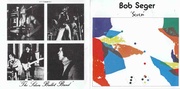
Bob Seger - Seven (1974)

Year: March 1974 (CD ????)
Label: Capitol Records (U.S.), 0777 7 81241 2 2
Style: Rock, Blues Rock
Country: Detroit, Michigan, U.S. (May 6, 1945)
Time: 31:03
Format: Flac Tracks 16/44,1 kHz
Size: 207 Mb
Seven was the first Seger album to feature 'The Silver Bullet Band', which he would steadily rely on for the rest of his career. The album gained notorious recognition and is a fan favorite despite its rarity. The very successful tour for this album was kicked off with Seger and his newly formed Silver Bullets as the opening act for Kiss. Kiss asked Seger and the band to support them for a few shows. After seeing the band's first set, they offered Seger the rest of the tour, which gained the band much-needed recognition.
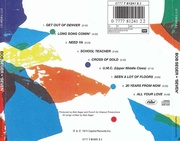
Early vinyl copies of the album featured the word 'contrasts' at the bottom of the cover, leading people to believe the album had two titles. Others believed the album was titled 'Seven Contrasts'. However, Contrasts is the name of the artwork featured on the album. The word in parenthesis is simply a reference to the artwork rather than an actual subtitle or title of the record.
A later bootleg of the album released in the 1980s was entitled Seven Worlds.
Although the album failed to make the Billboard Top 200 albums chart, the single "Get Out of Denver" reached 80. Critics and longtime Seger fans tend to regard the album as a lost classic, much like its predecessor Back in '72. For example, Stephen Thomas Erlewine of AllMusic retrospectively gave the album 5/5 stars, calling it "one of [Seger's] strongest, hardest-hitting rock records". 
Summing up, Erlewine wrote:
Only nine songs, lasting just over a half-hour, but it's one of the most infectious sets Seger ever cut, proving that he wasn't just a dynamite rocker, but he had the songs to match. And, again, it didn't have any success – it didn't even chart, actually. That doesn't change the fact that this is one of his very best albums.
(en.wikipedia.org/wiki/Seven_(Bob_Seger_album))

01. Get Out of Denver (02:44)
02. Long Song Comin' (04:30)
03. Need Ya (03:22)
04. School Teacher (02:45)
05. Cross of Gold (02:23)
06. U.M.C. (Upper Middle Class) (03:15)
07. Seen a Lot of Floors (03:00)
08. 20 Years from Now (04:32)
09. All Your Love (04:28)

BobSeger74Seven_01.jpgBobSeger74Seven_02.jpgBobSeger74Seven_back.jpg

KatFile               GigaPeta               TurboBit

Mott the Hoople - Wildlife [Japan Edition] (1971)

Year: 19 March 1971 (CD 2003)
Label: Universal Island Records (Japan), UICY-93104
Style: Rock
Country: Hereford, Herefordshire, England
Time: 48:02
Format: Flac Tracks 16/44,1 kHz
Size: 323 Mb
Charts: UK #44, U.S. #207
Having played in a number of different rock bands in Hereford, England, during the late 60s, the founding members of this outfit comprised Overend Watts (Peter Watts, 13 May 1947, Birmingham, England; vocals/bass), Mick Ralphs (b. Michael Geoffrey Ralphs, 31 May 1944, Hereford, Herefordshire, England; vocals/guitar), Verden Allen (b. 26 May 1944, Hereford, England; organ) and Dale Griffin (b. 24 October 1948, Ross-on-Wye, England; vocals/drums). After dispensing with their lead singer Stan Tippens, they were on the point of dissolving when Ralphs sent a demo tape to Island Records producer Guy Stevens. He responded enthusiastically, and after placing an advertisement in Melody Maker, they auditioned a promising singer named Ian Hunter (b. 3 June 1946, Shrewsbury, Shropshire, England; vocals, keyboards, guitar). In June 1969 Stevens christened the band Mott The Hoople, after the novel by Willard Manus. Their self-titled debut album revealed a very strong Bob Dylan influence, most notably in Hunter's nasal vocal inflexions and visual image. With his corkscrew hair and permanent shades Hunter bore a strong resemblance to vintage 1966 Dylan and retained that style for his entire career.
Their first album, with its M.C. Escher cover illustration, included pleasing interpretations of the Kinks' 'You Really Got Me' and Sonny Bono's 'Laugh At Me', and convinced many that Mott would become a major band. Their next three albums trod water, however, and it was only their popularity and power as a live act that kept them together. Despite teaming up with backing vocalist Steve Marriott on the Shadow Morton -produced 'Midnight Lady', a breakthrough hit remained elusive. On 26 March 1972, following the departure of Allen, they quit in disillusionment. Fairy godfather David Bowie convinced them to carry on, offered his assistance as producer, placed them under the wing of his manager, Tony De Fries, and even presented them with a stylish UK Top 5 hit, 'All The Young Dudes'. The catchy 'Honaloochie Boogie' maintained the momentum but there was one minor setback when Ralphs quit to form Bad Company. With new members Morgan Fisher (b. 1 January 1950, London, England) and Ariel Bender (b. Luther Grosvenor, 23 December 1949, Evesham, Worcestershire, England) the band enjoyed a run of further UK Top 10 hits including 'All The Way From Memphis' and 'Roll Away The Stone'. During their final phase, Bowie's sideman Mick Ronson (b. 26 May 1945, Hull, Yorkshire, England, d. 30 April 1993) joined the band in place of Grosvenor (who had departed to join Widowmaker). Preparations for a European tour in late 1974 were disrupted when Hunter was hospitalized suffering from physical exhaustion, culminating in the cancellation of the entire tour. When rumours circulated that Hunter had signed a recording contract instigating a solo career, with Ronson working alongside him, the upheaval led to an irrevocable rift within the band, resulting in the stormy demise of Mott The Hoople. With the official departure of Hunter and Ronson, the remaining members, Watts, Griffin and Fisher, determined to carry on, working simply as Mott.
(oldies.com/artist-biography/Mott-Hoople.html)

01. Whiskey Women (03:41)
02. Angel of Eighth Avenue (04:33)
03. Wrong Side of the River (05:19)
04. Waterlow (03:02)
05. Lay Down (04:13)
06. It Must Be Love (02:23)
07. Original Mixed Up Kid (03:40)
08. Home is Where I Want to Be (04:11)
09. Keep A 'Knockin' (10:11)
10. It'll Be Me (02:58)
11. Long Red (03:47)

MottTheHoople71Wildlife_01.jpgMottTheHoople71Wildlife_02.jpg

KatFile               GigaPeta                TurboBit

Poco - From the Inside (1971)

Year: September 5, 1971 (CD 2013)
Label: Iconoclassic Records (U.S.), ICON 1035
Style: Country Rock, Folk Rock, Soft Rock
Country: Los Angeles, California, U.S.
Time: 44:54
Format: Flac Tracks 16/44,1 kHz
Size: 285 Mb
Charts: U.S. #52, CAN #45.
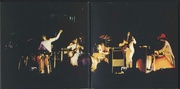
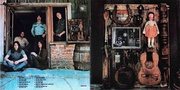
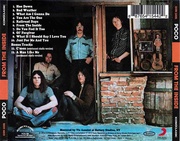
Poco , seminal West Coast country-rock band of the 1970s. Membership: Jim Messina, lead gtr., bs., voc. (b. Maywood, Calif., Dec. 5, 1947); Richie Furay, rhythm gtr., voc. (b. Yellow Springs, Ohio, May 9, 1944); Randy Meisner, bs., voc. (b. Scottsbluff, Neb., March 8, 1946); Rusty Young, pedal steel gtr., dobro., voc. (b. Long Beach, Calif., Feb. 23, 1946); George Grantham, drm., voc. (b. Cordell, Okla., Jan. 20, 1947). Timothy B. Schmit, bs., voc. (b. Sacramento, Calif., Oct. 30, 1947) replaced Randy Meisner; and Paul Cotton, gtr., voc. (b. Los Angeles, Feb. 26, 1943) replaced Jim Messina, in 1970. Schmit and George Grantham left in 1979, to be replaced by Steve Chapman, drm.; Charlie Harrison, bs.; Kim Bullard, kybd.
Poco did not attain the popularity of the Eagles, the first commercially successful band of the genre, until the late 1970s. By that time founders Jim Messina and Richie Furay had moved on, as had founder Randy Meisner, who subsequently joined and departed the Eagles. Despite the personnel changes, Poco maintained a remarkably consistent sound, featuring group vocal harmonies and rock instrumentation. They recorded several outstanding albums, including 1973’s Crazy Eyes, eventually breaking through with 1979’s Legend and its two hit singles. The group disbanded in 1984 and reunited with the original members in 1989.
Jim Messina and Richie Furay, both former members of the Buffalo Springfield, formed Poco with Rusty Young, Randy Meisner, and George Grantham in August 1968. Debuting at the Troubadour in Los Angeles in November, Poco auditioned for Apple Records but signed with Epic. Given the chaotic career of the Buffalo Springfield, Poco’s debut album was appropriately titled Piekin’ Up the Pieces. The album sold only modestly and failed to yield a hit single. By the time of the album’s release, Meisner had already departed to join Rick Nelson’s Stone Canyon Band, later to help form the Eagles. Poco remained a quartet until February 1970, when Timothy B. Schmit joined the band. Poco and Deliverin’ yielded minor hits with Messina’s “You Better Think Twice” and Furay’s “C’mon.”
In November 1970 Jim Messina left Poco to form the successful Loggins and Messina duo with Kenny Log-gins. He was replaced by Paul Cotton, the erstwhile leader of the 111. Speed Press. This lineup—Furay, Young, Cotton, Schmit, and Grantham—recorded three albums and toured extensively, usually as a support act. Crazy Eyes, probably their finest album for Epic, sold moderately and included Furay’s title song as well as excellent versions of Gram Parsons’s “Brass Buttons” and J. J. Cale’s “Magnolia.”
Richie Furay left Poco in September 1973 to form the ill-fated Souther-Hillman-Furay Band, with singer-songwriter John David Souther and Chris Hillman, a former member of the Byrds and the Flying Burrito Brothers. An early associate of Jackson Browne and Glenn Frey, Souther had cowritten several songs for the Eagles and contributed three songs to Linda Ronstadt’s album Don’t Cry Now. Formed at the behest of Asylum Records president David Geffen as a prospective supergroup, they scored a major hit with Furay’s “Fallin’ in Love” from their debut album. However, the group encountered a credibility problem brought on by Asylum’s massive hype campaign, and they disbanded in late 1975. Furay later recorded three solo albums for Asylum, managing a moderate hit with “I Still Have Dreams” in late 1979.
With Furay’s departure, Poco continued as a four-piece, with Paul Cotton taking over as lead vocalist and Cotton and Young composing most of the material. They recorded two more albums for Epic before switching to ABC Records in 1975. They were able to achieve minor hits with “Keep On Tryin’” and the title songs to Rose of Cimarron and Indian Summer. However, by March 1978 Timothy B. Schmit had left to join the Eagles and George Grantham had left, to eventually join the Doobie Brothers. Rusty Young, the only remaining original member, and Paul Cotton reconstituted the group for their best-selling album Legend, which yielded the major hits “Crazy Love” and “Heart of the Night.” Buoyed by the album’s success (it stayed on the album charts for a year), Poco continued to tour and record until 1984, when they disbanded.
In 1989 the five original members of Poco—Jim Messina, Richie Furay, Randy Meisner, Rusty Young, and George Grantham—reunited to record Legacy for RCA. The album yielded a moderate hit with "Nothin' to Hide," cowritten by producer Richard Marx, and "Call It Love." They toured in 1990 with drummer Gary Mallaber, but the band soon disintegrated.
(encyclopedia.com/arts/dictionaries-thesauruses-pictures-and-press-releases/poco-0)

01. Hoe Down (02:07)
02. Bad Weather (05:04)
03. What Am I Gonna Do (03:49)
04. You Are the One (03:52)
05. Railroad Days (03:38)
06. From the Inside (03:13)
07. Do You Feel It Too (05:35)
08. Ol' Forgiver (03:42)
09. What If I Should Say I Love You (03:36)
10. Just for Me and You (03:44)
11. C'mon [Unreleased Studio Version] (02:54)
12. A Man Like Me [Unreleased Studio Version] (03:36)

Poco71FromTheInside_01.jpgPoco71FromTheInside_back.jpgPoco71FromTheInside_back_in.jpg

KatFile               GigaPeta               TurboBit

Friday, 1 April 2022

The Pretty Things - Get The Picture [Japan Edition] (1965)

Year: December 1965 (CD Jun 27, 2007)
Label: Victor Records (Japan), VICP-63812
Style: Garage Rock, R&B
Country: London, England
Time: 46:05
Format: Flac Tracks 16/44,1 kHz
Size: 156 Mb
The Pretty Things' second album, Get the Picture? (released December 1965), has not only been remastered from original session tapes so the group sounds like their amps are practically right in your lap, but it's also been expanded to 18 songs with the addition of tracks cut for singles and EP releases from the same sessions. That's enough to recommend it even to casual fans -- this is now a record that's just a few notches short of Rolling Stones level in the charisma department, and pretty tough any way you want to look at it. On "Rainin' in My Heart," they sound exactly like the Stones from the same era, missing only the little harmonica flourish that might have been added on the break. The liner notes go into the history of the group during this period in delightful detail, and the histories of various songs, most particularly "L.S.D.," which, amazingly, was cut as a demo and never redone for release, but just put out the way it was. In their good moments here, the Pretty Things approach Rolling Stones' territory, and even in their off moments, they're flying at the same level as the Kinks' album tracks.
(allmusic.com/album/get-the-picture--mw0000038673?1648744922739)

One of the UK’s seminal R&B bands, the Pretty Things formed at Sidcup Art College, Kent, England, in September 1963. The original line-up featured a founder member of the Rolling Stones, Dick Taylor (Richard Clifford Taylor, 28 January 1943, Dartford, Kent, England; guitar), plus Phil May (b. Phillip Arthur Dennis Kattner, 9 November 1944, Dartford, Kent, England; vocals), Brian Pendleton (b. 13 April 1944, Wolverhampton, West Midlands, England, d. 16 May 2001, Maidstone, Kent, England; rhythm guitar), John Stax (b. John Edward Fulligan, 16 April 1944, Crayford, Kent, England; bass) and Peter Kitley (drums), although the latter was quickly replaced by Viv Andrews. The band secured a recording contract within months of their inception. Their label then insisted that the luckless Andrews be removed in favour of Viv Prince (b. Vivian St. John Prince, 9 August 1944, Loughborough, Leicestershire, England), an experienced musician and ex-member of Carter-Lewis And The Southerners.
The Pretty Things’ debut single, ‘Rosalyn’, scraped into the UK Top 50, but its unfettered power, coupled with the band’s controversial, unkempt appearance, ensured maximum publicity. Their brash, almost destructive, approach to R&B flourished with two exciting UK Top 20 singles, ‘Don’t Bring Me Down’ and ‘Honey I Need’. The unit’s exuberant first album offered much of the same. Skip Alan (b. Alan Skipper, 11 June 1948, London, England) replaced the erratic Prince in November 1965. Although the Pretty Things’ commercial standing had declined, subsequent singles, ‘Midnight To Six Man’ and ‘Come See Me’, were arguably their finest works, combining power with purpose. However, first Pendleton, then Stax, left the band and sessions for a third album, Emotions, were completed with two former members of the Fenmen, Wally Allen (bass/vocals) and John Povey (b. 20 August 1944, London, England; keyboards/vocals). Initially hired on a temporary basis, the duo proved crucial to the Pretty Things’ subsequent development.
By late 1967 the quintet was immersed in the emergent underground scene. Their music combined harmonies with experimentation, and two exceptional singles, ‘Defecting Grey’ and ‘Talking About The Good Times’, are definitive examples of English ‘flower-power’ pop. The band’s new-found confidence flourished on 1968’s S.F. Sorrow, an ambitious concept album that reportedly influenced the Who’s own rock opera Tommy. The set was not a commercial success, and a recurring instability - Skip Alan was replaced by former Tomorrow drummer John ‘ Twink’ Alder - only to rejoin again, also proved detrimental. Dick Taylor’s departure in November 1969 was highly damaging, and although the band’s subsequent album, Parachute, was lauded in Rolling Stone magazine, his distinctive guitar sound was notably absent.
The Pretty Things collapsed in 1971, but re-formed under a core of May, Povey and Skip Alan to complete Freeway Madness. This trio remained central through the band’s subsequent changes until May embarked on a solo career in 1976. Two years later the Emotions line-up - May, Taylor, Povey, Allen and Alan - was reunited. The same quintet, plus guitarist Peter Tolson (b. 10 September 1951, Bishops Stortford, Hertfordshire, England), completed a studio album, Cross Talk in 1980. Ten years later, a revitalized unit released a rousing cover version of Barry McGuire’s 1965 US number 1 ‘Eve Of Destruction’. By the mid-90s they were still gigging, now under the watchful eye of manager Mark St. John. He had successfully won them back rights to songs and royalties.
In 1996, after dozens of changes of personnel and image the line-up was the same as the unit that recorded the stunning ‘Come See Me’; May, Taylor, Alan, Allan and Povey. S.F. Sorrow was given its live premiere at Abbey Road studios in September 1998, with Dave Gilmour guesting on guitar. A new studio album followed in 1999, together with a fine remastering and reissue programme from Snapper Music.
The Encyclopedia of Popular Music by Colin Larkin. Licensed from Muze. (oldies.com/artist-biography/Pretty-Things.html)

01. You Don't Believe Me (02:23)
02. Buzz The Jerk (01:54)
03. Get The Picture? (01:55)
04. Can't Stand The Pain (02:41)
05. Rainin' In My Heart (02:30)
06. We'll Play House (02:32)
07. You'll Never Do It Baby (02:26)
08. I Had A Dream (02:58)
09. I Want Your Love (02:16)
10. London Town (02:26)
11. Cry To Me (02:51)
12. Gonna Find Me A Substitute (02:57)
13. Get A Buzz (04:01)
14. Sittin' All Alone (02:47)
15. Midnight To Six Man (02:19)
16. Me Needing You (01:57)
17. Come See Me (02:39)
18. L.S.D. (02:25)

Pretty-Things65-Get-01 Pretty-Things65-Get-front-OBI Pretty-Things65-Get-OBI

KatFile               GigaPeta               TurboBit

Edgar Broughton Band - Edgar Broughton Band [Japan Edition] (1971)

Year: May 1971 (CD Aug 8, 2001)
Label: Toshiba Records (Japan), TOCP-65781
Style: Psychedelic Rock, Hard Rock, Folk Rock
Country: Warwick, England
Time: 40:44
Format: Flac Tracks 16/44,1 kHz
Size: 265 Mb
Charts: UK #28
Shaped in Warwick, England, the Edgar Broughton Strap arrived within the London underground music scene in 1968. Led from the Broughton brothers, vocalist/guitarist Edgar and drummer Steve, and fleshed out by bassist Arthur Give and guitarist Victor Unitt (who also briefly offered with the Fairly Items), they quickly signed using the Harvest label and released their debut, Wasa Wasa, a assortment of underground electrical blues jams anchored by Edgar’s Captain Beefheart-like vocals, in past due 1969. The Edgar Broughton Music group came back in 1970 with Sing Sibling Sing, which reached the U.K. Best 20 and spawned a set of minor strike singles, “Out Demons Out” and “Apache Drop-Out” (a fusion of Beefheart’s “Dropout Boogie” as well as the Shadows’ “Apache”). The group appeared poised for a significant industrial breakthrough, but even while their make of large rock and roll was flourishing because of groups like Dark Sabbath and Deep Crimson, the Broughton Music group produced an about-face, and their music became somewhat more tranquil and politically billed. Their graph momentum stalled, along with a 1971 self-titled work failed to capture on. After both 1972’s Inside Out and 1973’s Oora fulfilled a similar destiny, the group still left Harvest for NEMS. Legal wrangles locked them from the studio for several months, however they finally resurfaced in 1975 — minus Unitt, who’d been changed by guitarist John Thomas — with Bandages. A short breakup followed, however in 1978 they came back with Live Strikes Harder. With the discharge of 1979’s Parlez Vous British?, the group acquired expanded to some six-piece, utilizing the name the Broughtons. Time for the Edgar Broughton Music group moniker, the music group became a three-piece for 1982’s Super Chip: THE ULTIMATE Silicon Solution, an idea album filled up with synthesizers and brand-new influx tempos. Touring continuing throughout ’80s, ’90s, and 2000s. In 2004 the band’s six albums for the Harvest label had been reissued, each offering numerous bonus monitors.
(musicianbio.org/edgar-broughton/)

01. Evening Over Rooftops (05:02)
02. The Birth (03:23)
03. Piece Of My Own (02:48)
04. Poppy (02:14)
05. Don't Even Know Which Day It Is (04:22)
06. House Of Turnabout (03:08)
07. Madhatter (06:16)
08. Getting Hard - What Is A Woman (07:31)
09. Thinking Of You (02:07)
10. For Dr Spock(Part One and Two) (03:50)

Edgar-Broughton71-Edgar-back Edgar-Broughton71-Edgar-book-front Edgar-Broughton71-Edgar-book-in

KatFile               GigaPeta               TurboBit