Monday, 6 September 2021

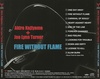
Akira Kajiyama and Joe Lynn Turner (Japan Edition) - Fire Without Flame (2005) CD

Year: 7 December 2005 (Japan), May 2006 (Europe), (CD December 7, 2005)
Label: Yamaha Music (Japan), YCCY-10013
Style: Hard Rock, Rock
Country: Yamaguchi, Japan / New Jersey, U.S.
Time: 53:04
Format: Flac Tracks 16/44,1 kHz
Size: 405 Mb

Guitarist Akira Kajiyama and singer Joe Lynn Turner have composed, played, and recorded music together several times before now. Most of these occasions have been to make Lynn Turner solo albums like Under Cover 2 (’99), Holy Man (’00), and Slam (’01). Kajiyama also played with Lynn Turner on the HTP live album Live In Tokyo (‘02).
Fire Without Flame could very well have been a new solo album from Joe. It sounds like one. However, this time around the release is just as much Akira Kajiyama’s child. Kajiyama has, as well as sharing the song writing task, played all the instruments on the album plus was in charge of the production.
Having said this; in a sense this album could have been promoted as Kajiyama’s solo album with Lynn Turner as a hired singer. However, by putting both their names on the cover, they may very well sell a few more copies. Joe Lynn Turner has, over the years, profited a lot from whomever he’s been working with, rather than from his own name alone. Face it, as a member of Rainbow, Deep Purple, or Yngwie Malmsteen’s band, he never had the hottest name in any of the line-ups.
However, Fire Without Flame is the first heard from Joe Lynn Turner since the release of last year’s critically acclaimed (deservingly so) solo release, The Usual Suspects. Unfortunately, one has to admit that this new release doesn’t add anything new to his more than 30-year long career as a singer. By all means, the songs are all very well-performed, Joe can sing, and the multi-instrumentalist Akira sure can play. Still, it all sounds like a whole lot of what you’ve heard before.
Despite this, some variation is provided throughout the album. Some Blues and Metal material, some ballads … but most of all, you get Melodic Hard Rock that’s a little bit too stuck in the past. Especially the keyboard arrangements sound from time to time embarrisingly 80ish, and the lyrics are a long row of cliches.
Track three, "Survival,” sounds a lot like a leftover from Blackmore’s Stranger In Us All sessions. How uninteresting isn’t that? Track four, "Heart Against Heart,” sounds uncomfortably close to an attempt on making another "Love Conquers All” (Deep Purple – Slaves And Masters). "End Of The Line” is one of the album’s strongest moments, strong riff, chorus, bridge, and all, but could just as well have been on any of the two HTP studio albums.
Joe Lynn Turner and Akira Kajiyama sound very motivated, though, and Fire Without Flame might be a necessary stepping stone for the both of them to point out their future paths. At least this should be an important move for Akira; to have his own name on the cover. His CV will be strengthened from this, and for Lynn Turner -– he has once again proved that a partnership with him will mean a spotlight shared.
Highlights: "End Of The Line," "Bad Feeling," and "License To Kill."
(metalexpressradio.com/2015/09/06/akira-kajiyama-joe-lynn-turner-fire-without-flame) (September 6, 2015)

01. One Day Away (04:08)
02. Fire Without Flame (04:18)
03. Carnival Of Souls (03:43)
04. Heart Against Herart (06:57)
05. End Of The Line (04:44)
06. Forever Changed (05:56)
07. Bad Feeling (04:58)
08. Looking For Trouble (04:27)
09. Down And Dirty (04:34)
10. License To Kill (04:49)
11. Slow Burn (04:26)
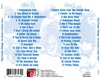
KajiyamaAndTurner2005_back.jpgKajiyamaAndTurner2005_book_1.jpgKajiyamaAndTurner2005_book_4.jpgKajiyamaAndTurner2005_japan_insert_side_B.jpg

KatFile            TurboBit              GigaPeta

Saturday, 4 September 2021

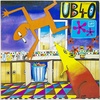
UB40 - Rat In The Kitchen [Vinyl Rip] (1986)

Year: 1986 (LP 1986)
Label: Melodia Records (USSR), C60 25593 008
Style: Reggae, Pop
Country: England
Time: 43:09
Format: Flac Tracks 16/44,1 kHz
Size: 298 Mb

Rat in the Kitchen is the seventh album by UB40, released in July 1986. This album contained two UK hits, "Sing Our Own Song" (UK No. 5 in 1986) and "Rat in Mi Kitchen" (UK No. 12 in 1987). The album itself reached 8 in the UK album charts in 1986 staying in the charts for twenty weeks. The album provoked a positive reception from critics.
(en.wikipedia.org/wiki/Rat_in_the_Kitchen)

In the U.K., UB40 were major stars, and this album was their sixth Top Ten hit, featuring the singles "Sing Your Own Song," "All I Want to Do," and "Rat in Mi Kitchen." In the U.S., the group remained a developing act with a modest following, but they were only able to score a hit by covering a previous hit like "I Got You, Babe." Rat in the Kitchen did nothing to change that, although it was, as usual, a tuneful collection of reggae.
(allmusic.com/album/rat-in-the-kitchen-mw0000192273)

01. A1 All I Want To Do (05:32)
02. A2 You Could Meet Somebody (04:51)
03. A3 Tell It Like It Is (03:35)
04. A4 The Elevator (03:26)
05. A5 Watchdogs (04:15)
06. B1 Rat In The Kitchen (07:00)
07. B2 Looking Down At My Reflection (03:26)
08. B3 Don't Blame Me (03:37)
09. B4 Sing Our Own Song (07:24)

UB40RatInTheKitchen86_front.jpgUB40RatInTheKitchen86_back.jpgUB40RatInTheKitchen86_label.jpg

KatFile            TurboBit              GigaPeta

Friday, 3 September 2021

Amazing Blondel - England (1972) CD

Year: 1972, (CD 1995)
Label: Si-Wan Records (South Korea), SRMC 0041
Style: Folk, Folk Rock
Country: England
Time: 34:57
Format: Flac Tracks 16/44,1 kHz
Size: 199 Mb

Amazing Blondel's fourth album is a gorgeous evocation of the England that seems to exist in so many of the land's loveliest folk songs, a peaceful world of picturesque farming folk, doughty fishermen, immortal sunsets, and halcyon summers. Just six songs convey this impression, all dominated by the side-long three-piece suite "The Paintings," which places into words and gentle orchestrations the impressions conjured by the imagery of "Seascape," "Landscape," and "Afterglow." Described by the band itself as "three pastoral settings for voices, flute, guitars and orchestra," it's an incredibly ambitious piece, but never so much that it loses sight of its intrinsic romance. Played alongside Roy Harper's "One of Those Days in England," it could set even the sternest expatriate's thoughts winging homewards. The shorter songs are less entrancing, with "A Spring Air" coming so close to TV ad theme territory that one can almost see the spring lambs bouncing through fields of freshly laundered shirts and sheets. The chanted "Cantus Firmus to Counterpoint," however, is a stirringly churchical piece, with just a hint of "We Three Kings of Orient Are" floating around the melody, while "Sinfonia for Guitar and Strings" is as well executed as its title suggests it ought to be. The finest moment, however, has to be the Gothic organ-led "Lament to the Earl of Bottesford Beck," whose own country churchyard tones take listeners straight back to the start of the album, and another 20 minutes spent with "The Paintings."
(allmusic.com/album/england-mw0000084719)

01. The Paintings 1. Seascape (06:13)
02. The Paintings 2. Landscape (07:41)
03. The Paintings 3. Afterglow (03:41)
04. A Spring Air (03:43)
05. Cantus Firmus To Counterpoint (03:24)
06. Sinfonia For Guitar And Strings (from the suite 'For My Ladys Delight') (03:13)
07. Dolor Dulcis (Sweet Sorrow) (03:29)
08. Lament To The Earl Of Bottesford Beck (03:30)

AmazingBlondel72England_back.jpgAmazingBlondel72England_book_1.jpgAmazingBlondel72England_book_2.jpgAmazingBlondel72England_book_4.jpg

KatFile            TurboBit              GigaPeta

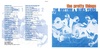
Pretty Things - S. F. Sorrow (Japan Edition) (1968) CD

Year: December 1968, (CD Jun 27, 2007)
Label: Victor Records (Japan), VICP-63814
Style: Rock Opera, Psichedelia, Rock
Country: London, England
Time: 67:46
Format: Flac Tracks 16/44,1 kHz
Size: 408 Mb

I'm not getting into the discussion over whether S. F. Sorrow kicks the shit out of Tommy or whether Tommy bashes the chitlins out of S. F. Sorrow. It's clear that, since S. F. Sorrow came out first, Townshend was heavily influenced by the storyline and the concept in general; however, if you hear misguided rants about how S. F. Sorrow has no pretentions and no bombast as opposed to Pete's overbloated project, don't you go around believing it - this is an equally mystical and convoluted tale, with a plot that's even harder to guess, especially if you haven't read the story it is supposed to accompany, and while the subject matter of Sorrow is a wee bit more grounded (after all, the protagonist does have to deal with a lot of ordinary life problems before having his magical dream about Baron Saturday), the overall message is even less clear than that of Tommy. And that's all I'm gonna say. Draw your conclusions yourself after you've heard this.
But one thing's for certain - hear this you must, as it's undoubtedly the Great Lost Psychedelic album of the Sixties. The Pretties are really one unjustly forgotten band: having achieved no success with their gritty blend of R'n'B and having effectively reinvented themselves as one of swinging London's coolest psycho outfits, they achieved even less success. R'n'B fans naturally thought they were betrayed, and as for the new breed of hippies and loony Tolkienists, they didn't want no aliens, being perfectly happy when entertained by the likes of Barrett's Pink Floyd, Marc Bolan and the Soft Machine. As a result, S. F. Sorrow bypassed the public eye completely, and it's a shame.
(full version: starling.rinet.ru/music/pretty.htm#Sorrow)

01. S.F. Sorrow Is Born (03:08)
02. Bracelets Of Fingers (03:39)
03. She Says Good Morning (03:19)
04. Private Sorrow (03:50)
05. Balloon Burning (03:47)
06. Death (03:05)
07. Baron Saturday (03:58)
08. The Journey (02:46)
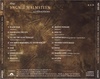
09. I See You (03:56)
10. Well Of Destiny (01:45)
11. Trust (02:45)
12. Old Man Going (03:07)
13. Loneliest Person (01:26)
14. Defecting Grey (Bonus) (05:10)
15. Defecting Grey (Bonus Single A) (04:28)
16. Mr. Evasion (Bonus Single B) (03:28)
17. Talkin' About The Good Times (Bonus) (03:43)
18. Walking Through My Dreams (Bonus) (03:36)
19. She Says Good Morning (Bonus Live 1969) (03:44)
20. Alexander (Bonus Live 1969) (02:57)

Pretty-Things68-SFSorrow-book-1 Pretty-Things68-SFSorrow-cover-side-A Pretty-Things68-SFSorrow-cover-side-B

KatFile            TurboBit              GigaPeta

Tuesday, 31 August 2021

Sunstorm (Joe Lynn Turner) - Edge Of Tomorrow (2016) CD

Year: May 13, 2016 (CD 2016)
Label: Irond Records (Russia), IROND CD 16-1886
Style: AOR, Hard Rock, Arena Rock
Country: U.S.
Time: 51:55
Format: Flac Tracks 16/44,1 kHz
Size: 384 Mb

EDGE OF TOMORROW is the fourth album by AOR/hard rock "super group" Sunstorm. One of extraordinary vocalist Joe Lynn Turner’s project groups, Sunstorm started over a decade ago with Turner and the majority of Pink Cream 69, along with song writers Jim Peterik (Survivor) and Dann Huff. The group released three well-regarded albums before Turner took a break to record with Carmine Appice and others. For whatever reason, when Turner decided to regroup Sunstorm, keeping the melodic style of the previous albums but with a vision of adding a harder edge, he did not bring back his PC69 friends but rather turned to the skills of Frontiers Records man-about-town, Alessandro Del Vecchio.
The results, as evidenced on EDGE OF TOMORROW are, in my opinion, the strongest, most aggressive album ever done by the band. Don’t let that mislead you, this album is still jammed full of Turner’s powerful vocals, melodies, hooks, and catchy riffs, but there is definitely song extra fire in this Sunstorm. As well, the lyrics, while still dwelling on relationships, love, women, etc., seem to have a more forceful tone to them.
The band wastes no time in introducing their updated style with album highlight, "Don’t Walk Away from a Goodbye", a great up-tempo rocker that’s followed stylistically on the album by "Heart of the Storm", and especially "You Hold Me Down". Of course the rest of the record is filled by the band’s trademark melodic rock and ballads, but Sunstorm 2016 is definitely a tougher beast than it used to be.
As my colleague JP wrote in his 2012 review of the band’s EMOTIONAL FIRE, Sunstorm is "world-class". That still hold true in 2016 and all fans of melodic hard rock should not miss out on EDGE OF TOMORROW.
(metal-rules.com/2016/08/01/sunstorm-edge-of-tomorrow) (August 1, 2016)

01. Don't Walk Away From A Goodbye (05:08)
02. Edge Of Tomorrow (06:07)
03. Nothing Left To Say (04:55)
04. Heart Of The Storm (04:44)
05. The Sound Of Goodbye (05:25)
06. The Darkness Of This Dawn (04:25)
07. You Hold Me Down (04:20)
08. Angel Eyes (04:57)
09. Everything You've Got (04:07)
10. Tangled In Blue (03:33)
11. Burning Fire (04:11)

Sunstorm2016EdgeOf_back.jpgSunstorm2016EdgeOf_book_1.jpgSunstorm2016EdgeOf_book_2.jpgSunstorm2016EdgeOf_book_3.jpgSunstorm2016EdgeOf_book_4.jpgSunstorm2016EdgeOf_book_6.jpg

KatFile            TurboBit            GigaPeta

Monday, 30 August 2021

Pretty Things - The Rhythm & Blues Years (2xCD) 2001 CD

Year: 1964-1966 (CD 29 October 2001)
Label: Recall 2cd Records (Europe), SMDCD 343
Style: Rhythm & Blues, Blues Rock, Rock
Country: London, England
Time: 49:35, 47:03
Format: Flac Tracks 16/44,1 kHz
Size: 169, 171 Mb

Everybody's got to have an idol, an ideal that one strives to reach and, if possible, surpass. For the Pretty Things, such an ideal were the Rolling Stones. This was really a predictable thing, though: the band was founded around 1964 by Dick Taylor, former bass player for the Stones before they actually had a recording contract. Dick quit the band because of financial troubles and personal ambitions (not content with his minor role since Brian Jones shoved him in the background), and became one of the founding fathers for the Pretty Things - but the band still kept a tight connection with the Stones. Initially, their image was supposed to be modelled after the Stones, only even more hardcore: they were even wilder, had even longer hair, and were banned from even more TV shows than the Stones ever have. At least, that's how the legend goes. Too bad that the actual music played by the Pretties was nowhere near as enduring as the Stones' stuff: the band was nowhere near as professional or talented, and their lead singer, Phil May, had, to put it mildly, a pretty limited vocal potential. Thus, the Pretties' early albums are rife with filler, even if the aggressive rock'n'roll energy contained in their best stuff easily compensates for the weaker numbers.
This all began to change around the Summer of Love epoch: unlike gazillions of their even less talented and/or ambitiousd colleagues, the Pretties had time and will to jump on the accelerating rock music wagon (together with the Stones!) and drifted away into artsier, more sophisticated territory. Unfortunately, the band never really made the big time; despite a few moderate hits, their image had already been soldered as that of second-rate Stones imitators, and this, taken together with poor management and inner lineup problems, never did much to improve the band's financial situation. And yet, it's the late Sixties that count for the Pretties - not every band can successfully transform itself from a basic R'n'B outfit into a full-blown psychedelic machine, but that's exactly what happened. The 1967 record, Emotions, is a minor (and thoroughly underrated) Brit-pop/psycho gem, but, of course, it's the 1968 tour de force, S. F. Sorrow, that the Pretties are going to be remembered for, if they are going to be remembered at all: the first rock opera (or 'rock narrative', whatever), a cohesive and complex album with a level of twistedness and sophistication no other former R'n'B band, not even the Stones, would ever achieve. If anything, S. F. Sorrow just goes to show that the band had serious potential in them, and were actually able to realize that potential instead of always drag in the shadow of their superior pals.
Too bad neither Emotions nor S. F. Sorrow hit the big time; after their failure, the disillusioned Dick Taylor quit the band, and although it dragged on for half a decade more, fuelled mostly by the energy of Phil May, and released three more LPs at least one of which (Parachute) is said to be very good, by the mid-70s it was obvious that there was simply nowhere else to go. The Pretties therefore disbanded into nothing, and despite several attempts at reunions and even some new studio output and live performances in the Nineties, they're still a pretty dark spot in popular culture.
I'm not an avid fan, of course, but one thing is obvious - the Pretty Things are more than just a potential bait for collectors of Sixties' antiques (and while we're at it, it is every Sixties' antiques collector's duty to procure the band's catalog in its entirety, now!). They didn't have that much talent in them, nor did they possess a particular thoughtful inspired talented creative guy; most of the band's best compositions are group efforts. Yet they seem to have possessed a certain 'group mentality' that was enough for their records, at least, the 1967-68 ones, not to sound like weak pathetic clones, but instead provoke a strong and deep emotional reaction. They were trend-followers, but they didn't follow these trends in half-measures: there's enough soul and feeling in their music to make it likeable. They never deserve anything more than a weak two on the band rating scale, that's for sure, but neither should they just be allowed to sink in the general mire of talentless mid-Sixties rip-offs because, frankly speaking, they were better than most. Don't believe me? Buy S. F. Sorrow today and spin it three times in a row to see what I mean. Then slowly and gradually work your way forwards and backwards, never letting your expectations run before the actual music - and hoopla, you just might have something there.
(starling.rinet.ru/music/pretty.htm)

01. Judgement Day (02:48)
02. The Moon Is Rising (02:33)
03. I'm Gonna Find Me A Substitute (02:58)
04. 13 Chester Street (02:21)
05. Oh Baby Doll (03:02)
06. Get a Buzz (04:00)
07. Don't Bring Me Down (02:11)
08. Sittin' All Alone (02:48)
09. You'll Never Do It Baby (02:27)
10. Come See Me (02:40)
11. Rosalyn (02:21)
12. She's Fine, She's Mine (04:24)
13. I Can Never Say (02:37)
14. Get Yourself Home (02:16)
15. I Had a Dream (02:59)
16. Me Needing You (01:58)
17. It's Been So Long (05:06)

01. Mama Keep Your Big Mouth Shut (03:04)
02. Rainin' in My Heart (02:31)
03. Big Boss Man (02:39)
04. Unknown Blues (03:48)
05. We'll Play House (02:33)
06. Don't Lie to Me (03:53)
07. I Want Your Love (02:17)
08. Roadrunner (03:11)
09. We'll Be Together (02:11)
10. Honey, I Need (01:59)
11. Cry to Me (02:52)
12. Buzz the Jerk (01:55)
13. Big City (02:02)
14. London Town (02:26)
15. Out in the Night (02:41)
16. Vivian Prince (05:14)
17. Pretty Thing (01:39)

PrettyThings2001RhythmBlues_back.jpgPrettyThings2001RhythmBlues_book_1.jpgPrettyThings2001RhythmBlues_book_2.jpgPrettyThings2001RhythmBlues_book_3.jpgPrettyThings2001RhythmBlues_book_4.jpg

CD1            KatFile            TurboBit            GigaPeta

CD2            KatFile            TurboBit            GigaPeta


Sunday, 29 August 2021

Wicked Lady - The Axeman Cometh (1969-1972) CD

Year: 1969-1972 (CD 2012)
Label: Guerssen Records (Spain), GUESSCD 042
Style: Heavy Psych, Hard Rock
Country: Northamptonshire, England
Time: 60:04
Format: Flac Tracks 16/44,1 kHz
Size: 291 Mb

Wicked Lady exemplifies the "record collector" bands that gain new life through reissues: in this case, Kissing Spell's albums The Axeman Cometh and Psychotic Overkill. Their appearance marked some belated recognition for the power trio, which Northampton singer-guitarist Martin Weaver formed in 1968 with drummer "Mad" Dick Smith and bassist Bob Jeffries.
However, Wicked Lady never came within a whisper of the stratospheric status attained by Cream, or the Jimi Hendrix Experience. The band's liberal use of feedback - and large biker following - kept them relegated to clubs, even during the twilight hours of the psychedelic era. Awash in drink and drugs, Wicked Lady split up in 1970, but Smith and Weaver soon regrouped with new bassist, Del "German Head" Morley.
The new lineup duly set about documenting its existence, as captured on Psychotic Overkill - whose feel is looser than Axeman Cometh. The effect is a shotgun marriage of Black Sabbath-style rifferama, supported by a less risk-taking rhythm section. Weaver's vocal style lacks charisma, but his wah-wah and fuzz-driven guitar style carries the day. The highlights include a bluesy cover of Hendrix's "Voodoo Child," the sex 'n' drugs snapshot of "Sin City," and the howling, 21-minute epic, "Ship Of Ghosts."
But Wicked Lady's erratic ways proved too difficult for clubowners, who eventually refused to let them play. (At one gig, the band reportedly played the same song over and over until an irritated management pulled the plug on them.) Wicked Lady imploded in 1972, but Weaver rebounded that same year by joining the Dark, a more psychedelic- and progressive-outfit. Their Round The Edges album became a Holy Grail for collectors - because only a handful of copies were made for band members and their associates. (Kissing Spell reissued the album in 1991.)
Weaver next teamed with classically-trained keyboardist Dave "Doc" Wadley - who'd worked with a pre-Sabbath Tony Iommi - in the Mind Doctors. Kissing Spell also reissued On The Threshold Of Reality, an album of laidback instrumental "head" music.Weaver most recently surfaced on the re-formed Dark's Anonymous Days (1996), which featured material written in the 1970s and 1990s.
(allmusic.com/artist/wicked-lady-mn0000641714/biography)

01. Run the Night (05:13)
02. War Cloud (07:40)
03. The Axeman Cometh (06:55)
04. Life And Death (10:03)
05. Wicked Lady (06:07)
06. Out of the Dark (10:18)
07. Rebel (03:36)
08. Living on the Edge (10:09)

WickedLady69_72Axeman_back.jpgWickedLady69_72Axeman_back_in.jpgWickedLady69_72Axeman_book_1.jpgWickedLady69_72Axeman_book_6.jpg

KatFile           TurboBit           GigaPeta

Friday, 27 August 2021

Yngwie Malmsteen - The Yngwie Malmsteen Collection (Japan Edition) (1991) CD

Year: 1991 (CD July 16, 1997) (Recorded    1984–1990)
Label: Polydor Records (Japan), POCP 2559
Style: Heavy Metal, Hard Rock
Country: Stockholm, Sweden (30 June, 1963)
Time: 72:58
Format: Flac Tracks 16/44,1 kHz
Size: 517 Mb

Yngwie Malmsteen's over-the-top, dazzling guitar playing fills the grooves of this long LP: "The Yngwie Malmsteen Collection", brought to your ears by the guy who said that he doesn't owe Ritchie Blackmore a thing, notwithstanding several (most) of these tracks sound a lot like Rainbow...
Except "I'll See the Light Tonight", which sounds a lot like Dio, an ex-Rainbow singer.
Malmsteen rose to fame in the 1980s, after his tenure with Alcatrazz, melodic heavy-metal band with Euro flavor, formed in Los Angeles by Graham Bonnet, after that, Malmsteen recorded a couple of solo LPs that were surprising and innovative for the metal world back in 1984 or 85, mostly because of Malmsteen's guitar technique.
On this CD, and throughout 73 minutes of music, Yngwie Malmsteen entertains us with agile finger, classical baroque-ism applied to cliched hard-rock, arpeggios, solos, pizzicati, staccati, and a style that sounds self-indulgent, dramatic, cheesy and refined at the same time, backed here by his singing puppets Jeff-Scott Soto, ex-Rainbow Joe Lynn-Turner, Mark Boals and Goran Edman, an army of bland-excellent vocalists to give some human warmth to Malmsteen's mechanical, inhuman proficiency.
But another Yngwie Malmsteen's appeal (more important to me than his speedy fingers) is (or was) his ability to create good hard-rock tunes, like the aforementioned "I'll See the Light Tonight", "Queen in Love", "Making Love", or "You Don't Remember, I'll Never Forget", title created by the rancorous Malmsteen, who appears on the cover of this selection, holding his Fender Stratocaster, and saying exactly that: "You don't remember, but I... HA! I'll never forget... ", as the respectable reader can corroborate.
Overall a good and commendable collection of melodic heavy-metal songs from the '80s, by the creator of an instantly recognizable -and imitated- style.
(rateyourmusic.com/release/comp/yngwie-malmsteen/the-yngwie-malmsteen-collection/) (death_metal_doll Jun 01 2016)

01. Black Star (04:51)
02. Far Beyond The Sun (05:49)
03. I'll See The Light Tonight (04:24)
04. You Don't Remember, I'll Never Forget (04:29)
05. Liar (04:07)
06. Queen In Love (04:01)
07. Hold On (05:11)
08. Heaven Tonight (04:06)
09. Deja Vu (04:16)
10. Guitar Solo (Trilogy Suite Op: 5/Spasebo Blues) (10:20)
11. Spanish Castle Magic (06:43)
12. Judas (04:25)
13. Making Love (Extended Guitar Solo) (06:23)
14. Eclipse (03:46)

YngwieMalmsteen97Collection_back.jpgYngwieMalmsteen97Collection_book_1.jpgYngwieMalmsteen97Collection_book_2.jpg

KatFile            TurboBit            GigaPeta

Tuesday, 17 August 2021

Slapp Happy - Sort of (1972) CD

Year: 1972 (CD 1999)
Label: Blueprint Records (U.K.), BP318CD
Style: Avant-Rock, Krautrock, Art Rock
Country: German / English 1972–1975
Time: 46:07
Format: Flac Tracks 16/44,1 kHz
Size: 284 Mb

Germany
Slapp Happy was formed in 1972 in Hamburg, Germany by British experimental composer Anthony Moore. Moore had recorded two avant-garde/experimental solo LPs for Polydor Germany, but they rejected his third because it was not commercial enough. As a result of the rejection, he proposed a pop project with his girlfriend (and soon to be wife), Dagmar Krause from Hamburg, and a visiting American friend, Peter Blegvad. At the time, Krause couldn't sing because of problems with her voice, but when she heard Blegvad's singing she agreed to sing for the group.
With krautrock group Faust as a backing band, Slapp Happy recorded a debut album, Sort Of, for Polydor Germany in 1972. The songs were simple, primitive pop, a "naive rock" as Peter Blegvad put it. Commercially, the LP did not go very far, primarily because Slapp Happy refused to perform live.
In 1973 they returned to the studio (again with Faust as their backing band) to record their second album, Casablanca Moon. After the commercial failure of Sort Of, Polydor had demanded more pop-sounding material, and so Moore and Blegvad wrote "straight" pop songs, but Polydor was still not happy and refused to release it.

England
Slapp Happy then left Polydor Germany and moved to London where a record deal was signed a deal with the then emerging Virgin Records label, which was looking for experimental groups. Faust and Henry Cow had already signed up. At Virgin's Manor Studios in Oxfordshire, Slapp Happy re-recorded Casablanca Moon with the help of session musicians (under the direction of violinist Graham Preskett) and Virgin released it as Slapp Happy in 1974. It was not until 1980 that Recommended Records released the original Casablanca Moon (with Faust) as Acnalbasac Noom (the words of the original title written backwards). Comparison of the two releases revealed two very different musical arrangements. Acnalbasac Noom had a raw and unsophisticated feel about it, whereas Casablanca Moon tended to be more sentimental with more complex arrangements, including a string orchestra.
In June 1974, there were plans for a joint appearance by Slapp Happy and Virgin label mates Henry Cow and Robert Wyatt at a free concert in Hyde Park in London, but this was cancelled at the last minute. However, on 25 June Slapp Happy recorded a Top Gear session for the BBC, enlisting the help of former or current Cow members Geoff Leigh, Fred Frith and Lindsay Cooper, plus Robert Wyatt, who contributed guest vocals and percussion to a version of Blegvad's "A Little Something" from Casablanca Moon. Credited as "Slapp Happy & Friends", this was later released in 1994 on Wyatt's compilation album, Flotsam Jetsam.
The idea to collaborate with Henry Cow eventually materialised in November 1974 when Slapp Happy asked them to provide instrumental backing, much as Faust had done on the first two albums. The resulting Desperate Straights was released under the name "Slapp Happy/Henry Cow". The success of this collaboration surprised everyone, considering how dissimilar the two bands were, and the two bands merged. The music often had a Berlin Cabaret feel about it with a taste of avant-garde jazz.
The merged group returned to the studio in early 1975 to record Henry Cow's In Praise of Learning (as "Henry Cow/Slapp Happy"). The only real contribution from Slapp Happy (besides Dagmar's singing) was the Moore/Blegvad song "War", which blended in well with the album's political aggression. But differences in approach between the two groups had come to a head in April 1975 and Anthony Moore and Peter Blegvad quit, suggesting that Henry Cow's music was too serious (and political) for their liking. Dagmar Krause, however, elected to remain with Henry Cow, who needed a vocalist. This effectively spelt the end of Slapp Happy as a band. Slapp Happy did, however, record one more single, "Johnny's Dead", without Krause, which was released in July 1975.
(pop-culture.fandom.com/wiki/Slapp_Happy)

01. Just a Conversation (04:07)
02. Paradise Express (02:38)
03. I Got Evil (02:33)
04. Little Girls World (03:34)
05. Tutankhamun (02:15)
06. Mono Plane (06:52)
07. Blue Flower (05:21)
08. I'm All Alone (02:52)
09. Who's Gonna Help Me Now (02:28)
10. Small Hands of Stone (04:43)
11. Sort Of (02:21)
12. Heading for Kyoto (03:10)
13. Jumping Jonah (Bonus Track) (03:07)

SlappHappy72SortOf_back.jpgSlappHappy72SortOf_book_1.jpgSlappHappy72SortOf_book_2.jpg

KatFile           TurboBit             GigaPeta

Saturday, 14 August 2021

Silver Metre (ex Blue Cheer) - Silver Metre (1969) CD

Year: 1969 (CD 1998)
Label: Lizard Records (Germany), LR 0708-2
Style: Rock, Hard Rock
Country: San Francisco, U.S.
Time: 41:46
Format: Flac Tracks 16/44,1 kHz
Size: 269 Mb

Silver Metre was a short-lived, San Francisco-based outfit formed by Leigh Stevens, previously with Blue Cheer, and Mick Waller from the Jeff Beck Group. Together with Tom Cowan and Pete Sears, the band released one album in 1970. The album, recorded in England, is basic heavy rock with a spattering of psychedelia. A mix of originals and covers songs, it includes three Elton John/Bernie Taupin compositions: "Country Comforts," "Now They've Found Me," and "Sixty Years On." While the album did not make much impact upon its original release on the small National General label in the U.S., it is of interest to collectors because of the early Waller-Stevens connection. Stephens and Waller would later move on to the British-based band Pilot, a short-lived early-'70s outfit, while Pete Sears was later in Stoneground and Jefferson Starship.

In the summer of 1969, Sears left Trader Horne just before they began recording. Blue Cheer guitarist Leigh Stephens invited him to California for the first time. Sears, Stephens, Micky Waller (drummer), and Jack Reynolds (singer) formed Silver Metre.
"Silver Metre formed in Venice Beach and Santa Monica, California after my first trip to the United States at age 21...We recorded our first of a two-album deal with National General Records at Trident Studios, Wardour St, London. Our managers were Charlie Osborne, and later Tom Donahue who got us the deal...The money for our second album mysteriously disappeared...but I won’t go into that, other than to say it wasn’t the record companies fault."
(Pete Sears)

Silver Metre, named after Ben Dixon's "The Silver Meter" from Along Came John, formed in 1969, evolving out of the Red Weather recording sessions, with Micky Waller (drummer), just fired from the Jeff Beck Group, Stephens, Pete Sears, and Jack Reynolds (singer). They recorded one album at Trident Studios in London, England, released on National General Records, produced by their manager, FM rock radio pioneer Tom Donahue. Contributing music and lyrics included Andrew Lloyd Webber, Tim Rice, Elton John, Bernie Taupin, Leigh Stephens, Pete Sears, and Tom Coman.

01. Now They've Found Me (Ballad of a Well Known Gun) (03:40)
02. Naughty Lady (04:39)
03. Gangbang (04:41)
04. Country Comforts (03:25)
05. Superstar (03:45)
06. Sixty Years (04:18)
07. Compromising Situation (03:48)
08. Cocklewood Monster (05:18)
09. Night Flight (04:14)
10. Dog End (03:53)

SilverMetre70SilverMetre_book_2.jpgSilverMetre70SilverMetre_back.jpgSilverMetre70SilverMetre_book_1.jpg

KatFile            TurboBit           GigaPeta

Thursday, 12 August 2021

Jody Grind - One Step On (Japan Edition) (1969) CD

Year: 1969 (CD December 20, 2006)
Label: Strange Days Records (Japan), POCE-1083
Style: Rock, Art Rock, Psychedelic Rock
Country: London, U.K. (1966-1970)
Time: 39:50
Format: Flac Tracks 16/44,1 kHz
Size: 231 Mb
 
Early UK prog group lead by keyboardist Tim Hinkley, that released two albums on the folk specialist label Transatlantic Records. The first being a sort of psychedelic brass-rock called One Step On, the second (recorded with a completely different line-uo bar Hinkley) being a bit proggier, the unfocused Far Canal.
In 1965 he formed the Hammond Organ trio Jody Grind, with lead guitarist Ivan Zagni and drummer Barry Wilson. The trio recorded two albums One Step On (1969) and Far Canal which featured Bernie Holland on all guitars and Pete Gavin on drums (1970) (album cover details), for the British record label Transatlantic Records. Hinkley also recorded the album Bloodletting (1979), with Boxer.

01. One Step On (18:46)
02. Little Message (04:42)
03. Night Today (05:04)
04. U.S.A. (06:40)
05. Rock 'N Roll Man (04:36)

JodyGrind69OneStepOn_book_2.jpgJodyGrind69OneStepOn_sheet_B.jpgJodyGrind69OneStepOn_book_1.jpg

KatFile           TurboBit           GigaPeta