Saturday, 19 March 2022

Mott the Hoople - Mad Shadows (1970)

Year: 25 September 1970 (CD Oct 6, 2003)
Label: Angel Air Records (UK), SJPCD158
Style: Rock, Classic Rock
Country: Hereford, Herefordshire, England
Time: 41:35
Format: Flac Tracks 16/44,1 kHz
Size: 278 Mb
Charts: Billboard 200 #185, Official Charts (UK) #66.
Having played in a number of different rock bands in Hereford, England, during the late 60s, the founding members of this outfit comprised Overend Watts (Peter Watts, 13 May 1947, Birmingham, England; vocals/bass), Mick Ralphs (b. Michael Geoffrey Ralphs, 31 May 1944, Hereford, Herefordshire, England; vocals/guitar), Verden Allen (b. 26 May 1944, Hereford, England; organ) and Dale Griffin (b. 24 October 1948, Ross-on-Wye, England; vocals/drums). After dispensing with their lead singer Stan Tippens, they were on the point of dissolving when Ralphs sent a demo tape to Island Records producer Guy Stevens. He responded enthusiastically, and after placing an advertisement in Melody Maker, they auditioned a promising singer named Ian Hunter (b. 3 June 1946, Shrewsbury, Shropshire, England; vocals, keyboards, guitar). In June 1969 Stevens christened the band Mott The Hoople, after the novel by Willard Manus. Their self-titled debut album revealed a very strong Bob Dylan influence, most notably in Hunter's nasal vocal inflexions and visual image. With his corkscrew hair and permanent shades Hunter bore a strong resemblance to vintage 1966 Dylan and retained that style for his entire career.
Their first album, with its M.C. Escher cover illustration, included pleasing interpretations of the Kinks' 'You Really Got Me' and Sonny Bono's 'Laugh At Me', and convinced many that Mott would become a major band. Their next three albums trod water, however, and it was only their popularity and power as a live act that kept them together. Despite teaming up with backing vocalist Steve Marriott on the Shadow Morton -produced 'Midnight Lady', a breakthrough hit remained elusive. On 26 March 1972, following the departure of Allen, they quit in disillusionment. Fairy godfather David Bowie convinced them to carry on, offered his assistance as producer, placed them under the wing of his manager, Tony De Fries, and even presented them with a stylish UK Top 5 hit, 'All The Young Dudes'. The catchy 'Honaloochie Boogie' maintained the momentum but there was one minor setback when Ralphs quit to form Bad Company. With new members Morgan Fisher (b. 1 January 1950, London, England) and Ariel Bender (b. Luther Grosvenor, 23 December 1949, Evesham, Worcestershire, England) the band enjoyed a run of further UK Top 10 hits including 'All The Way From Memphis' and 'Roll Away The Stone'. During their final phase, Bowie's sideman Mick Ronson (b. 26 May 1945, Hull, Yorkshire, England, d. 30 April 1993) joined the band in place of Grosvenor (who had departed to join Widowmaker). Preparations for a European tour in late 1974 were disrupted when Hunter was hospitalized suffering from physical exhaustion, culminating in the cancellation of the entire tour. When rumours circulated that Hunter had signed a recording contract instigating a solo career, with Ronson working alongside him, the upheaval led to an irrevocable rift within the band, resulting in the stormy demise of Mott The Hoople. With the official departure of Hunter and Ronson, the remaining members, Watts, Griffin and Fisher, determined to carry on, working simply as Mott.
(oldies.com/artist-biography/Mott-Hoople.html)

01. Thunderbuck Ram (04:49)
02. No Wheels To Ride (05:49)
03. You Are One Of Us (02:25)
04. Walkin' With A Mountain (03:49)
05. I Can Feel (07:12)
06. Threads Of Iron (05:11)
07. When My Mind's Gone (06:31)
08. I Would Be A Pleasure (01:49)
09. How Long? (Death May Be Your Santa Claus) (03:55)

Mott-The-Hoople70-Mad-back Mott-The-Hoople70-Mad-back-in Mott-The-Hoople70-Mad-book-01 Mott-The-Hoople70-Mad-book-02 Mott-The-Hoople70-Mad-book-04 Mott-The-Hoople70-Mad-book-19

KatFile               GigaPeta               TurboBit

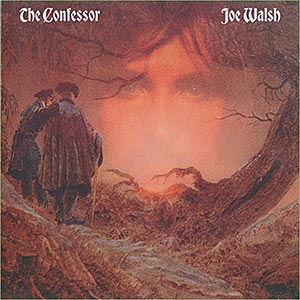
Joe Walsh (Eagles) - The Confessor (1985)

Year: May 21, 1985 (CD 1985)
Label: Warner Bros (U.S.), 9 25281-2
Style: Blues Rock, Rock, Reggae
Country: Wichita, Kansas, U.S. (November 20, 1947)
Time: 36:28
Format: Flac Tracks 16/44,1 kHz
Size: 218 Mb

Full name, Joseph Fidler Walsh; born November 20, 1947, in Wichita, Kan.; raised in Cleveland, Ohio. Education: Attended Kent State University. Addresses: Record company --Warner Bros., 3300 Warner Blvd., Burbank, CA 91510.
Joe Walsh's reputation as one of rock's premiere guitar craftsmen is highly understandable when one looks at the volume of studio work he has done over the past twenty years. From B.B. King to Dan Fogelberg, from Rod Stewart to Graham Nash, countless artists have called upon Walsh's melodic playing to enhance their records. But Walsh's fame has not come primarily through the work of others. His three-year stint with the James Gang marked the beginning of a fruitful career that has seen nine solo LPs as well as three more with the Eagles in their final and most successful phase.
Born in Wichita, Kansas, in 1947, Walsh grew up in Ohio where he eventually learned to play bass guitar, performing in high school bands like the Nomads. He enrolled as a full-time student at Kent State University for three quarters before switching to part-time studies. Walsh began to work seriously on his guitar playing while at college and complemented this with courses in electronics, enabling him to perform Dr. Frankenstein-like experiments on his equipment.
Walsh joined the James Gang in 1969 (replacing Glen Schwartz), the same year the group (with Walsh handling vocals and guitar chores, Jimmy Fox on drums and Dale Peters on bass) released Yer' Album and established themselves as "the most significant post-Cream power-trio strategy," according to John Swenson in The Rolling Stone Record Guide.
The James Gang followed up their successful debut the next year with Rides Again, a Top 10 LP that included "Tend My Garden" and "Fun #49," a Walsh tour de force. In support of the record, the trio toured Europe in 1970 with the Who, a band whose members had a profound impact on the young guitarist. "Peter's [Townshend] my guru. He taught me how to play lead-rhythm, and Keith Moon taught me how to break things," Walsh told Guitar World. The influence of Pete Townshend's style on Walsh's is quite evident in the thick power chords of tunes like "Walk Away" from the James Gang's third LP, Thirds. Keith Moon's insanity would take slightly longer to show in Walsh's character, but it would become an equally identifiable trademark of the guitarist in the near future.
In 1971 the James Gang released Live in Concert, compiled from their foreign dates with the Who. Walsh capitalized on Townshend's style but found himself painted into a corner creatively. "I saw myself being stereotyped almost into a heavy metal guitarist about 10 years before heavy metal came out, and I didn't like that," Walsh told Matt Resnicoff in Guitar World. "I got extremely frustrated being the only melodic instrument."
His dissatisfaction, coupled with his distaste for the tactics involved in the record business, led to his departure from the James Gang and a move to Colorado. There he hooked up with bassist Kenny Passarelli and drummer Joe Vitale for 1972's Barnstorm and The Smoker You Drink, the Player You Get in 1973. The latter produced a Walsh classic, "Rocky Mountain Way," a stomping good-time rocker that featured an odd musical device called the "talk box," which transforms the human voice into a synthesized-sounding musical instrument. Rocke Grace and Joe Lala were added on keyboards and percussion for the album.
Walsh's heavy sustain and nasty slide work may have seemed groundbreaking, but were actually just a natural progression. "I'm a third-generation blues studier, and that's why I sound like I do," Walsh told Guitar World. "I studied the blues through white English guys!" However, unlike his mentors Eric Clapton, Peter Green, and Mick Taylor, Walsh was not restricted to just the guitar. "I hear a lot of tones and textures and such," he told Jas Obrecht in Guitar Player. "I know I'm known mostly for my guitar work, but in terms of being a musician, there are other vehicles that I am quite capable of playing, and sometimes that ain't guitar. The song tells me what to play."
Soon Walsh's talented ear and tasteful playing were popping up on other musicians' work, making him one of the most in-demand non-studio players. In later years his searing guitar would be heard on Steve Winwood's "Split Decision" and Richard Marx's "Don't Mean Nothin'," both top hits thanks to Walsh's creative slide. "I like to accept the energy involved in that first pass," Walsh said in Guitar World of his recording technique, "that's really where the magic is."
With a successful solo career well at hand, and enough choice studio dates to keep any musician rich and happy, Walsh was recruited by the Eagles to replace guitarist Bernie Leadon in 1976. "I got asked to join the Eagles as a specialist, because they wanted some humor," he told Guitar World. "They were taking everything too seriously.... My job was to keep everybody laughing, or at least keep the band from breaking up." Walsh accomplished more than that at first for the Eagles. His initial flight with the band, the Grammy-winning album Hotel California, soared up the charts in 1976 to the Number 1 spot. The title track featured an incredible guitar jam, while "Life in the Fast Lane" and "New Kid in Town" were hot-selling singles.
Walsh continued his solo recordings with the live You Can't Argue With a Sick Mind in 1976 and But Seriously Folks in 1978, which included "Life's Been Good," a Number 12 single that struck right to the heart of the rock and roll lifestyle. "I think it might have been a little too close to the truth," Walsh confessed in Guitar World, "and I didn't want to overextend my sense of humor to the public." The zany guitarist even took a shot at running for president after the song became so popular.
In 1979 Walsh was back in the studio with the Eagles working on The Long Run, an impressive LP that featured a fine title track and the funky "Those Shoes." The inner turmoil of the group and the usual music corporation hassles eventually led to the breakup of the Eagles following the release of a live album a short while later. Even if Walsh couldn't keep the band from folding, he inspired them to record some of their finest, and certainly their most successful, music. "We were a damn good band for a while," Walsh stated in Guitar Player. "I'm proud of having been a part of that and Hotel California. Besides the royalties and everything, just the fact that was a special album for a lot of people on the planet. I feel that I was part of a true band, and that we made a very valid musical statement for the generation that we represent."
Walsh went back to a three-piece format with Joe Vitale on an LP by John Entwistle, bassist for the Who. In 1985 he released Confessor, "the apologia of a strictly raised mid-western episcopalian after living in rock and roll sin for 'Fifteen Years' on the road," wrote Bruce Malamut in Guitar World. "The balance ... is a sober retrospective from rock's own Harpo Marx."
Joe Walsh's Career:
Played bass guitar in local bands while in high school in Cleveland, including the Nomads; began playing lead guitar while in college; lead guitarist for the James Gang, 1966-71; solo artist, 1971--; member of the Eagles, 1976-82; has performed as featured guitarist on numerous albums.
Joe Walsh's Awards:
Co-winner (as member of the Eagles) of three Grammy Awards, including record of the year, 1977, for Hotel California.
(musicianguide.com/biographies/1608000783/Joe-Walsh.html)

01. Problems (03:55)
02. I Broke My Leg (03:12)
03. Bubbles (03:33)
04. Slow Dancing (04:22)
05. 15 Years (03:52)
06. The Confessor (07:06)
07. Rosewood Bitters (03:29)
08. Good Man Down (04:14)
09. Dear John (02:40)

Joe-Walsh85-The-Confessor-1 Joe-Walsh85-The-Confessor-2 Joe-Walsh85-The-Confessor-back

KatFile               GigaPeta               TurboBit

Thursday, 17 March 2022

Vinegar Joe (Robert Palmer) - Vinegar Joe (1972)

Year: 1972 (CD 2008)
Label: Lemon Records (Europe), CD LEM 108
Style: Classic Rock, Blues Rock, Rock
Country: London, England
Time: 56:04
Format: Flac Tracks 16/44,1 kHz
Size: 351 Mb
Vinegar Joe were an English R&B band, formed in 1971 in London. They released three albums on Island Records, but were best known for their live shows and launching the solo careers of Elkie Brooks and Robert Palmer.
Vinegar Joe evolved out of Dada, a 12-piece Stax-influenced, jazz/blues rock fusion band. Dada released one eponymous album in 1970, with a line up including vocalist Elkie Brooks and guitarist Pete Gage. Singer Robert Palmer, formerly with The Alan Bown Set joined Dada after the album had been recorded. Dada were signed by Ahmet Ertegun for Atlantic Records. After their US tour, Ahmet sub-licensed them to Chris Blackwell of Island Records for the UK and rest of the world, with instructions to reduce the line up to form Vinegar Joe in 1971, adding keyboard player Dave Thompson, but the band was still without a drummer. Phil Collins had unsuccessfully applied for the job. Conrad Isidore and Rob Tait drummed on the first album. Tim Hinkley added keyboards alongside Dave Thompson and it was Hinkley who appeared on the cover of the first album. Their debut LP Vinegar Joe was released in April 1972 on Island Records in the UK and Atco Records in the US. The album cover featured plasticine models of the band created by John Padley.
Tim Hinkley took over from Thompson on keyboards and was succeeded by John Hawken. Drummer Rob Tait played the first series of live shows succeeded by John Woods. Mike Deacon took over on keyboards. During recording of their second album, Rock'n Roll Gypsies, also released in 1972, Keef Hartley played drums. Guitarist Jim Mullen also joined the band for this record and played on the US tour. The artwork for the album was supplied by Hipgnosis. Drummer Pete Gavin joined the band prior to the US tour and recording of their third and final album Six Star General released in 1973. The band dissolved in the spring of 1974. Alan Powell played drums during the band's final weeks.
Subsequently, Brooks and Palmer went on to enjoy success as solo musicians. Gage became a record producer and arranger, working with Brooks, his wife, until their divorce, and a range of musicians such as Joan Armatrading and specialising in upcoming rockabilly and punk bands including as Restless and King Kurt.
(en.wikipedia.org/wiki/Vinegar_Joe_(band))

01. Rusty Red Armour (05:07)
02. Early Monday Morning (04:46)
03. Ride Me Easy Rider (05:49)
04. Circles (04:07)
05. Leg Up (04:59)
06. See The World (Through My Eyes) (06:21)
07. Never Met A Dog (That Took To Me) (06:34)
08. Avinu Malkenu (03:29)
09. Gettin Out (05:09)
10. Live A Little Get Somewhere (05:27)
11. Speed Queen Of Ventura (04:11)

Vinegar-Joe72-Vinegar-Joe-1 Vinegar-Joe72-Vinegar-Joe-2 Vinegar-Joe72-Vinegar-Joe-3 Vinegar-Joe72-Vinegar-Joe-4 Vinegar-Joe72-Vinegar-Joe-5 Vinegar-Joe72-Vinegar-Joe-6

KatFile               GigaPeta               TurboBit

Rainbow - Live In Dusseldorf (Live 2xCD) (1976)

Year: 1976 (CD 12 feb 2007)
Label: Hummingbird Records (Germany), T2CD0110
Style: Hard Rock
Country: London and Los Angeles
Time: 55:25, 34:10
Format: Flac Tracks 16/44,1 kHz
Size: 345, 216 Mb
Recorded a mere two nights after the already released 'Live In Cologne', this is, remarkably, even better. The mix seems clearer and the band performances seem to have notched up a degree. In particular, the often maligned keyboards of Tony Carey seem more integral.
But on to the stars of the show. Ronnie James Dio is in fine fettle, especially on what is my new favourite version of 'Catch The Rainbow' , Cozy Powell demonstrates that he was the greatest rock drummer ever (rebuttals on a postcard to someone who cares - for goodness sake, listen to 'Man On The Silver Mountain' for proof) and the workmanlike bass of Jimmy Bain is never less than workmanlike!
And then there's Ritchie. Now I've probably heard thousands of hours of his playing including (whisper) boots of this tour but, cleaned up and polished, I'm convinced this was when he peaked. Back in the box Purpleheads, this was when the line between genius and Xmas carols was straddled with most applomb.
So, as the Cozy 1812 Overture crashes through my head again, I doff my syrup to Mr Blackmore one more time. We shall never see his like again. Absolutely essential for fans of the man, this is an hour and a half you will want to relive over and over.
review: Stuart A Hamilton, Zeitgeist, PO Box 13499, Edinburgh EH6 8YL, UK (deep-purple.net/review-files/rainbow-dusseldorf76/dusseldorf76.htm)

CD1:

01. Intro (Over the Rainbow) (02:15)
02. Kill the King (04:48)
03. Mistreated (13:41)
04. Sixteenth Century Greensleeves (07:09)
05. Catch the Rainbow (14:35)
06. Man on the Silver Mountain (12:56)

CD2:

01. Stargazer (16:03)
02. Still I'm Sad (18:06)

Rainbow76-Live-In-Dusseldorf-back Rainbow76-Live-In-Dusseldorf-backin Rainbow76-Live-In-Dusseldorf-in1 Rainbow76-Live-In-Dusseldorf-in2 Rainbow76-Live-In-Dusseldorf-in3 Rainbow76-Live-In-Dusseldorf-inback

CD1:

KatFile               GigaPeta               TurboBit

CD2:

KatFile               GigaPeta               TurboBit

Saturday, 12 March 2022

Joe Walsh (Eagles) - Barnstorm (1972)

Year: October 1972 (CD 1990)
Label: Mobile Fidelity Sound Lab (U.S.), MFCD 777
Style: Pop Rock, Rock
Country: Wichita, Kansas, U.S. (November 20, 1947)
Time: 38:06
Format: Flac Tracks 16/44,1 kHz
Size: 198 Mb
Charts: Billboard Pop Albums 1973 #79 (U.S.).
Full name, Joseph Fidler Walsh; born November 20, 1947, in Wichita, Kan.; raised in Cleveland, Ohio. Education: Attended Kent State University. Addresses: Record company --Warner Bros., 3300 Warner Blvd., Burbank, CA 91510.
Joe Walsh's reputation as one of rock's premiere guitar craftsmen is highly understandable when one looks at the volume of studio work he has done over the past twenty years. From B.B. King to Dan Fogelberg, from Rod Stewart to Graham Nash, countless artists have called upon Walsh's melodic playing to enhance their records. But Walsh's fame has not come primarily through the work of others. His three-year stint with the James Gang marked the beginning of a fruitful career that has seen nine solo LPs as well as three more with the Eagles in their final and most successful phase.
Born in Wichita, Kansas, in 1947, Walsh grew up in Ohio where he eventually learned to play bass guitar, performing in high school bands like the Nomads. He enrolled as a full-time student at Kent State University for three quarters before switching to part-time studies. Walsh began to work seriously on his guitar playing while at college and complemented this with courses in electronics, enabling him to perform Dr. Frankenstein-like experiments on his equipment.
Walsh joined the James Gang in 1969 (replacing Glen Schwartz), the same year the group (with Walsh handling vocals and guitar chores, Jimmy Fox on drums and Dale Peters on bass) released Yer' Album and established themselves as "the most significant post-Cream power-trio strategy," according to John Swenson in The Rolling Stone Record Guide.
The James Gang followed up their successful debut the next year with Rides Again, a Top 10 LP that included "Tend My Garden" and "Fun #49," a Walsh tour de force. In support of the record, the trio toured Europe in 1970 with the Who, a band whose members had a profound impact on the young guitarist. "Peter's [Townshend] my guru. He taught me how to play lead-rhythm, and Keith Moon taught me how to break things," Walsh told Guitar World. The influence of Pete Townshend's style on Walsh's is quite evident in the thick power chords of tunes like "Walk Away" from the James Gang's third LP, Thirds. Keith Moon's insanity would take slightly longer to show in Walsh's character, but it would become an equally identifiable trademark of the guitarist in the near future.
In 1971 the James Gang released Live in Concert, compiled from their foreign dates with the Who. Walsh capitalized on Townshend's style but found himself painted into a corner creatively. "I saw myself being stereotyped almost into a heavy metal guitarist about 10 years before heavy metal came out, and I didn't like that," Walsh told Matt Resnicoff in Guitar World. "I got extremely frustrated being the only melodic instrument."
His dissatisfaction, coupled with his distaste for the tactics involved in the record business, led to his departure from the James Gang and a move to Colorado. There he hooked up with bassist Kenny Passarelli and drummer Joe Vitale for 1972's Barnstorm and The Smoker You Drink, the Player You Get in 1973. The latter produced a Walsh classic, "Rocky Mountain Way," a stomping good-time rocker that featured an odd musical device called the "talk box," which transforms the human voice into a synthesized-sounding musical instrument. Rocke Grace and Joe Lala were added on keyboards and percussion for the album.
Walsh's heavy sustain and nasty slide work may have seemed groundbreaking, but were actually just a natural progression. "I'm a third-generation blues studier, and that's why I sound like I do," Walsh told Guitar World. "I studied the blues through white English guys!" However, unlike his mentors Eric Clapton, Peter Green, and Mick Taylor, Walsh was not restricted to just the guitar. "I hear a lot of tones and textures and such," he told Jas Obrecht in Guitar Player. "I know I'm known mostly for my guitar work, but in terms of being a musician, there are other vehicles that I am quite capable of playing, and sometimes that ain't guitar. The song tells me what to play."
Soon Walsh's talented ear and tasteful playing were popping up on other musicians' work, making him one of the most in-demand non-studio players. In later years his searing guitar would be heard on Steve Winwood's "Split Decision" and Richard Marx's "Don't Mean Nothin'," both top hits thanks to Walsh's creative slide. "I like to accept the energy involved in that first pass," Walsh said in Guitar World of his recording technique, "that's really where the magic is."
With a successful solo career well at hand, and enough choice studio dates to keep any musician rich and happy, Walsh was recruited by the Eagles to replace guitarist Bernie Leadon in 1976. "I got asked to join the Eagles as a specialist, because they wanted some humor," he told Guitar World. "They were taking everything too seriously.... My job was to keep everybody laughing, or at least keep the band from breaking up." Walsh accomplished more than that at first for the Eagles. His initial flight with the band, the Grammy-winning album Hotel California, soared up the charts in 1976 to the Number 1 spot. The title track featured an incredible guitar jam, while "Life in the Fast Lane" and "New Kid in Town" were hot-selling singles.
Walsh continued his solo recordings with the live You Can't Argue With a Sick Mind in 1976 and But Seriously Folks in 1978, which included "Life's Been Good," a Number 12 single that struck right to the heart of the rock and roll lifestyle. "I think it might have been a little too close to the truth," Walsh confessed in Guitar World, "and I didn't want to overextend my sense of humor to the public." The zany guitarist even took a shot at running for president after the song became so popular.
In 1979 Walsh was back in the studio with the Eagles working on The Long Run, an impressive LP that featured a fine title track and the funky "Those Shoes." The inner turmoil of the group and the usual music corporation hassles eventually led to the breakup of the Eagles following the release of a live album a short while later. Even if Walsh couldn't keep the band from folding, he inspired them to record some of their finest, and certainly their most successful, music. "We were a damn good band for a while," Walsh stated in Guitar Player. "I'm proud of having been a part of that and Hotel California. Besides the royalties and everything, just the fact that was a special album for a lot of people on the planet. I feel that I was part of a true band, and that we made a very valid musical statement for the generation that we represent."
Walsh went back to a three-piece format with Joe Vitale on an LP by John Entwistle, bassist for the Who. In 1985 he released Confessor, "the apologia of a strictly raised mid-western episcopalian after living in rock and roll sin for 'Fifteen Years' on the road," wrote Bruce Malamut in Guitar World. "The balance ... is a sober retrospective from rock's own Harpo Marx."
Joe Walsh's Career:
Played bass guitar in local bands while in high school in Cleveland, including the Nomads; began playing lead guitar while in college; lead guitarist for the James Gang, 1966-71; solo artist, 1971--; member of the Eagles, 1976-82; has performed as featured guitarist on numerous albums.
Joe Walsh's Awards:
Co-winner (as member of the Eagles) of three Grammy Awards, including record of the year, 1977, for Hotel California.
(musicianguide.com/biographies/1608000783/Joe-Walsh.html)

01. Here We Go (04:59)
02. Midnight Visitor (03:16)
03. One And One (01:15)
04. Giant Bohemoth (04:19)
05. Mother Says (06:27)
06. Birdcall Morning (03:43)
07. Home (02:53)
08. I'll Tell The World (03:56)
09. Turn To Stone (05:20)
10. Comin' Down (01:53)

Joe-Walsh72-Barnstorm-01 Joe-Walsh72-Barnstorm-02 Joe-Walsh72-Barnstorm-03 Joe-Walsh72-Barnstorm-04 Joe-Walsh72-Barnstorm-05 Joe-Walsh72-Barnstorm-back

KatFile               GigaPeta               TurboBit

Colin Blunstone (The Zombies) - Planes (1977) Never Even Thought (1978) (2LP on 1CD)

Year: 1977 / 1978 (CD 2015)
Label: Cherry Red Records (UK), CDMRED665
Style: Pop
Country: Hatfield, Hertfordshire, England, UK (24 June 1945)
Time: 73:39
Format: Flac Tracks 16/44,1 kHz
Size: 518 Mb
Colin Edward Michael Blunstone (born 24 June 1945) is an English singer, songwriter and musician. In a career spanning more than 50 years, Blunstone came to prominence in the mid-1960s as the lead singer of the English rock band the Zombies, which released four singles that entered the Top 75 charts in the United States during the 1960s, including "She's Not There", "Tell Her No", "She's Coming Home", and "Time of the Season". Blunstone began his solo career in 1969, releasing three singles under a pseudonym of Neil MacArthur. Since then, he has released ten studio albums under his real name. He appears on several albums with the Alan Parsons Project and sang "Old and Wise".
In 2019, Blunstone was inducted into the Rock and Roll Hall of Fame as part of The Zombies.
(en.wikipedia.org/wiki/Colin_Blunstone)

Colin Blunstone was born on June 24, 1945 in Hatfield, Hertfordshire, England.
Like many musicians, Colin would start by playing in a garage band. However, it would be a band that would become a household name. Colin said, "The Zombies were a school band, even though the guys in the band came from two different schools in St. Albans, which is next door to Hatfield."
In 1964, The Zombies released their first album in the US on the Parrot record label, and the album would launch them into the Top 10 in America. "She's Not There" peaked at number two on Billboard (and number one in Cashbox), while "Tell Her No" climbed to number six. 1965 would lead them to record the soundtrack for the movie "Bunny Lake Is Missing". "Odessey and Oracle" (with the hit "Time Of The Season") would be released in 1968, and mark the end of The Zombies.
After The Zombies, Colin worked briefly in insurance before deciding to re-enter the music industry. In 1971 Colin returned by releasing the album "One Year". Other albums would follow, including: "Ennismore" (1972), "Journey" (1974), and "Planes" (1976).
In the late seventies, Colin also began to make appearances on other artist’s records, including Mae McKenna's "Walk On Water" (1977), Mike Batt's "Tarot Suite" (1978), and The Alan Parsons Project "Pyramid" (1977). He would record with Alan Parsons a number of times, including the classic track "Old and Wise".
In 1984 Colin and other members of The Project joined together to form the band Keats. They only released the one self-titled album, which including the song (and video) "Turn Your Heart Around".
In the 1990s, Colin has done everything from making music for commercials, to releasing new solo albums (including "Echo Bridge"), and performing on Steve Hackett's "Watcher of The Skies: Genesis Revisited" album.
More recently Colin has released his latest solo album: "Out of the Shadows". He has also been busy touring – sometimes with his old Zombies’ bandmate Rod Argent.
(theavenueonline.info/site1/bios/colin.htm)

Planes (1977)

01. Beautiful You (03:11)
02. Planes (03:58)
03. Since I've Been Loving You (04:28)
04. Ain't It Funny (02:49)
05. Only With You (03:30)
06. I Can Almost See The Light (03:54)
07. Good Guys Don't Always Win (03:39)
08. Loving And Free (03:54)
09. Dancing In The Dark (02:02)
10. It's Hard To Say Goodbye (03:13)
11. (Care Of) Cell (03:17)
12. Tell Me How (02:09)

Never Even Thought (1978)

13. I'll Never Forget You (03:27)
14. Lovelight (03:40)
15. Ain't It Funny (03:27)
16. Who That Knocking (02:29)
17. Never Even Thought (05:20)
18. Touch And Go (03:17)
19. Yoy Are The Way For Me (03:17)
20. Photograph (04:03)
21. Do Magnolia Do (04:25)

Colin-Blunstone1977-1978-01 Colin-Blunstone1977-1978-02 Colin-Blunstone1977-1978-03 Colin-Blunstone1977-1978-04 Colin-Blunstone1977-1978-back Colin-Blunstone1977-1978-back-in

KatFile               GigaPeta               TurboBit
Thursday, 10 March 2022

Humble Pie - As Safe As Yesterday Is [Japan Edition] (1969)

Year: 1 August 1969 (CD Sep 6, 2006)
Label: Victor Records (Japan), VICP-63557
Style: Blues Rock, Classic Rock, Hard Rock
Country: Moreton, Essex, England, UK
Time: 55:51
Format: Flac Tracks 16/44,1 kHz
Size: 404 Mb
Humble Pie was a British band formed in 1968 by guitarist and vocalist Steve Marriott of the Small Faces and virtuoso guitarist Peter Frampton, who had just climbed the charts with his band The Herd (From The Underworld, Paradise Lost, I Don't Want Our Loving To Die). They debuted in the year of Led Zeppelin with the hard-rocking As Safe As Yesterday (Immediate, 1969) and Town And Country (Immediate, 1969), the latter containing Natural Born Boogie. The dual guitar attack was quite disappointing. Humble Pie (A&M, 1970) and Rock On (A&M, 1971) offered a more mature sound, closer in spirit and execution to American southern-rock than to British hard-rock.
(scaruffi.com/vol2/humblepi.html)

The tragic story of Steve Marriott death:
Steve Marriott was one of the greatest rock and roll voices, the legendary singer that was the frontman of Small Faces and Humble Pie gave us amazing interpretations that are amazing to hear until this day. But unfortunately, his life had a tragic ending in 1991.
Back in April 19 1991, the musician and his third wife was Toni Poulton flew home from the United States, where Marriott had recorded songs for a future album with Frampton to England. During the flight, according Marriott’s wife he was drinking heavily, was in a bad mood what made the two argue. When they arrived in England, they went out for dinner with a friend and made Marriott drink more.
After dinner, they returned to their friend’s house and decided to stay overnight, since it was late, but upstairs in bed, Marriott and Poulton continued to argue. Poulton finally fell asleep and later woke to discover that Marriott had taken a taxi to his home in the nearby village of Arkesden.
At 6:30 am on April 20, a driver saw the roof of Marriott’s cottage on fire and called the fire brigade. Assistant Divisional Fire Officer Keith Dunatis, who found Marriott talked about it saying: “It was a tough fight getting upstairs. We searched the bedroom areas and it was very hot, we knew immediately that no-one could have survived the fire. We began to feel around the walls and discovered him lying on the floor between the bed and the wall. I would say he had been in bed and tried to escape. As soon as I saw the body clearly I knew who it was. I used to be a fan, it’s difficult to put my feelings into words. The scene was horrific in that corner of the room. I saw him lying there and thought what a pity it all was. I deal with many fires but this one was like walking down memory lane. We managed to salvage all his guitars and musical equipment. I feel a bit upset, all the firemen do. It was like seeing part of our lives gone forever.”
The police said the fire might have been started by a cigarette in the main bedroom of Mr. Marriott’s 16th-century cottage in Essex.
(rockandrollgarage.com/the-tragic-story-of-steve-marriott-death/)

01. Desperation (06:28)
02. Stick Shift (02:22)
03. Butter Milk Boy (04:22)
04. Growing Closer (03:13)
05. As Safe As Yesterday Is (06:06)
06. Bang! (03:24)
07. Alabama '69 (04:37)
08. I'll Go Alone (06:17)
09. A Nifty Little Number Like You (06:11)
10. What You Will (04:20)
11. Natural Born Bugie (04:12)
12. Wrist Job (04:14)

Humble-Pie69-As-Safe-As-Insert-01 Humble-Pie69-As-Safe-As-Insert-02 Humble-Pie69-As-Safe-As-back Humble-Pie69-As-Safe-As-front Humble-Pie69-As-Safe-As-front-obi

KatFile               GigaPeta               TurboBit

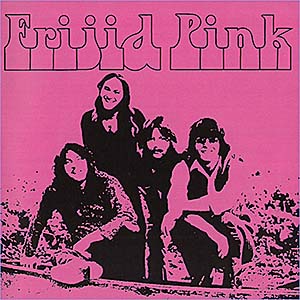
Frijid Pink - Frijid Pink (1970)

Year: January 1970, (CD 2005)
Label: Repertoire Records (Europe), REP 5057
Style: Hard Rock, Blues Rock, Psychedelic Rock
Country: Brighton, Michigan, U.S.
Time: 57:02
Format: Flac Tracks 16/44,1 kHz
Size: 328 Mb
Who is Frijid Pink?
Frijid Pink is an American psychedelic/blues rock, formed in 1967. Their first two singles on Parrot label went unnoticed, but their third single, a cover of the Animals’ “House Of The Rising Sun” – broke into the Top 10 in 1970. Their self-titled debut was a Top 20 hit on the Billboard 200 chart that same year; their second album Defrosted was also released later. However, following singles such as “Sing A Song For Freedom” and “Heartbreak Hotel” were minor hits. They released Earth Omen in 1972, and after a long hiatus, Frijid Pink returned to the studio to record their final album All Pink Inside before disbanding in 1975. The group re-formed in the 21st century, continuing performing and recording.
The Detroit rockers Frijid Pink:
Frijid Pink is an American rock band formed in Detroit, Michigan in 1967. The original line-up of the group comprised of singer Kelly Green (the stage name of Thomas Beaudry), guitarist Gary Ray Thompson, keyboardist Larry Zelanka, bass guitarist Tom Harris and drummer Richard Stevers
The group played various forms of rock music including acid rock, blues rock, psychedelic rock, hard rock and progressive rock.
First and only major hit with “The House of the Rising Sun”:
The group spent their first two years touring and performing around Detroit and Southeast Michigan area before inking a contract with Parrot label in 1969. Their first two singles (also released that same year) “Tell Me Why” and “Drivin’ Blues” failed to generate much notice. However, their third single - a distorted, guitar-driven rendition of the Animals’ “The House of the Rising Sun” - broke into the Billboard Hot 100’s Top 10, peaking at #7.
The single sold over a million copies, guaranteeing it a “gold” disc status. “The House of the Rising Sun” was an even bigger hit on the British chart at #4, and on the Canadian chart at #3.
The hit single was included on the group’s self-titled debut album, which also became a big smash. Released in 1970, Frijid Pink LP reaching #11 on the Billboard 200 album chart.
Frijid Pink became so wildly popular especially in their hometown Detroit that a newcomer British rock band by the name of Led Zeppelin opened for them, at the city’s Grande Ballroom. Frijid Pink often shared top billing with other local acts such as the Amboy Dukes, MC5, and the Stooges.
The group’s LP Defrosted was also released in 1970, and went to #149 on the Billboard 200 album chart. Most of the album’s tracks were written by Beaudry and Thomspon.
However, following singles such as “Sing a Song for Freedom” (#55, Hot 100) and their cover of Elvis Presley’s “Heartbreak Hotel” (#72, Hot 100) didn’t quite match the success of their first single. Beaudry and Thompson left, and new members David Alexander and (later) new singer Jon Wearing joined the fold. This new roster recorded and released Earth Omen on Lion label in 1972.
Frijd Pink’s disbandment:
After that album, the group didn’t re-enter the studio until 1975 when another wave of new members (vocalist Jo Baker and bassist Larry Poplizio) joined Frijid Pink to record their last released studio album All Pink Inside (on Fantasy label in 1975). Soon after the album was issued, Frijid Pink disbanded.
Frijid Pink’s re-activity in the 21st century:
In 2002, the band re-formed (but no old members were present) and recorded one more album Inner Heat, which still remains unreleased. Three years later the group formed once again, retaining most of its original members - Stevers, Harris and Beaudry, with new guitarist Steve Dansby (of Cactus) and keyboardist Larin Michaels.
However, this lineup dissolved by late 2006. Stevers started to launch auditions for new Frijid Pink members. The recent lineup did local gigs and eventually returned to the studio, in an attempt to record another album. In 2011 that album was eventually released in the US as an import, featuring re-recorded versions of the band’s old tracks as well as new music. Frijid Pink has continued doing studio work, while its lineup has been continually fluctuating.
(mentalitch.com/frijid-pink-the-house-of-the-rising-sun/)

01. God Gave Me You (03:34)
02. Crying Shame (03:12)
03. I'm On My Way (04:35)
04. Drivin' Blues (03:15)
05. Tell Me Why (02:52)
06. End Of The Line (04:08)
07. House Of The Rising Sun (04:44)
08. I Want To Be Your Lover (07:32)
09. Boozin' Blues (06:03)
10. Heartbreak Hotel (Bonus Track) (02:51)
11. Music For The People (Bonus Track) (02:59)
12. House Of The Rising Sun (Single Edit) (Bonus Track) (03:56)
13. Sing A Song For Freedom (Mono Single Mix) (Bonus Track) (03:04)
14. End Of The Line (Mono Single Mix) (Bonus Track) (04:08)

Frijid-Pink70-Frijid-Pink-03 Frijid-Pink70-Frijid-Pink-04 Frijid-Pink70-Frijid-Pink-05 Frijid-Pink70-Frijid-Pink-07 Frijid-Pink70-Frijid-Pink-08 Frijid-Pink70-Frijid-Pink-09

KatFile               GigaPeta               TurboBit